
ActivityTimeline supports both importing events from Outlook Calendar and exporting your ActivityTimeline schedule to Outlook Calendar.
Each user configures their own calendar integration from My Account → Calendar Integration.
Import Events from Outlook Calendar
Starting from v12.7 ActivityTimeline supports the import of events from Outlook Web (Cloud).
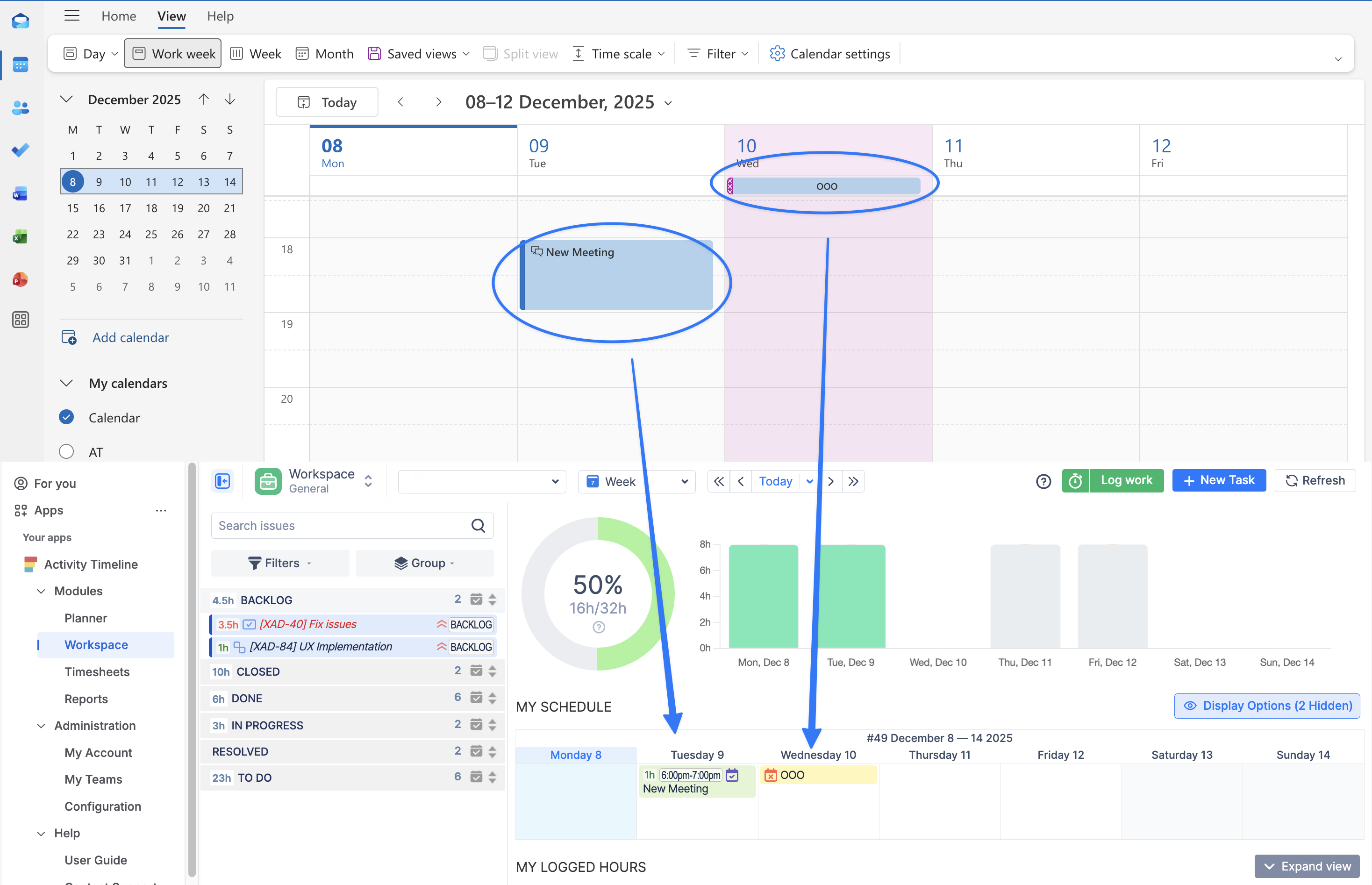
Imported events can include meetings and out-of-office events, allowing them to appear directly on your ActivityTimeline schedule.
Follow these steps to import external Outlook calendar events into ActivityTimeline using an iCal link.
Get your Outlook iCal link
-
Open Outlook.
-
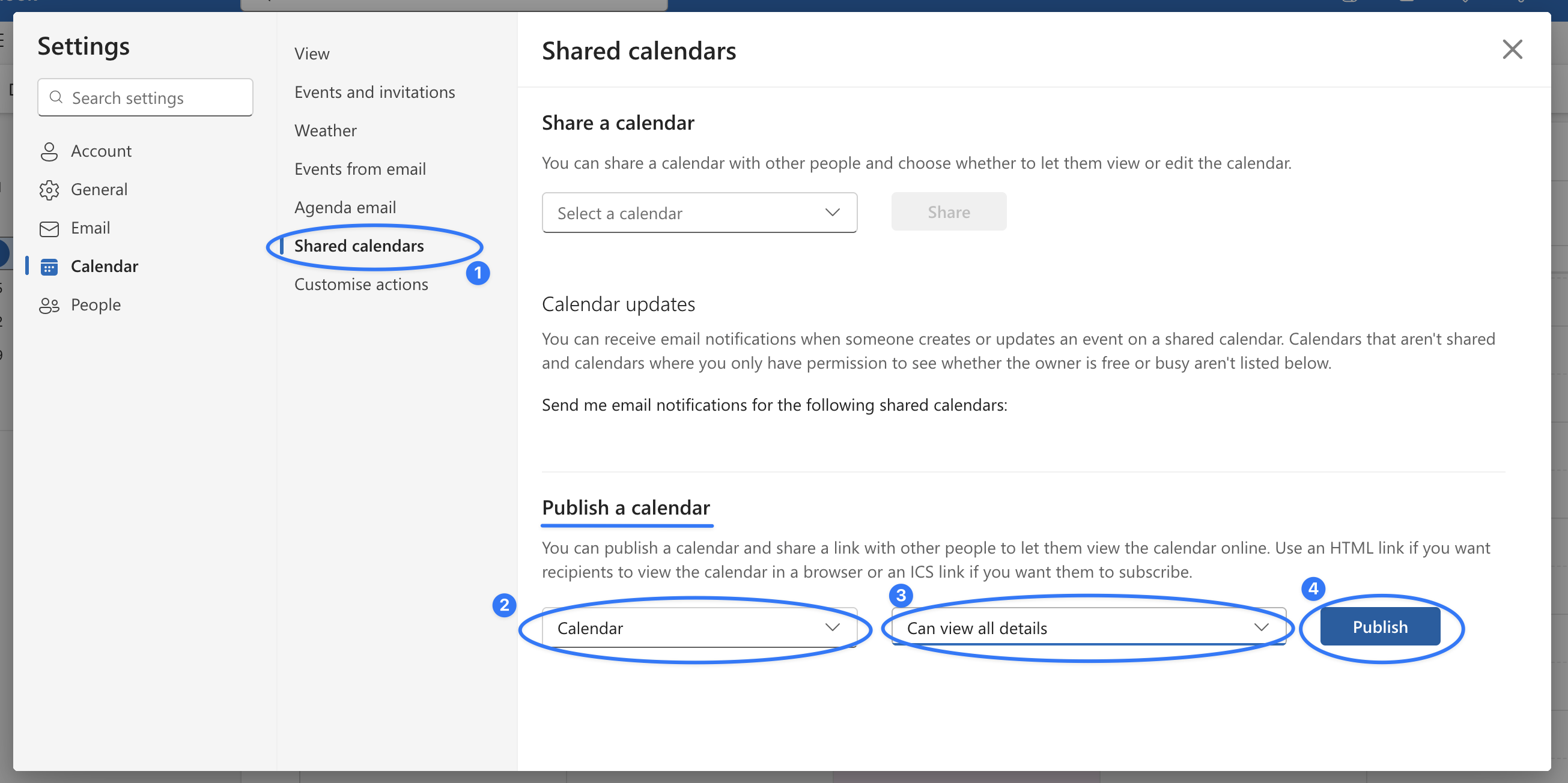
Go to Calendar → Calendar Settings.

-
Go to Shared calendars → Under ‘Publish a calendar’ choose calendar and ‘Can view all details’ → Click ‘Publish’.
-
Copy the generated iCal (.ics) URL.
Add the iCal link to ActivityTimeline
-
In ActivityTimeline, go to My Account → Calendar Integration.
-
Paste the iCal URL into Configure Import of Events from iCal link.
-
Click Continue to approve the integration.
-
Select the time zone that should be used to display imported events.
-
Click Update.
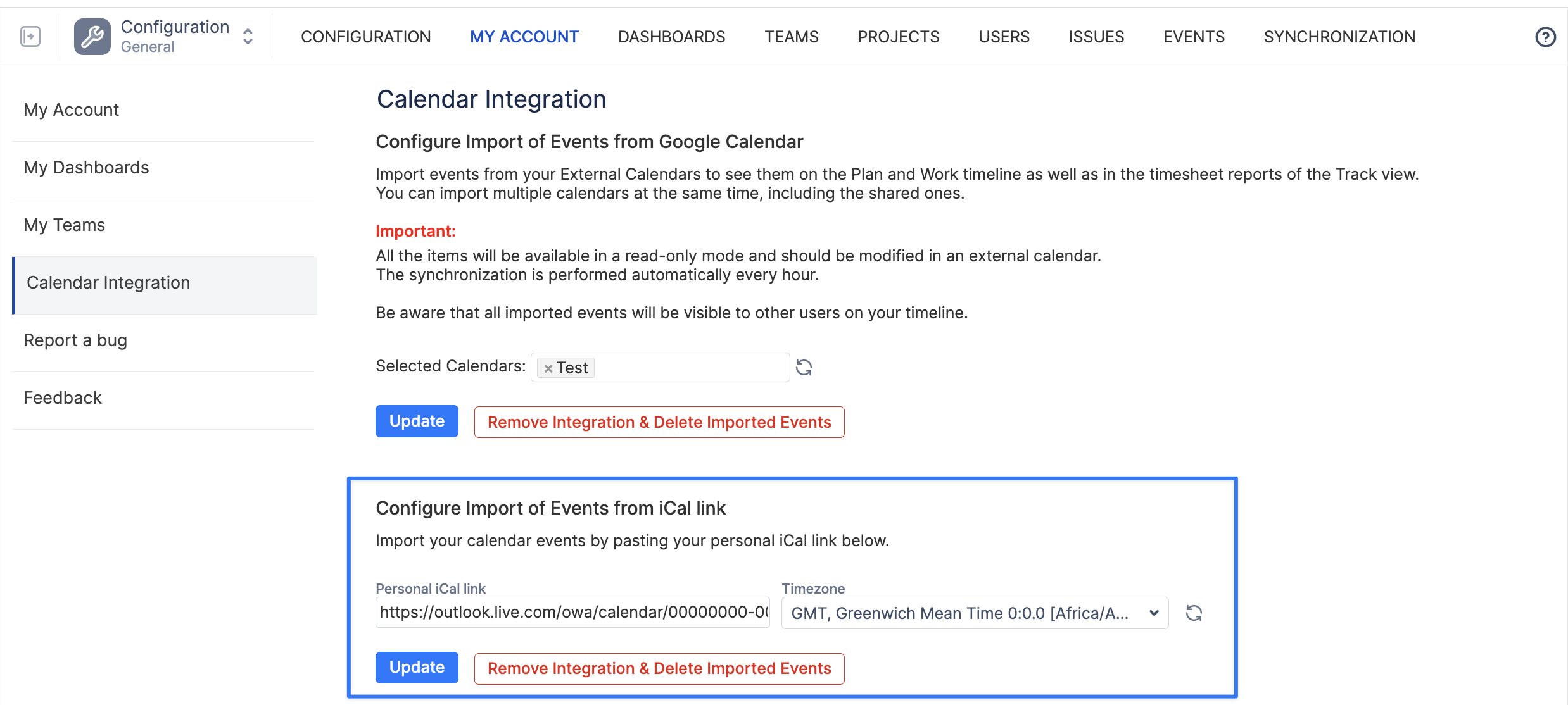
Once connected, Outlook events will begin appearing on your ActivityTimeline schedule.
How Imported Events Work
You can decide how imported events should be treated within ActivityTimeline. There are three main options depending on your workflow:
1. Use for Planning and Automatic Time Tracking (Default)
By default, imported events are:
-
Displayed on users’ timelines. On the Planner, all imported calendar events are grouped into a single “Calendar Events” line.
When you click on it, you’ll see a detailed list of events for the selected day or week. In the Workspace, the full list of calendar events is displayed by default.
-
Counted towards workload and capacity (OOO events reduce available capacity).
-
Automatically counted as time spent once the event has passed.
These events appear in Planning reports as workload and Timesheet Reports as time spent by the user.

2. Use for Planning and Manual Time Tracking
If you prefer not to automatically count calendar events as time spent:
-
Go to Configuration → Timesheet Settings → External Calendar Worklog Behavior.
-
Select Treat none as Worklogs.
With this setting:
-
Past calendar events will not count as logged time automatically.
-
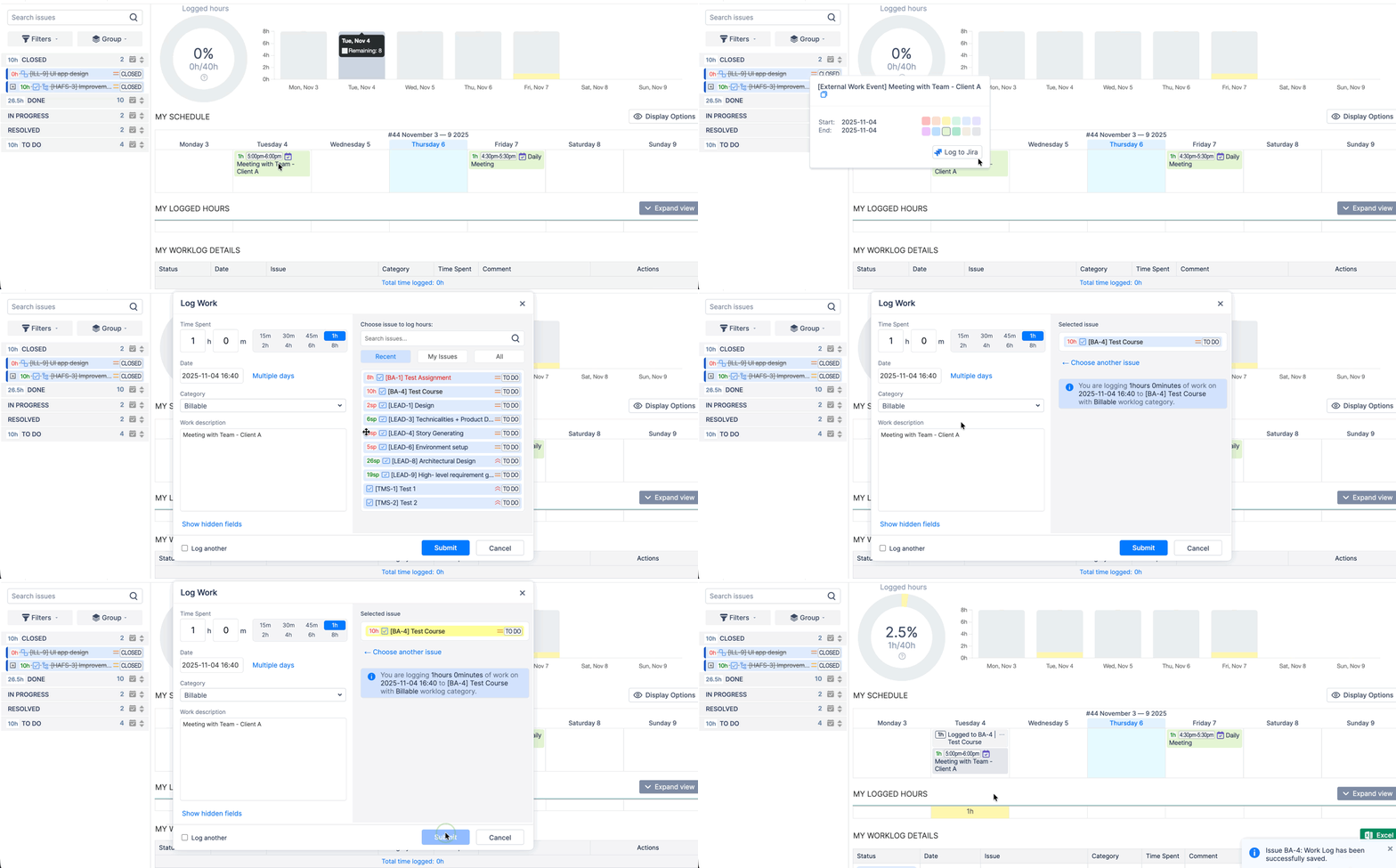
Users can manually log time against Jira issues from these events:
-
Click the event → Log to Jira → complete the Log Work dialog.
-
The event will then appear in grey to indicate that time has been logged.
-
3. Use Only for Time Tracking (Exclude from Workload)
You can also import calendar events solely for time tracking purposes, without having them affect team capacity.
This is useful if meeting time is already included in Jira issue estimates and you want to avoid double counting.
To enable this:
-
Go to Configuration → Advanced Settings → Custom Functionality.
-
Add the following line: IGNORE_CALENDAR_EVENT_ESTIMATE
-
Click Update.
Important Notes
-
The integration initially imports 500 events, and subsequent synchronizations will automatically fetch all remaining scheduled events.
-
The synchronization frequency for shared calendars is approximately every few hours.
-
ActivityTimeline always uses the event time in UTC but you have an option to choose which Time Zone to use.
-
If you do not plan to attend a meeting, set your attendance to “No” in Outlook Calendar. Pending or tentative events will still appear on your timeline.
-
Events cannot be edited directly in ActivityTimeline. To change or remove an event, update it in Outlook Calendar.
-
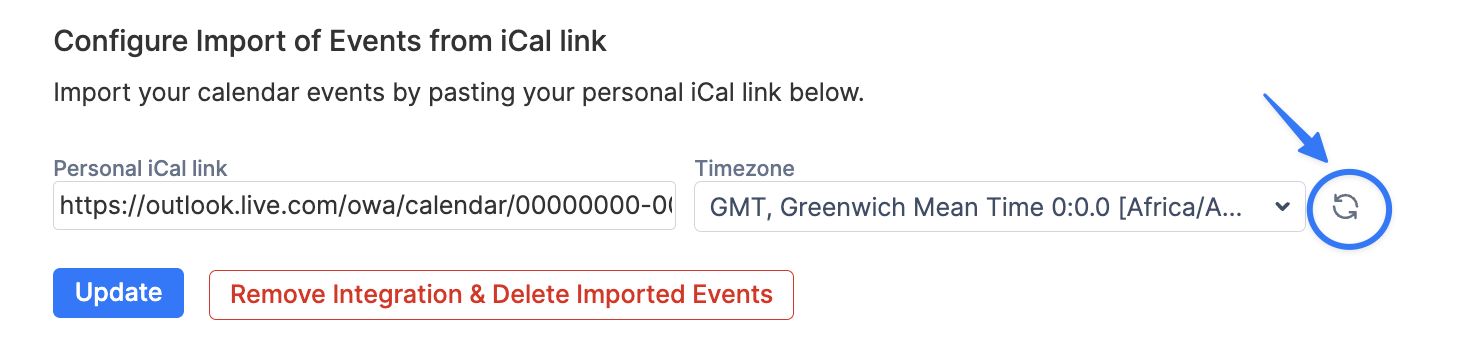
To trigger synchronziation, users can also click on the sync icon on Calendar Integration page:
Export Your ActivityTimeline Schedule to Outlook Calendar
You can also subscribe to your ActivityTimeline schedule in Outlook Calendar.
Configure the Export
To build one's timeline into Outlook calendar, follow the steps:
-
In ActivityTimeline, go to My Account → Calendar Integration.
-
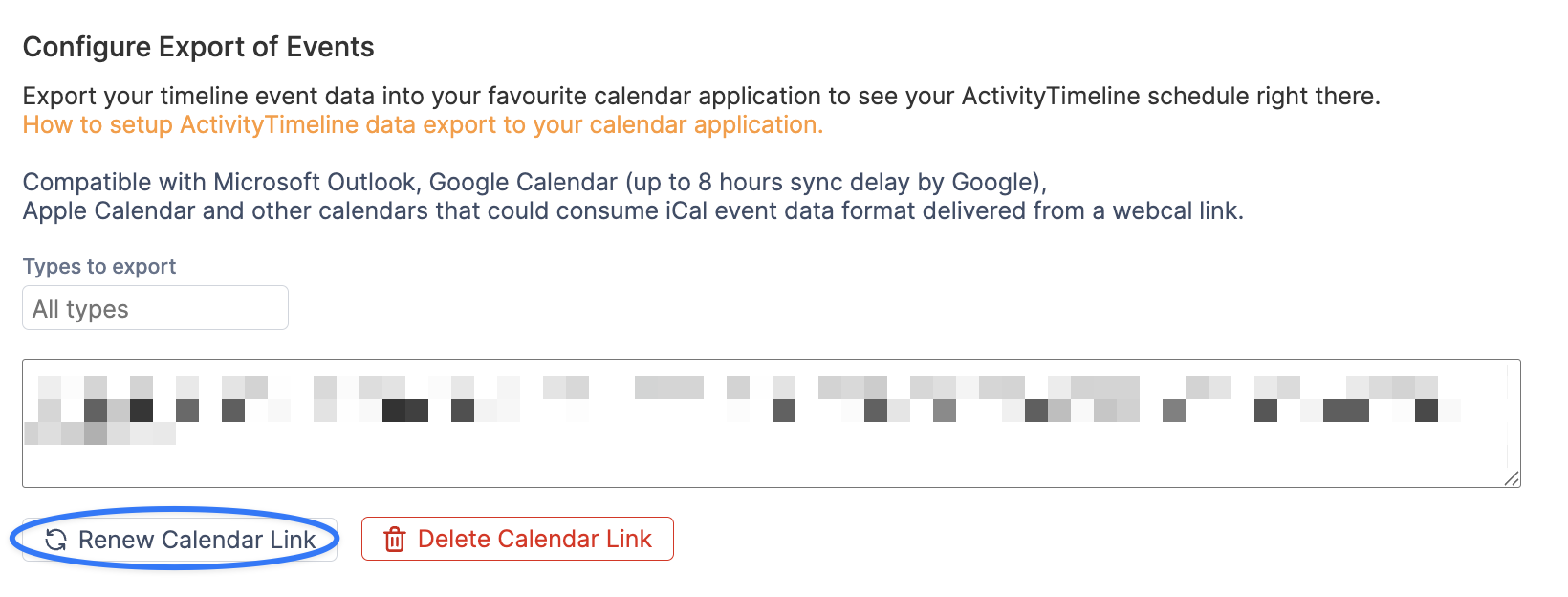
Click Renew Calendar Link to generate your personal iCal Datafeed URL.
-
Copy the generated URL.
-
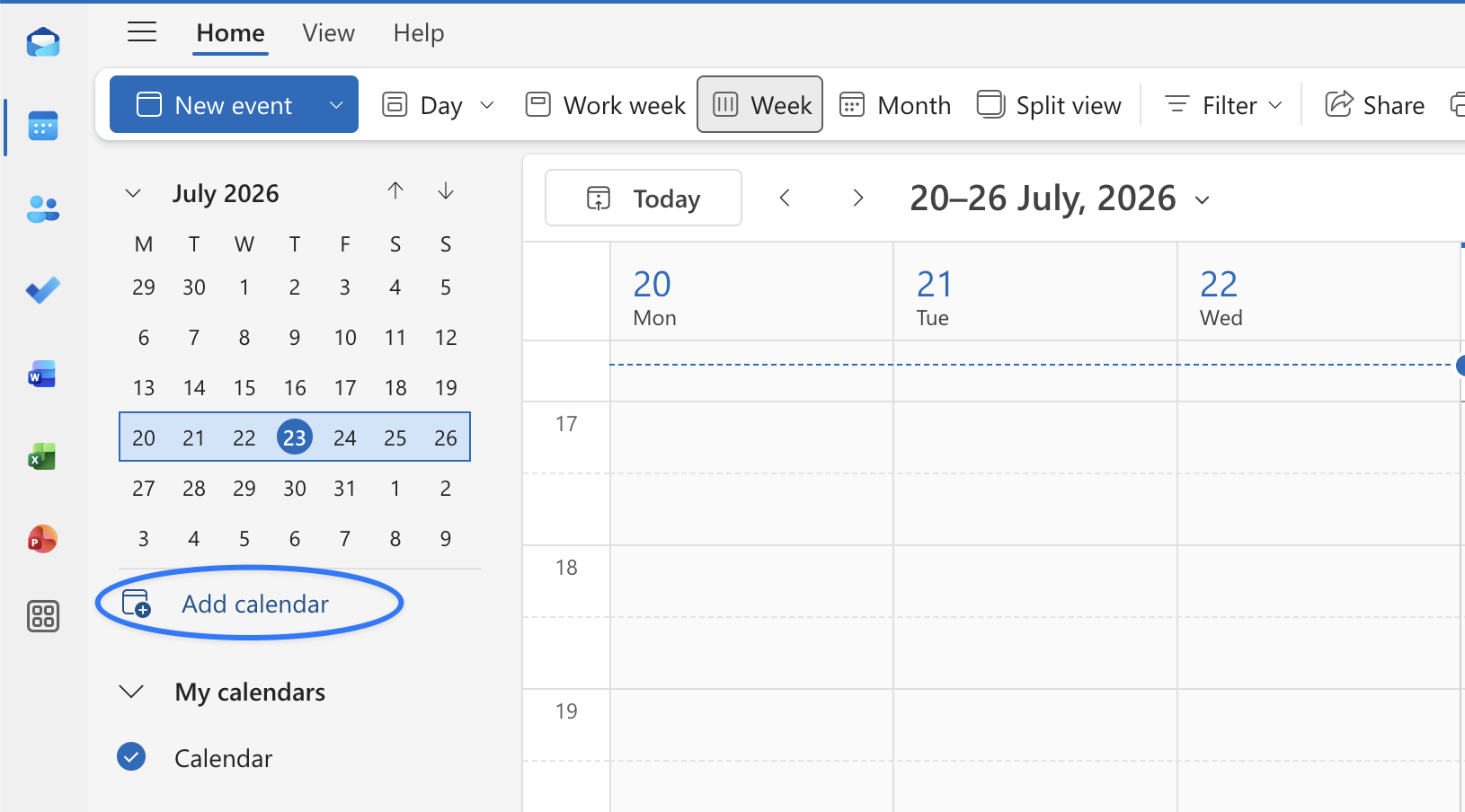
Open Microsoft Outlook Calendar → Click Add Calendar.
-
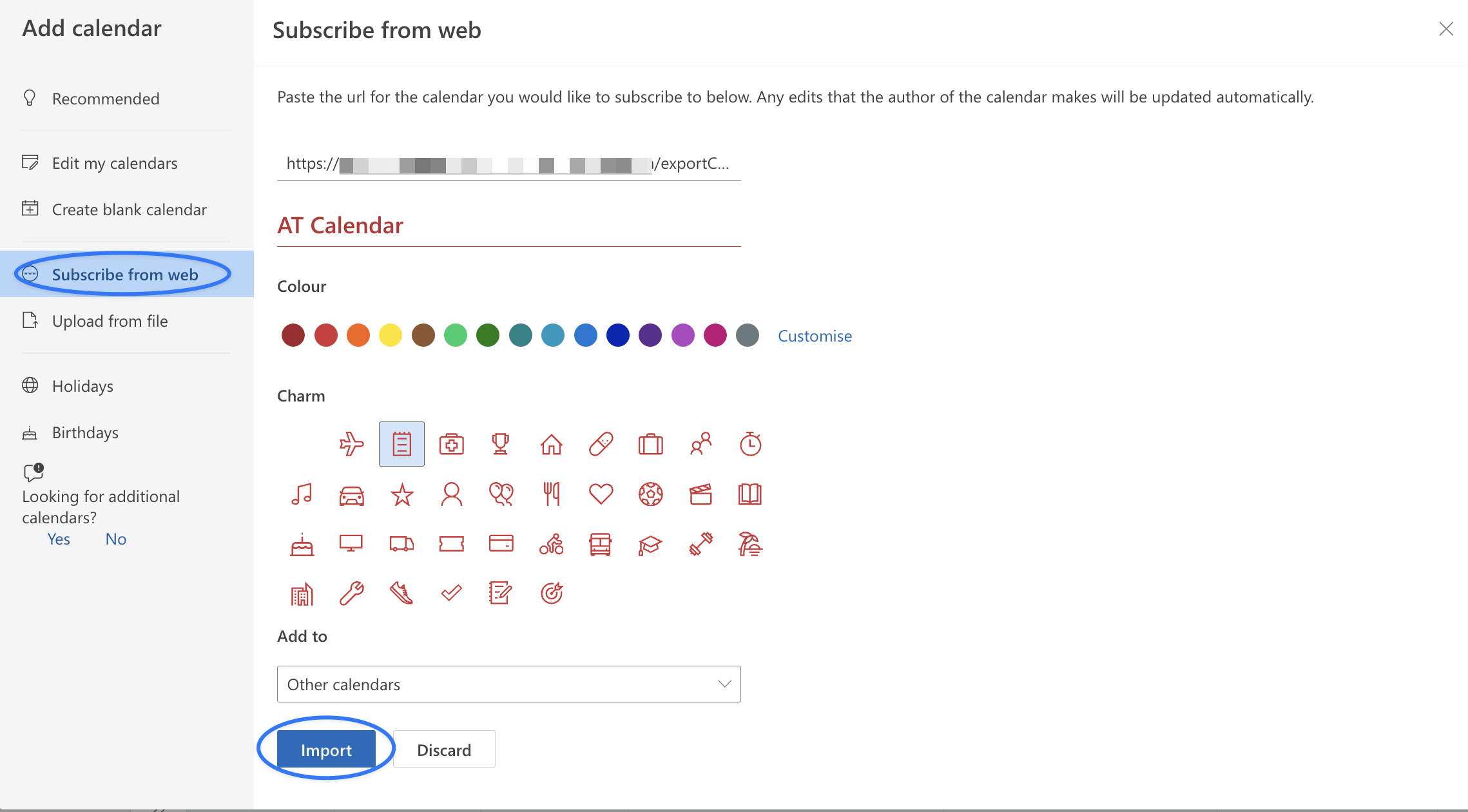
Choose Subscribe from Web.
-
Paste the iCal URL.
-
Add name of calendar.
-
Click Import.
Scheduled Jira issues and ActivityTimeline events from your timeline will then appear in Outlook Calendar.
Updates are synchronized through the calendar subscription and may not appear immediately.
Important Notes
-
The export works per user and shares only that user’s timeline data. It is also possible to export data for the whole team under Configuration → Teams → Export to Calendar option.
-
Shared Outlook calendars are not supported. Other team members who don’t use ActivityTimeline won’t see your bookings or custom events.
-
If Dates Only mode is used in ActivityTimeline, exported Jira issues and events will appear at the top of the Outlook calendar as date-based items rather than being displayed at a specific time.
-
If you receive the error:
“We can’t add the calendar for right now. Try again later.” It’s usually caused by Microsoft’s Shared calendar improvements feature in Microsoft 365. To fix this, ensure that this option is turned off (unchecked).
You may also refer to the video guide: https://youtu.be/_vPclvHYwc4?si=zkexLdB0ElBnLFpa