
Now that you’ve learned how to schedule tasks on the timeline, the next step is understanding how ActivityTimeline calculates workload.
When a task is scheduled, ActivityTimeline automatically distributes its estimated effort across the selected time period. The way those hours are allocated depends on the selected workload calculation mode.
Workload is the amount of planned work assigned to a user over a selected period.
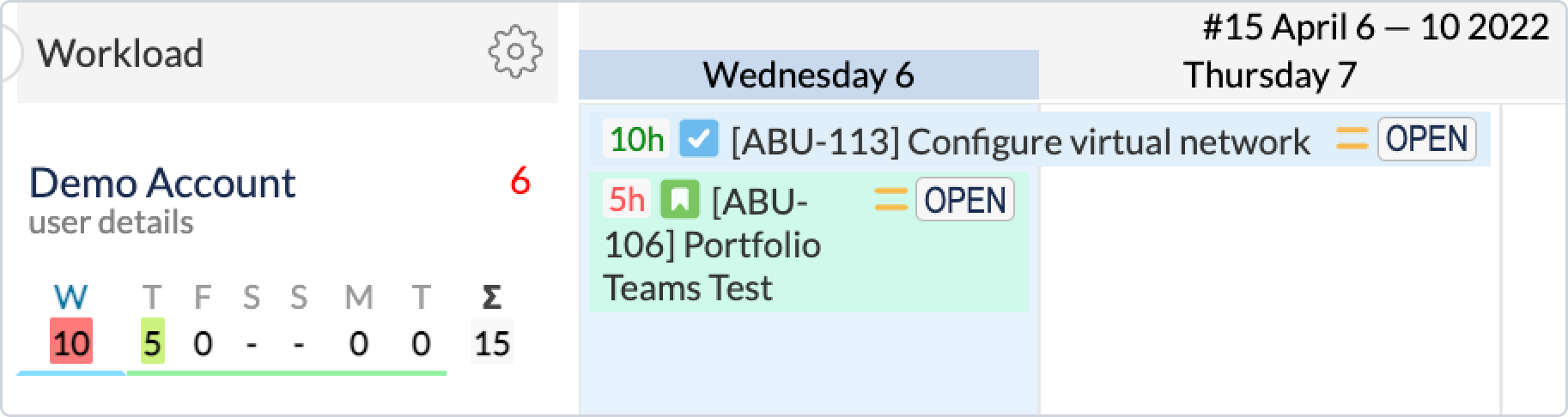
In ActivityTimeline, workload is calculated based on the remaining estimate (daily estimate) or story points and any custom events scheduled on a user’s timeline.
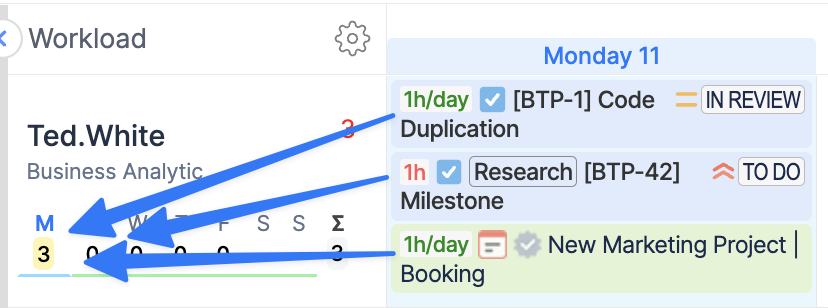
For example, Ted is assigned task BTP-42 with a 1-hour remaining estimate, task BTP-1 with a 1-hour daily estimate, and a booking with a 1-hour daily estimate. Therefore, his total workload for the day amounts to 3 hours.
ActivityTimeline supports two workload calculation modes:
-
Balance Mode
-
Liquid Mode
Both modes use the same task estimates and schedule, but they distribute the workload differently. Choosing the appropriate mode helps ensure your plans reflect how your team actually works.
|
Balance Mode |
Liquid Mode |
|---|---|
|
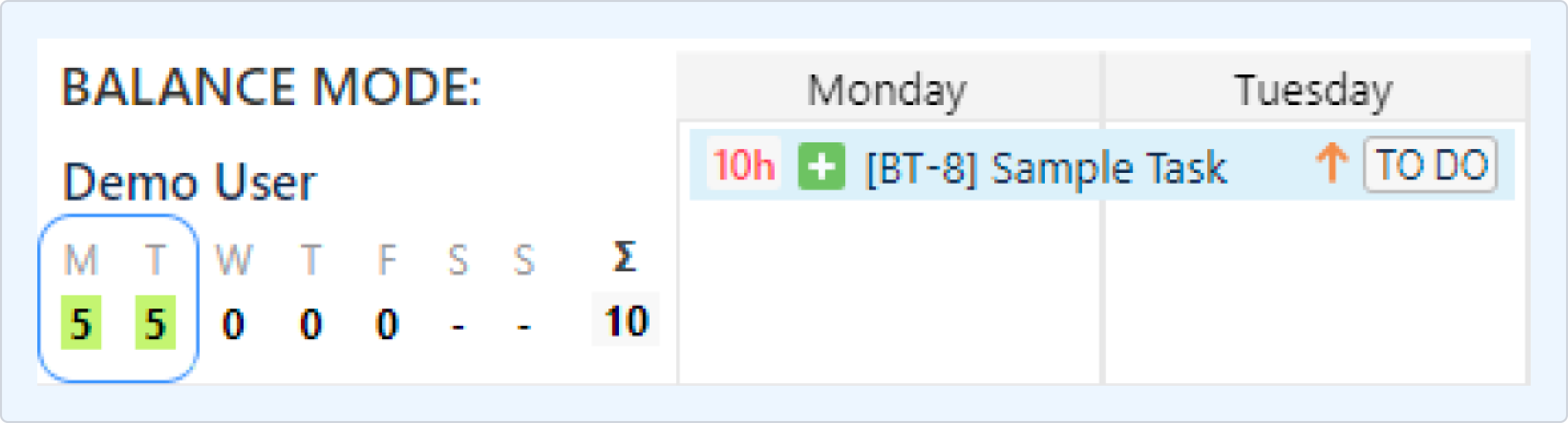
Balance mode evenly distributes hours for a set period.
If a task is estimated for 10 hours, and a manager schedules it for 2 days, the system will automatically schedule 5 hours per day for that task |
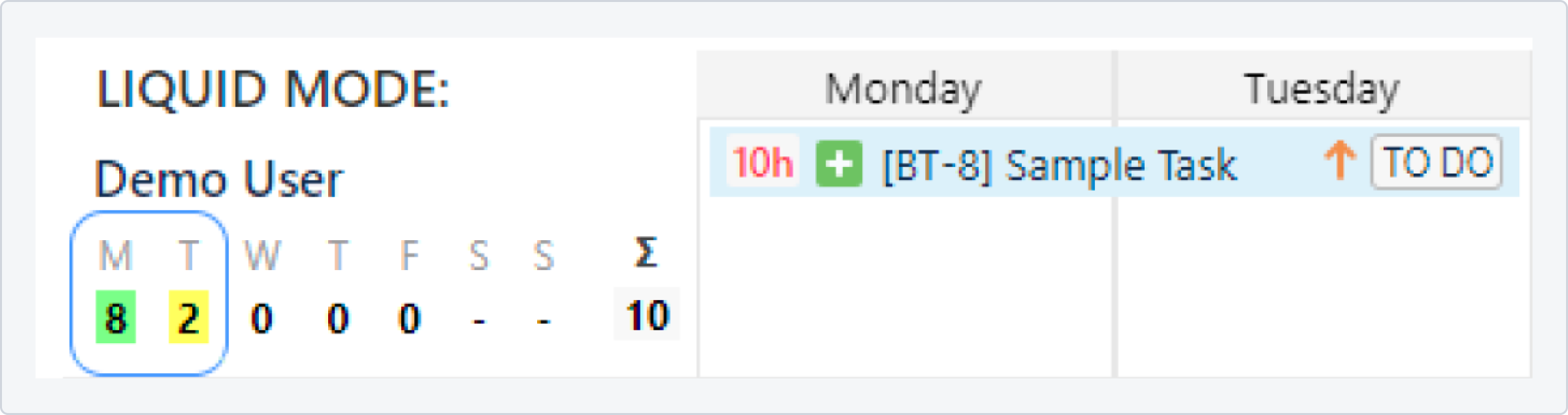
The liquid mode will help you to plan the workload according to the default involvement of a user. If a task is estimated for 10 hours, and a manager schedules it for 2 days, the system will automatically put all hours upfront. It's a move convenient way of scheduling
|
|
|
|
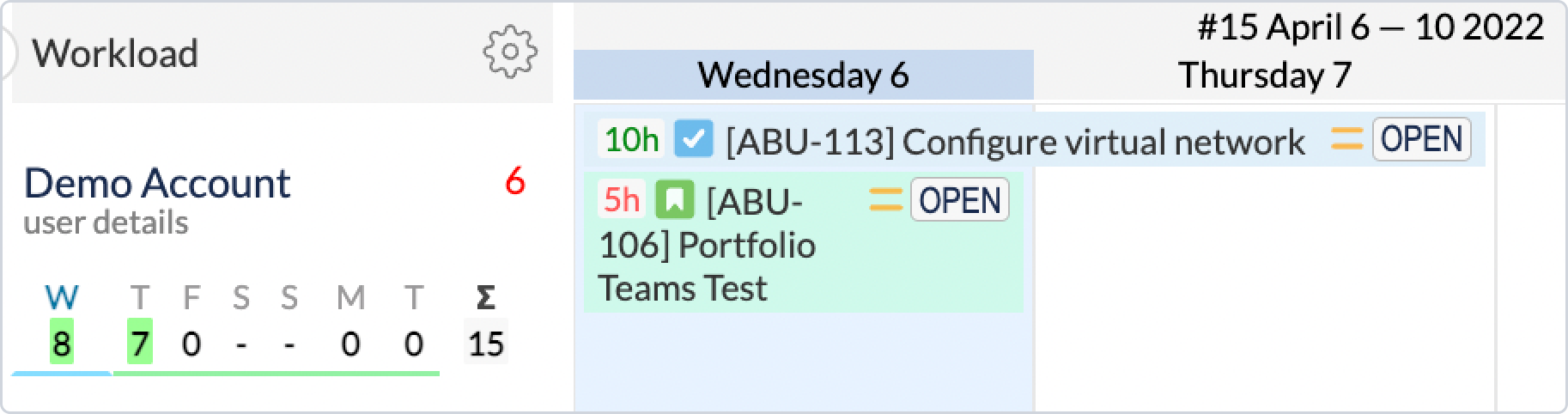
This video shows how the workload indicator works in Balance & Liquid modes.
Using Story Points? Configure conversion first to include them in workload calculations. See: How does conversion from Story points into Hours work?
What Happens Next
Once you are all set, go to the next step, which is configuring Time Tracking Modes and Workload