
Aggregation functionality is available starting from ActivityTimeline v9.4.0+
Timeline Aggregation provides a summarized view of scheduled work by grouping timeline items based on a shared Jira attribute. Instead of displaying every individual issue, ActivityTimeline combines related items into a single visual block, making it easier to analyze workloads and identify planning trends.
Aggregation is particularly useful when reviewing resource allocation across teams or projects, as it helps you focus on the overall picture without being distracted by individual tasks.
By default, Aggregation is disabled.
To enable it, click the Aggregation icon on the right-side toolbar.
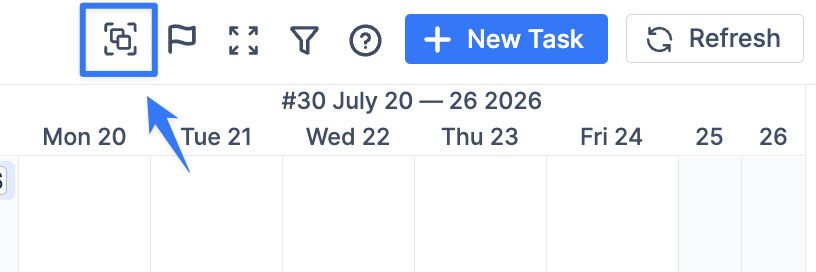
Available Aggregation Modes
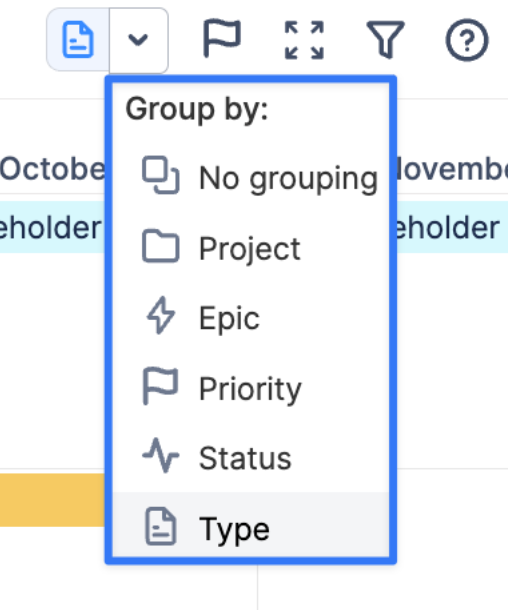
ActivityTimeline supports the following aggregation types:
-
Project
-
Epic
-
Issue Status
-
Issue Type
-
Issue Priority
Simply select the desired aggregation mode to regroup the timeline.
Aggregate by Project
The Project view groups all scheduled work by Jira project.
Instead of displaying individual issues, the Timeline shows one block for each project, allowing you to quickly understand:
-
which projects each user is working on,
-
the distribution of work across multiple projects.
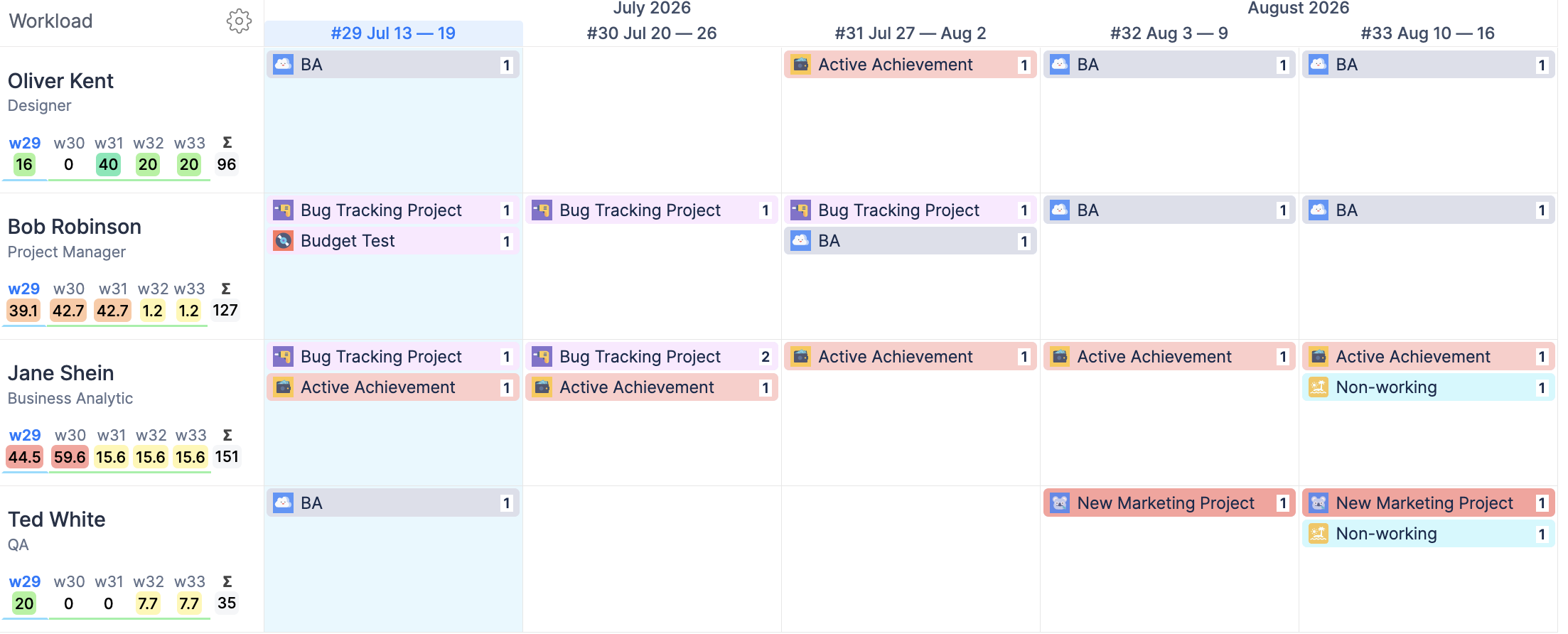
Each project is displayed using a different color for easier visual identification.
Aggregate by Epic
The Epic view groups issues according to the Epic they belong to.
This helps managers understand:
-
which initiatives users are contributing to,
-
the overall progress of larger bodies of work.
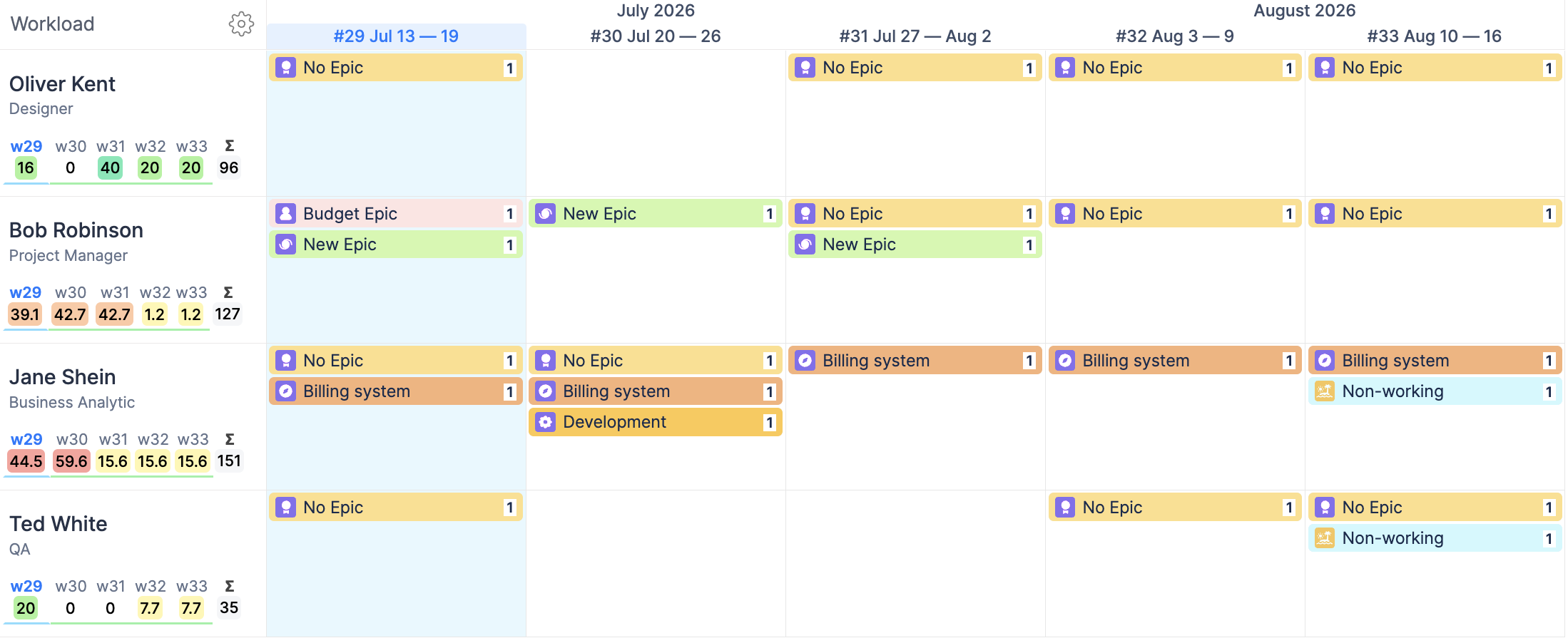
Each Epic is assigned its own color, making different initiatives easy to distinguish.
Aggregate by Issue Status
The Issue Status view groups work based on the current Jira workflow status.
This provides a quick overview of how work is progressing and makes it easy to identify:
-
work currently in progress,
-
completed work,
-
planned work.
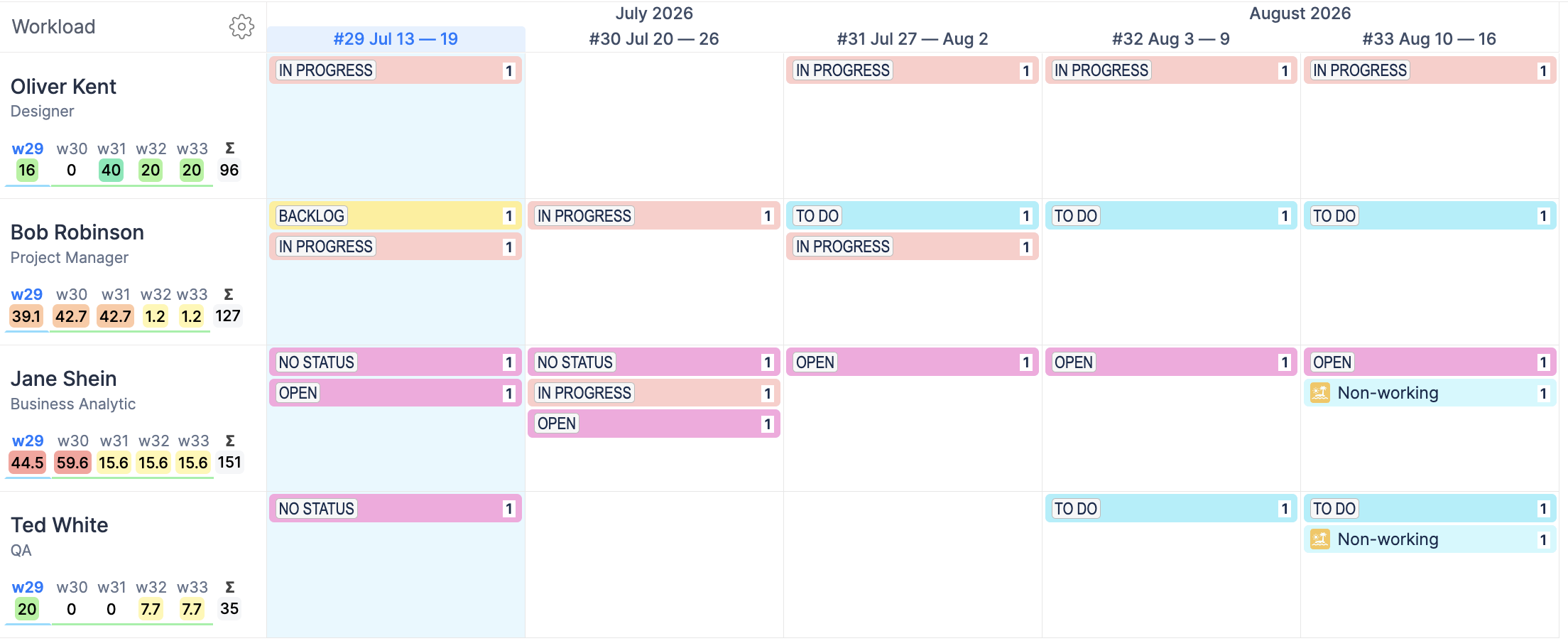
This view is especially useful for monitoring workflow health and identifying bottlenecks.
Aggregate by Issue Type
The Issue Type view groups work according to the Jira issue type.
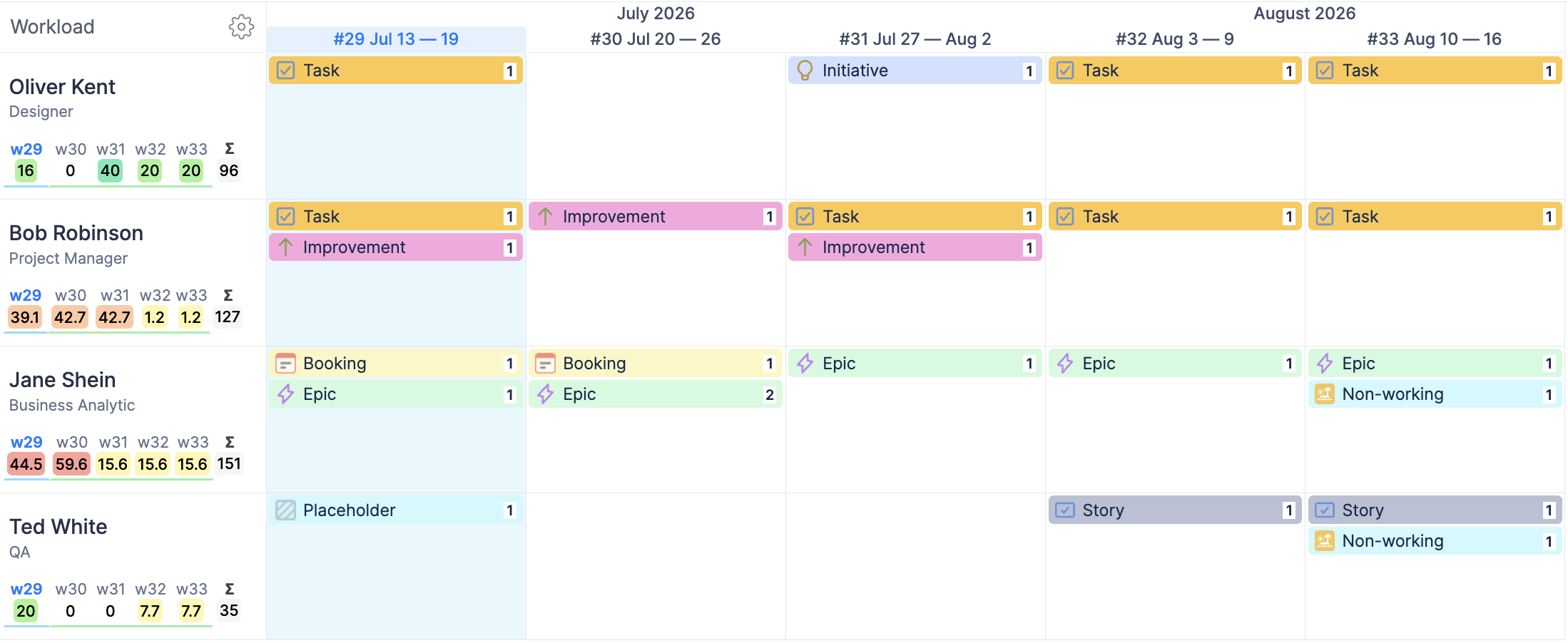
This helps teams understand the composition of their work and identify how effort is distributed across different types of activities.
Aggregate by Issue Priority
The Issue Priority view groups work according to the Jira priority assigned to each issue.
This makes it easy to identify:
-
how much high-priority work is planned,
-
whether urgent issues are receiving appropriate attention,
-
the overall balance between critical and lower-priority tasks.
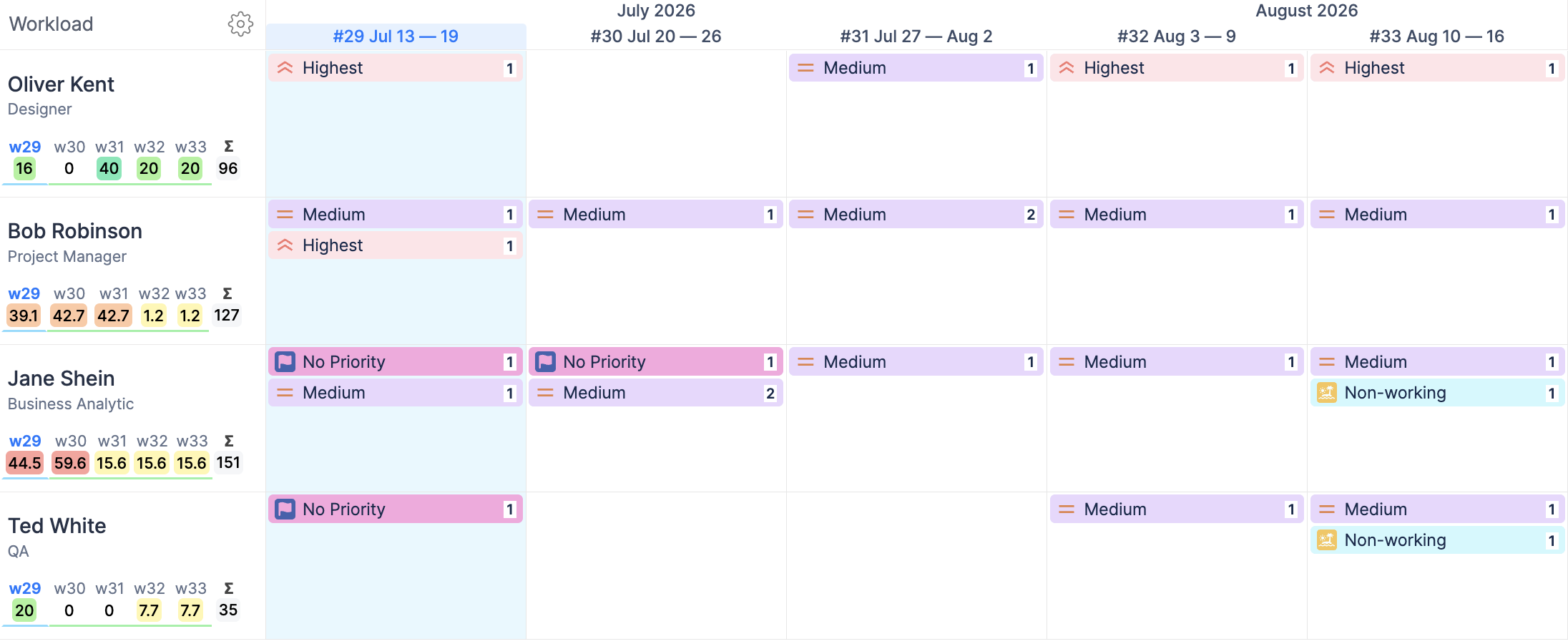
This view is particularly useful when reviewing team workload and ensuring that the most important work is scheduled appropriately.