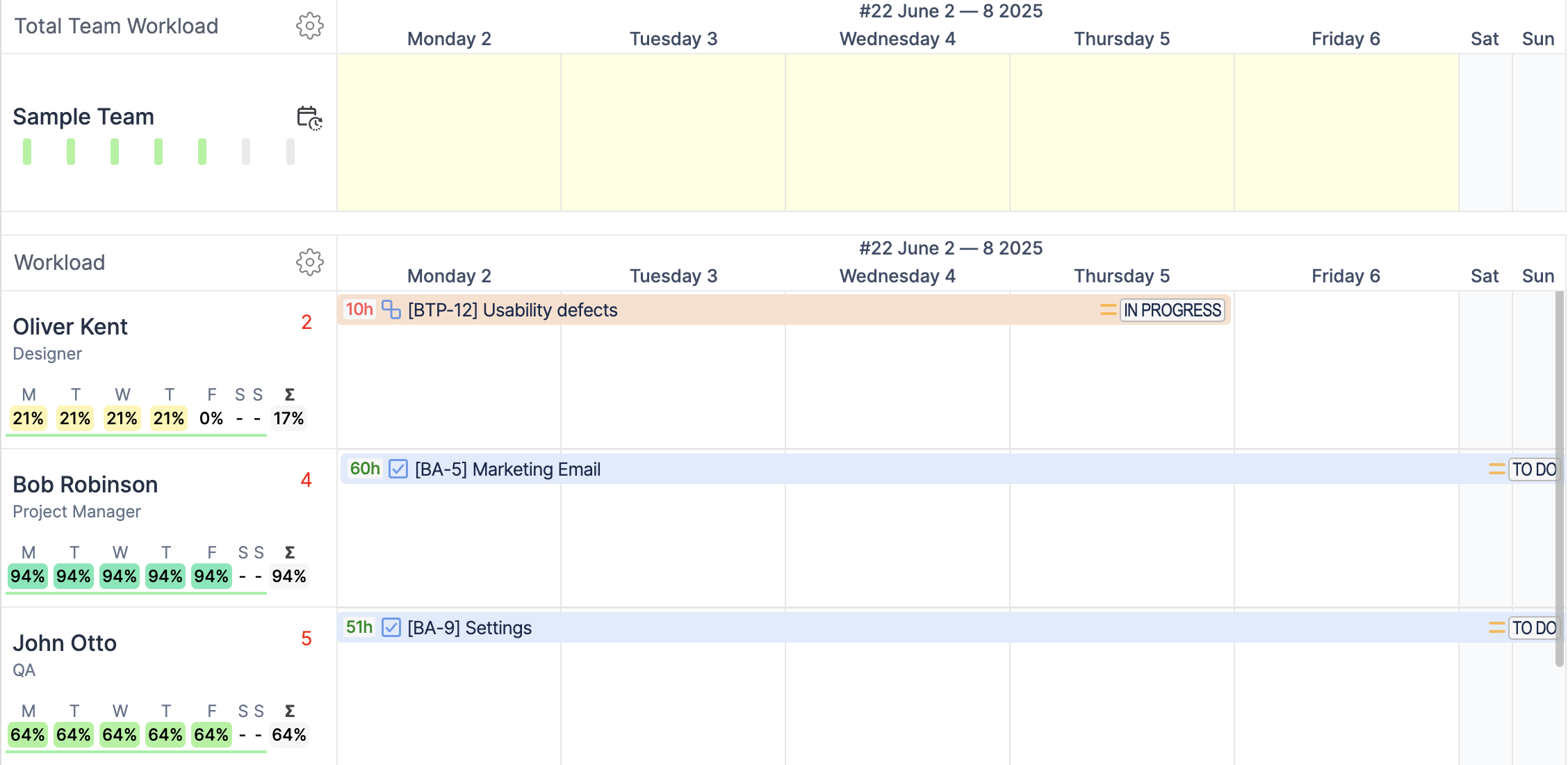
ActivityTimeline is built around planning work for people and groups of people.
In the app, individual people are called resources, and groups of people are called teams. These two concepts are the foundation of planning in ActivityTimeline.
Resources
A resource is a person available in ActivityTimeline.
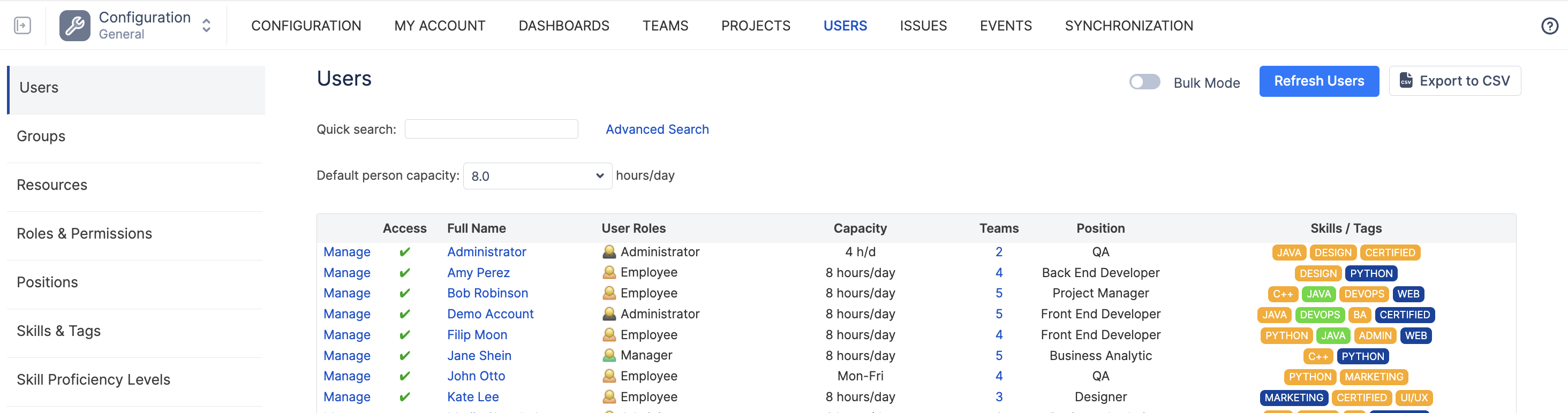
In most cases, this means a user with access to Jira who appears in the app. Resources can also have additional information assigned to them, such as roles, positions, and skills. This helps you organize people and plan work more effectively.
You can manage your resources in: ActivityTimeline Configuration → Users:
Teams
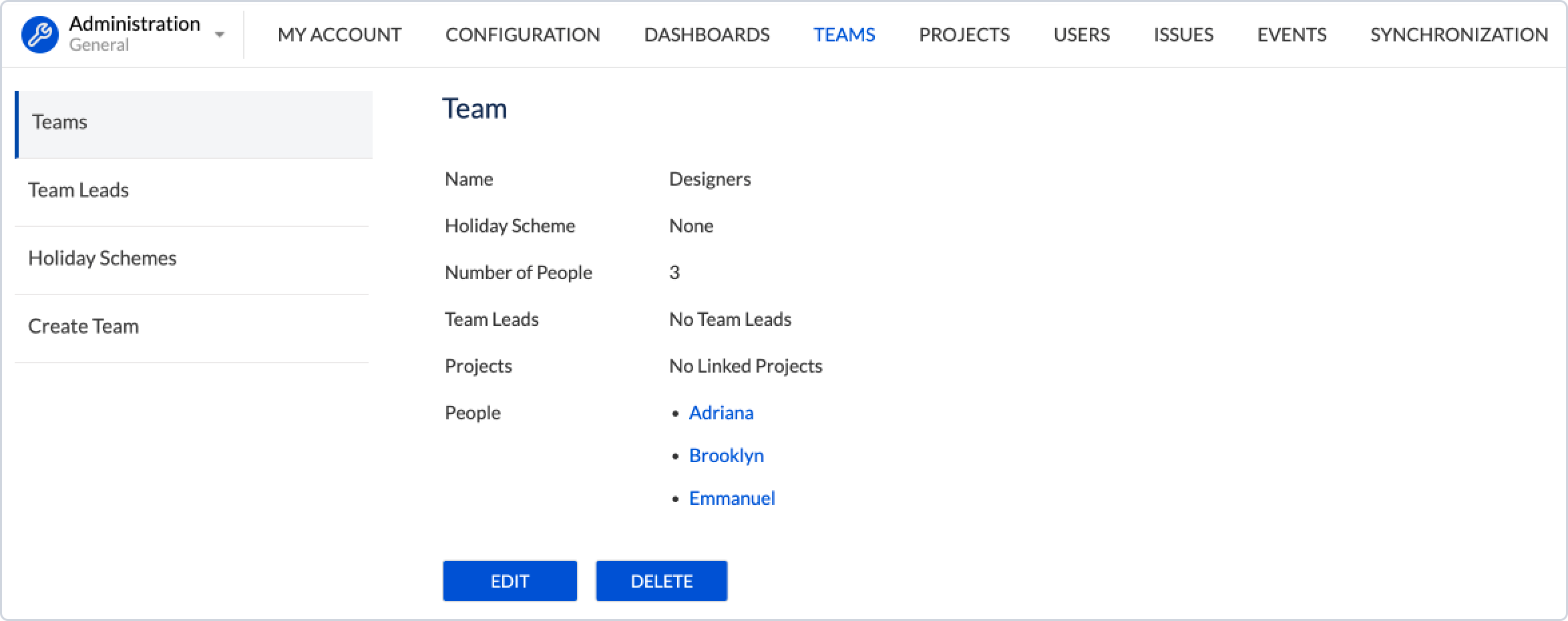
A team is a group of resources that you want to manage and plan together. Teams help you look at work on a higher level instead of only person by person.
There are 2 types of Teams in ActivityTimeline: Classic and Functional. The difference behind these two team types is the way how they are formed and maintained:
-
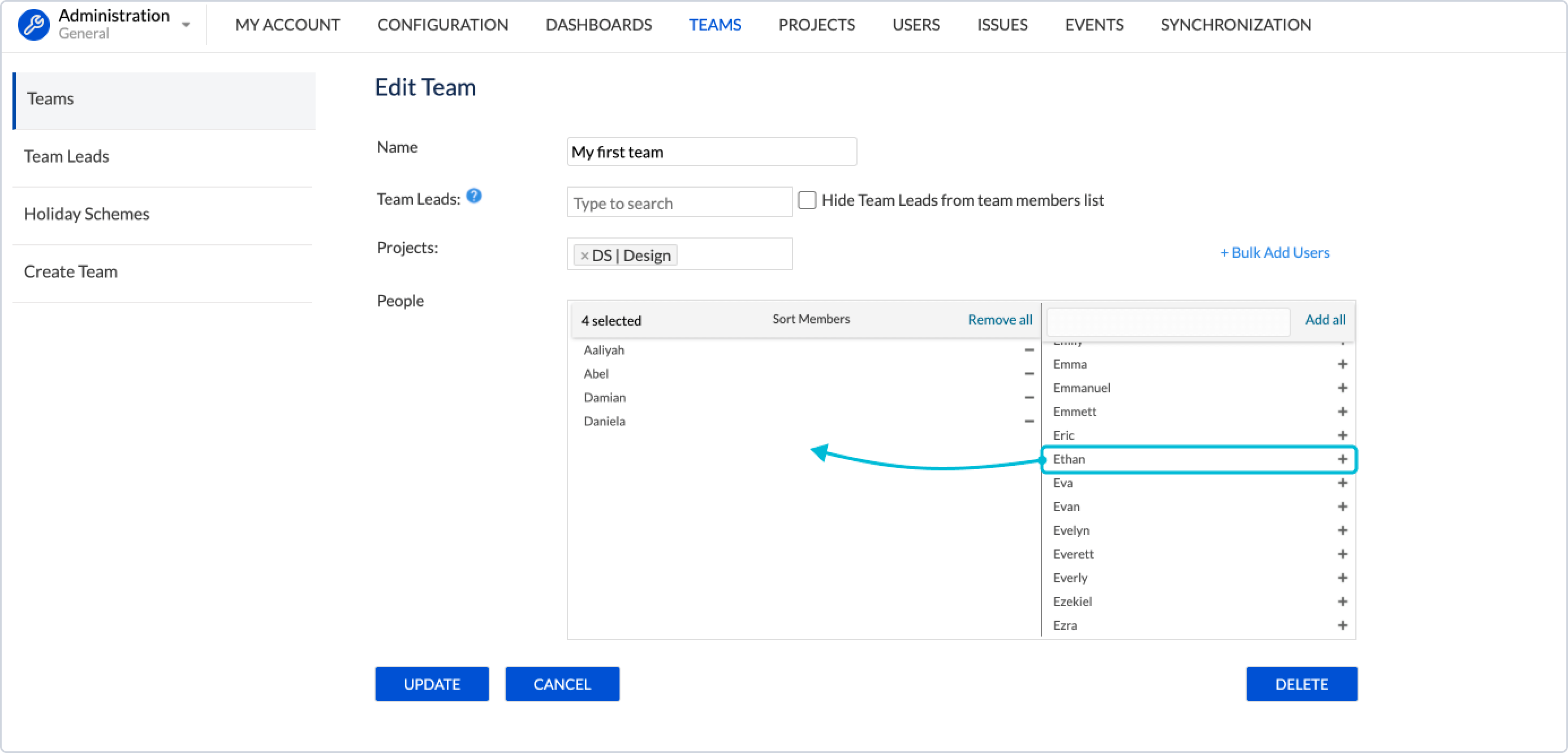
Classic Team is created by manually adding users to a team.
This is the right option when you want full control over who belongs to the team and when membership changes. You can add or remove users at any time.
-
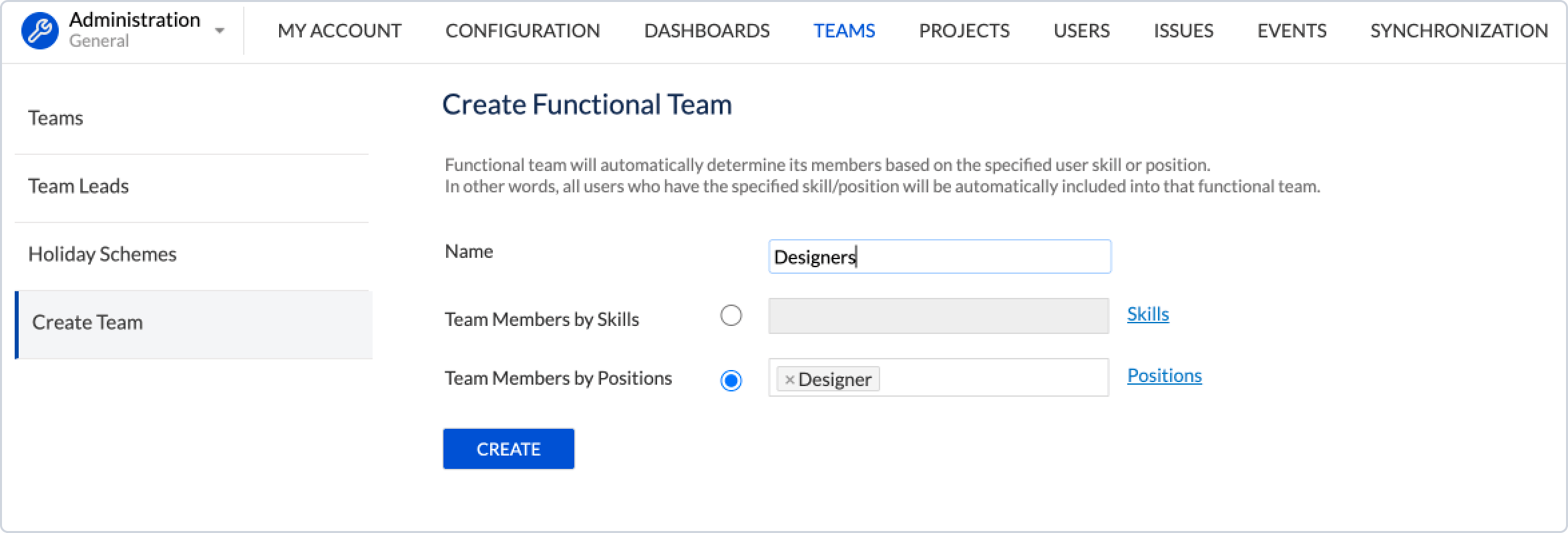
Functional Team is created automatically based on user attributes, such as skills or positions.
To use this type of team, you first assign skills or positions to users. Then ActivityTimeline can build the team automatically based on that data. This is useful when team membership should be driven by employee capabilities rather than manual setup.
Why this matters
Once your resources and teams are set up, you can plan work more clearly, review capacity more easily, and report on progress at both individual and team level.