
Resources are central to ActivityTimeline. To plan work effectively, we recommend configuring your users before you start scheduling tasks.
The most important user settings are:
-
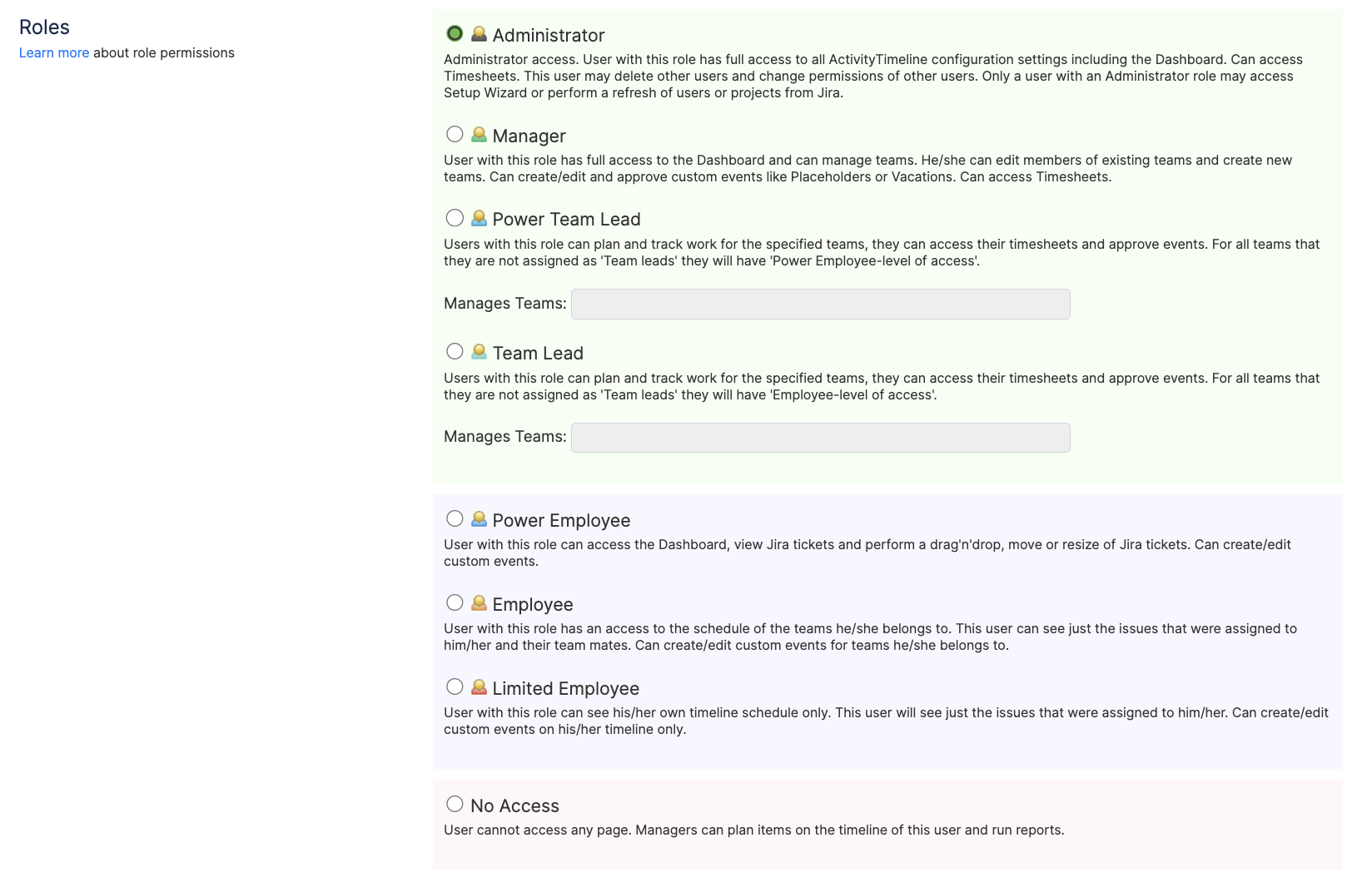
Roles – define what users can access and manage.
-
Capacity & Workload Schemes – defines each user’s working capacity.
-
Positions & Skills – add additional information for planning, searching, reporting, and Functional Teams.
Roles
In ActivityTimeline, roles define user permissions. They control what each person can access and manage in the application.
For full details, see: User Roles and Permissions
As a general recommendation, you can use the following setup:
-
Administrator — for Jira admins or users responsible for ActivityTimeline configuration. This role can also be assigned to users who are not Jira administrators.
-
Manager — for users who plan and manage work for others, such as Project Managers, Business Analysts, Team Leads, and resource managers.
-
Employee — for users who only need to manage their own tasks, schedule, and worklogs.
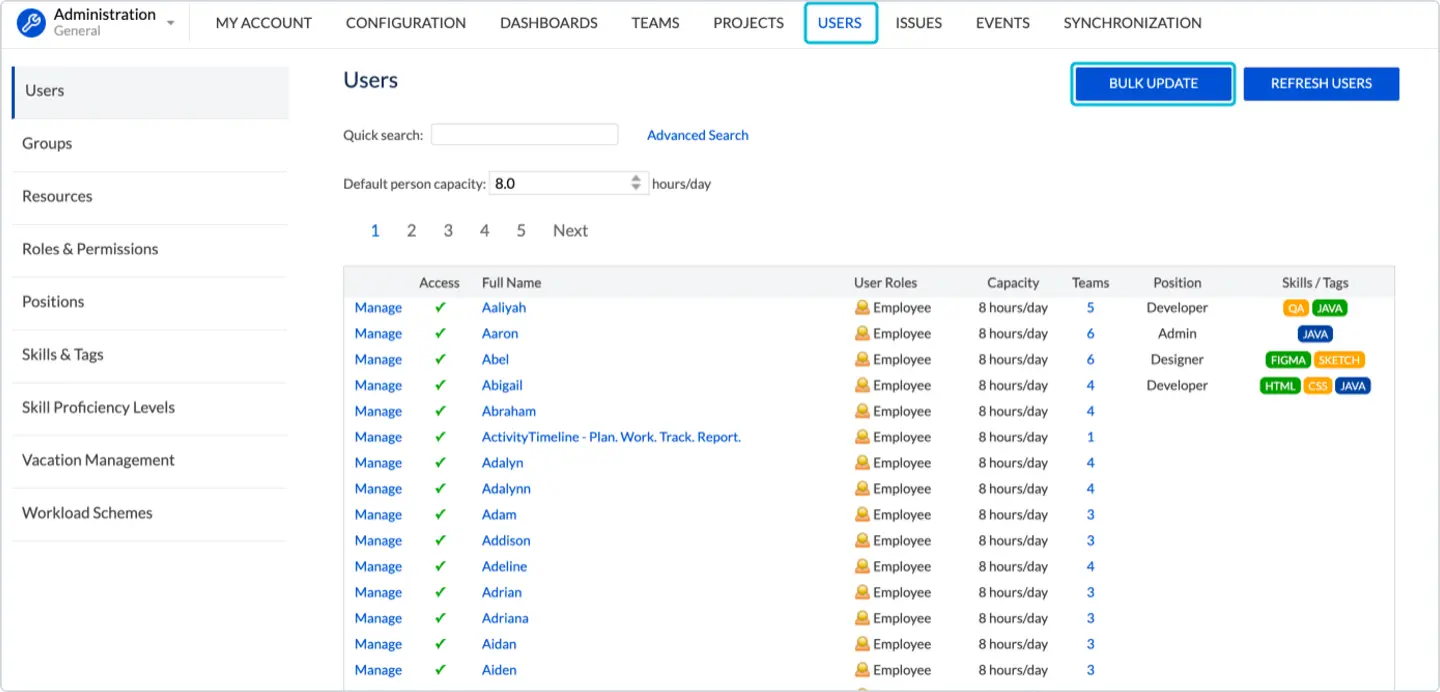
To save time, go to Configuration → Users → Bulk Mode to assign roles to multiple users at once. Bulk Mode can also be used for positions and skills.
Capacity and Workload Schemes
After assigning user roles, the next important step is to configure user capacity. Capacity affects workload indicators, availability, utilization, and forecasting.
In ActivityTimeline, capacity can be managed in two related ways:
-
Personal Capacity / Involvement — defines how much time a resource is available for a specific day.
-
Workload Schemes — define a reusable working schedule, including working days and available hours, that can be assigned to users or groups.
Positions & Skills
Positions and Skills add useful context to user profiles.
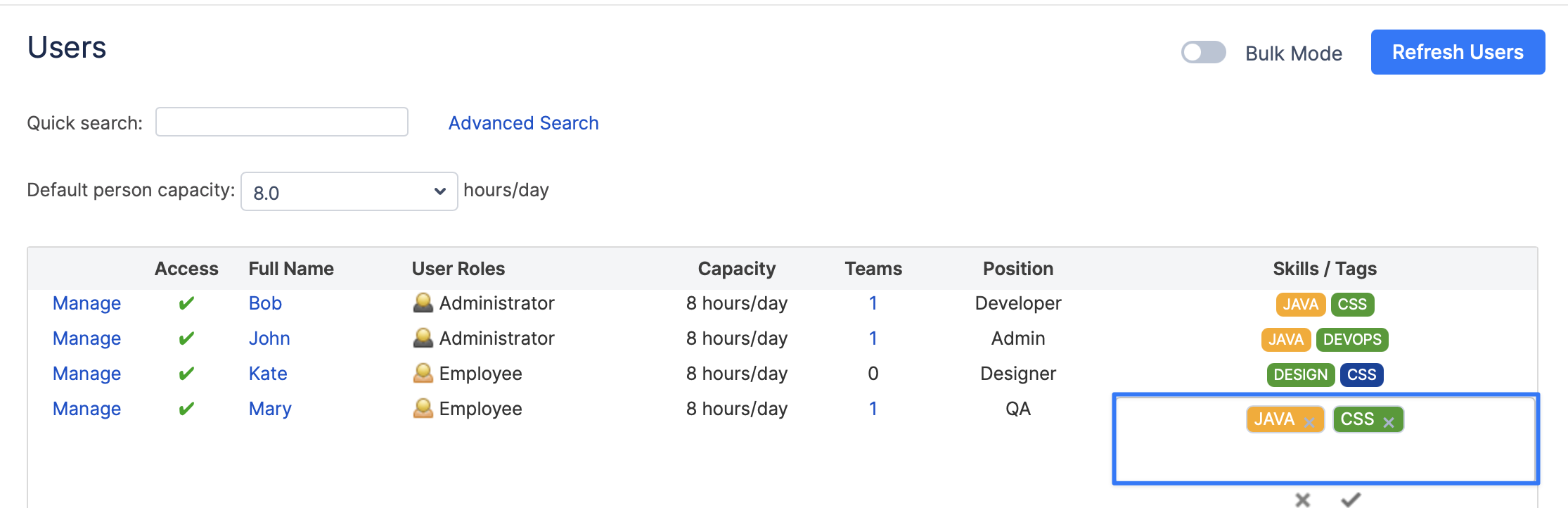
After creating your teams and assigning user roles, we recommend adding each user’s position and skills.
You can create new positions or skills directly by typing them into the corresponding field in the user profile.
What can you do with Positions & Skills?
-
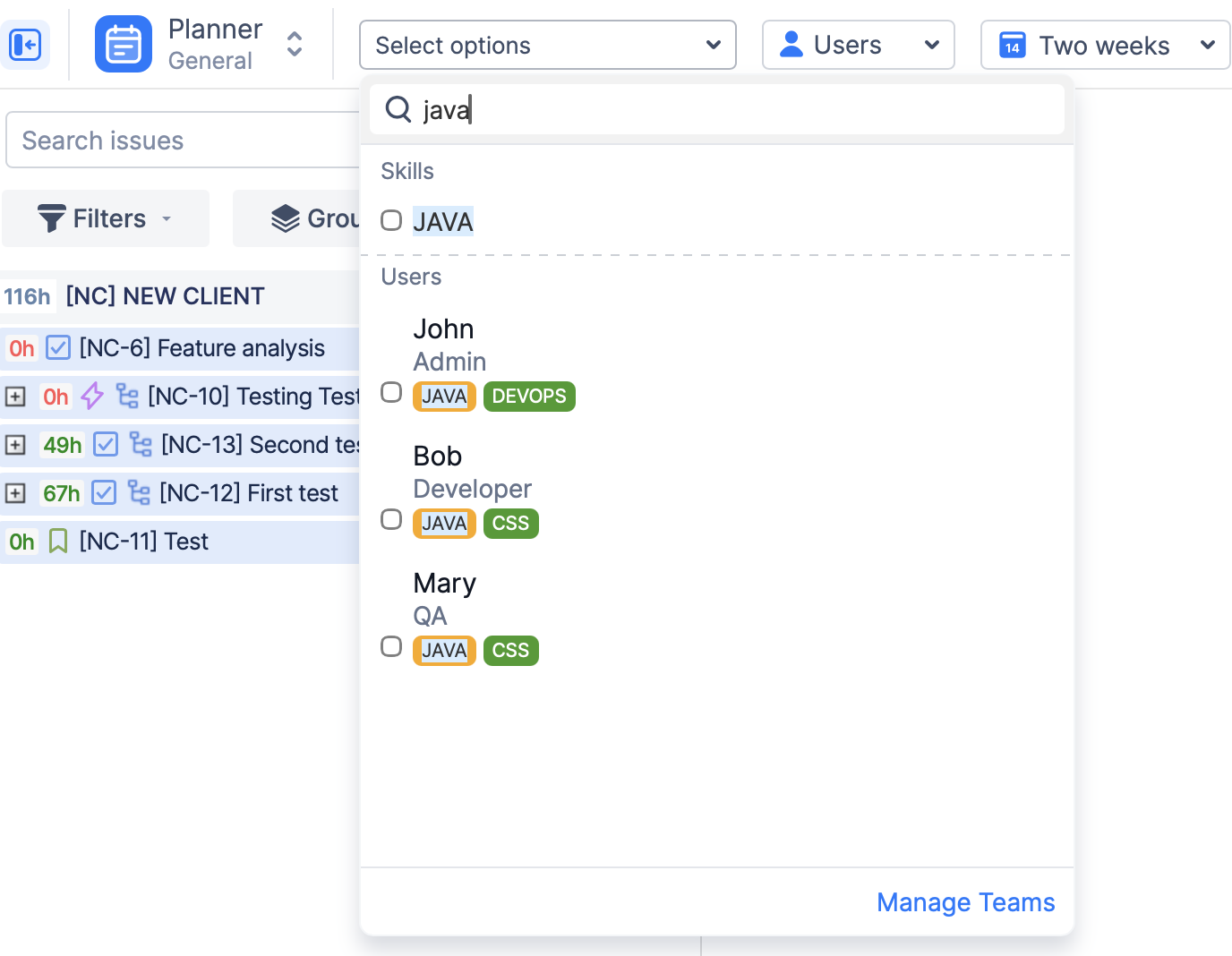
Use positions and skills to find people with a specific skill set or role. For example, you can search for users who have a certain skill when you need the right person for a task or project.
-
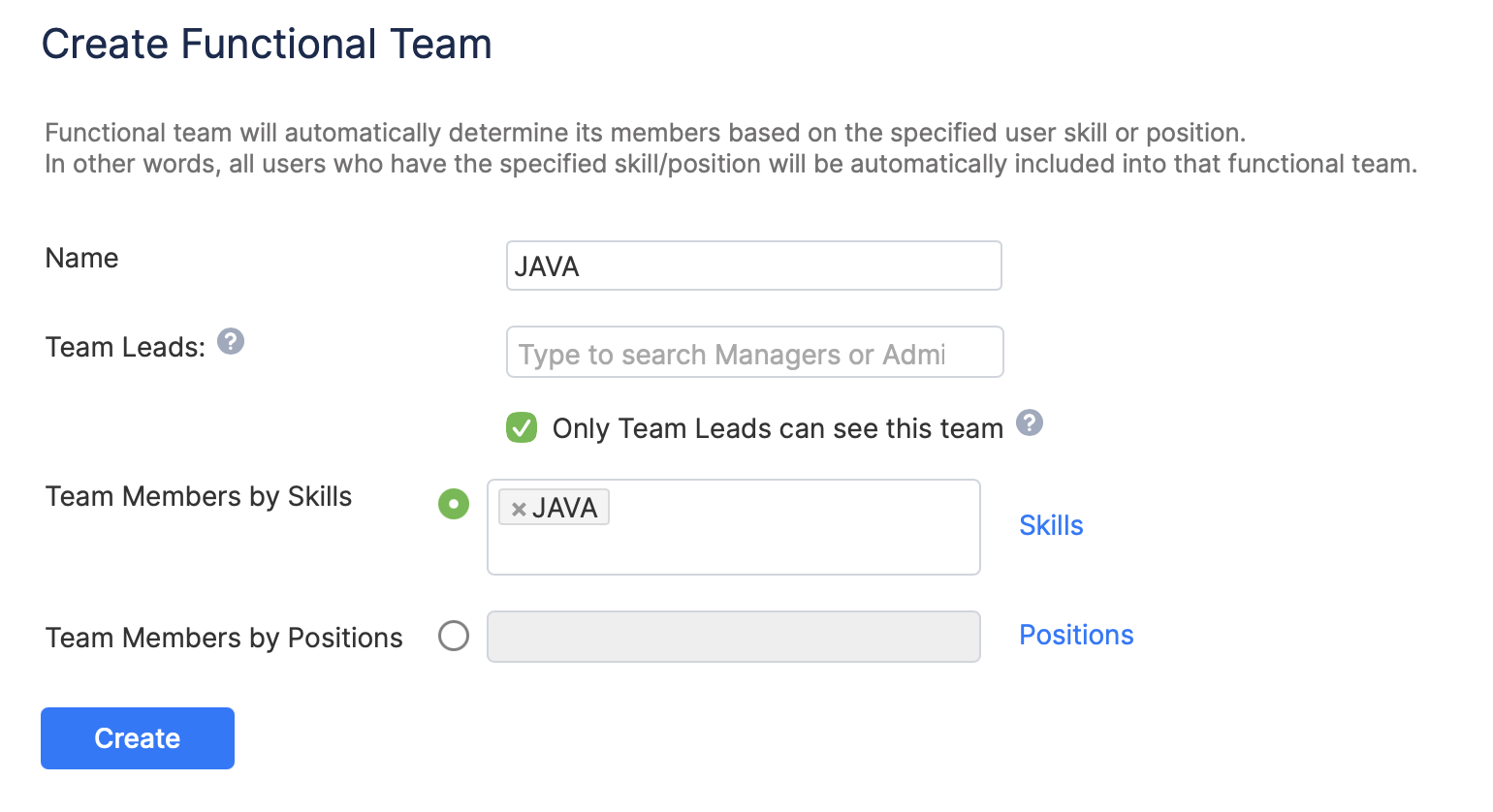
Functional Team can be generated based on skills or position. This means ActivityTimeline can automatically add users to a team when they match the required criteria.
For more details, see: Functional Team Administration
-
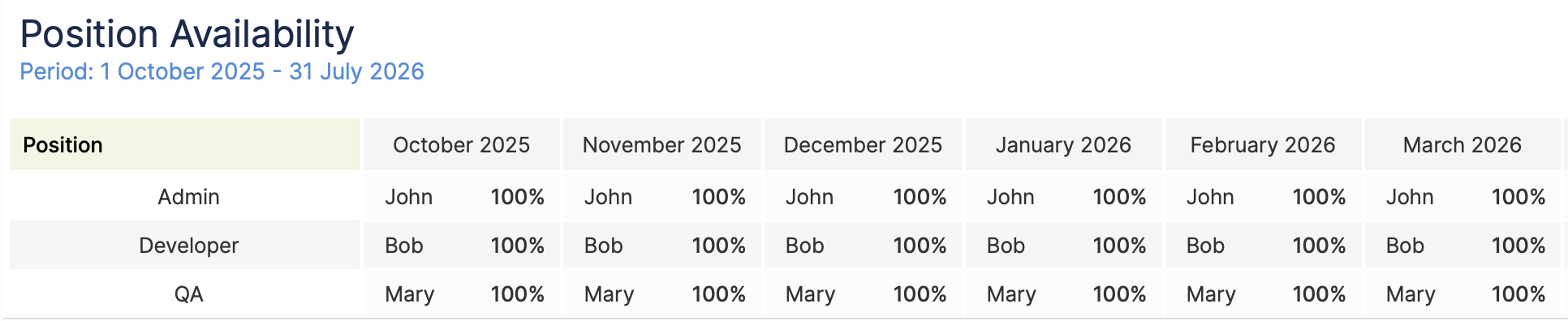
Reports can be generated based on positions or skills to help you understand when people with specific expertise are available.
This is useful when planning work that requires particular roles, qualifications, or technical skills.
-
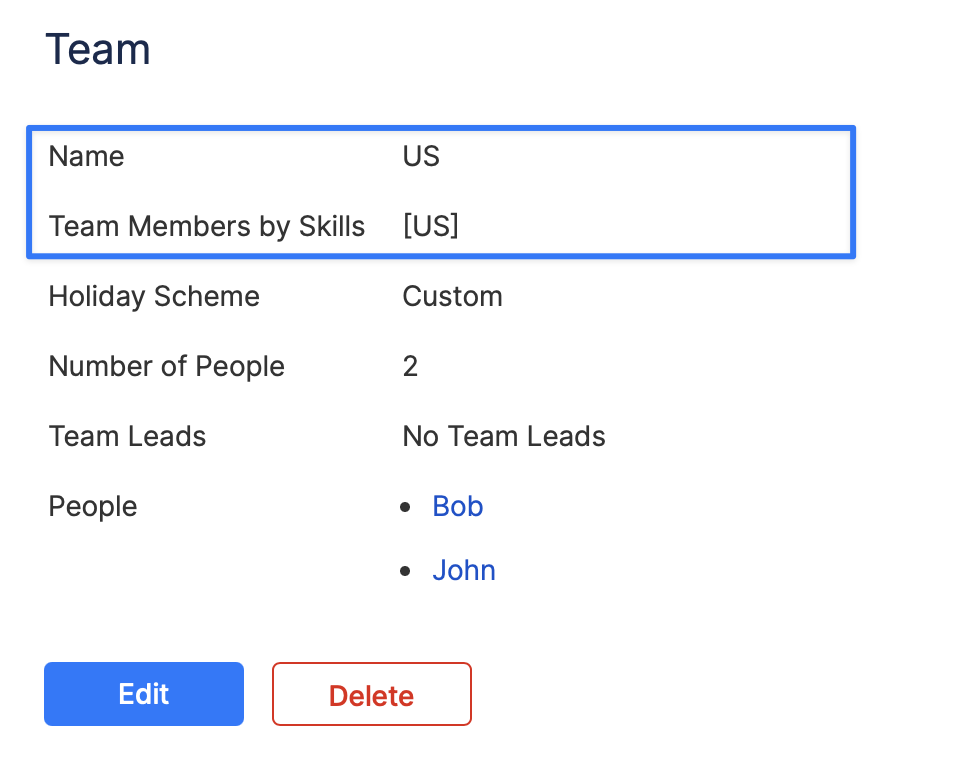
You can also use Skills as location tags. For example, if your team is geographically distributed, you can add locations such as US, EU as tags.
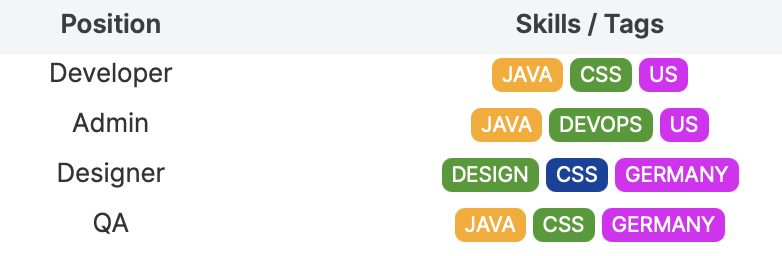
You can then create ‘location-based’ teams by using ‘Functional Team’ feature:
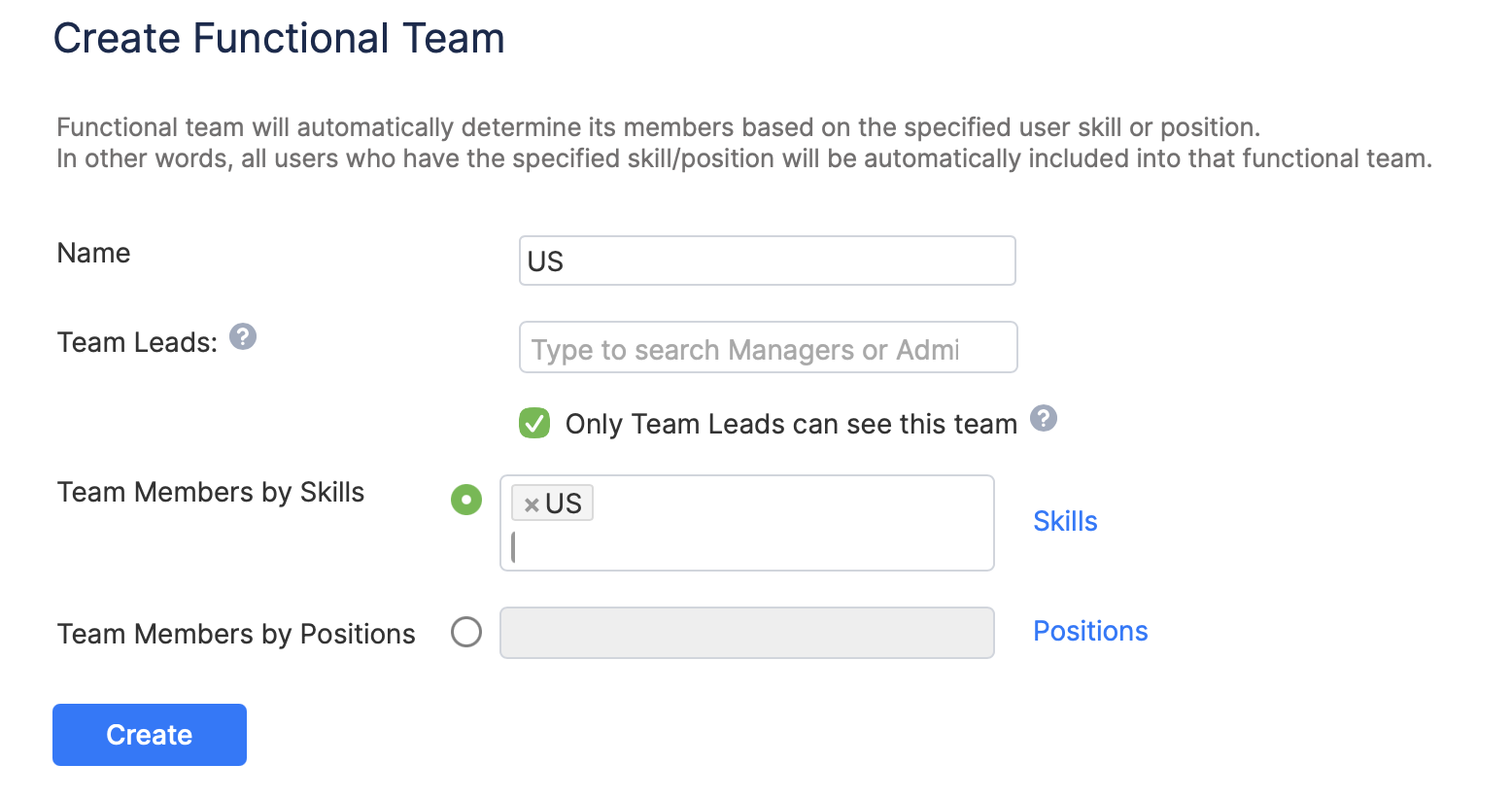
System added everyone with ‘US’ location tag to the US team:
Manage Users in Bulk
If you’re configuring a large number of users, ActivityTimeline provides several ways to simplify administration.
Using Configuration → Users → Bulk Mode, you can update:
-
roles,
-
positions,
-
skills,
-
and other user properties
for multiple users simultaneously.
If your organization already manages users through Jira groups, you can also use Group Mapping to automatically assign users skills, positions and etc.
What Happens Next
Once user roles, positions, and skills are configured, you can continue to the next setup step: Map Custom Fields