
In ActivityTimeline, user capacity defines how much time a user or resource is available for work. Capacity is used to calculate workload, availability, overbooking, and resource utilization across the Planner and reports.
ActivityTimeline provides several ways to configure user capacity depending on how your organization manages working schedules.
Default Capacity
Default (Global) Capacity defines the default number of working hours for a regular workday.
This value is used when users follow the same working schedule across all working days, for example, 8 hours per day from Monday to Friday.
Standard Capacity can be configured globally and applied to users by default.
To configure Standard Capacity, go to:
Configuration → Users → Default person capacity
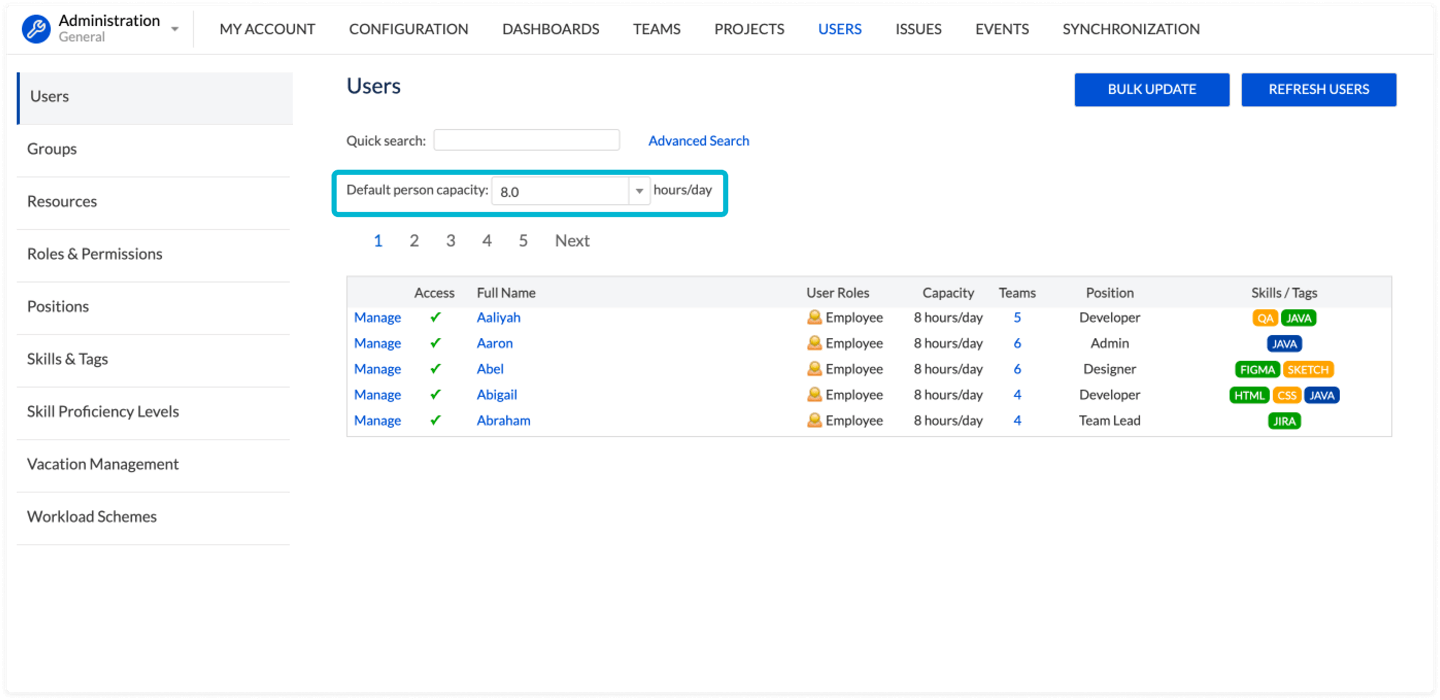
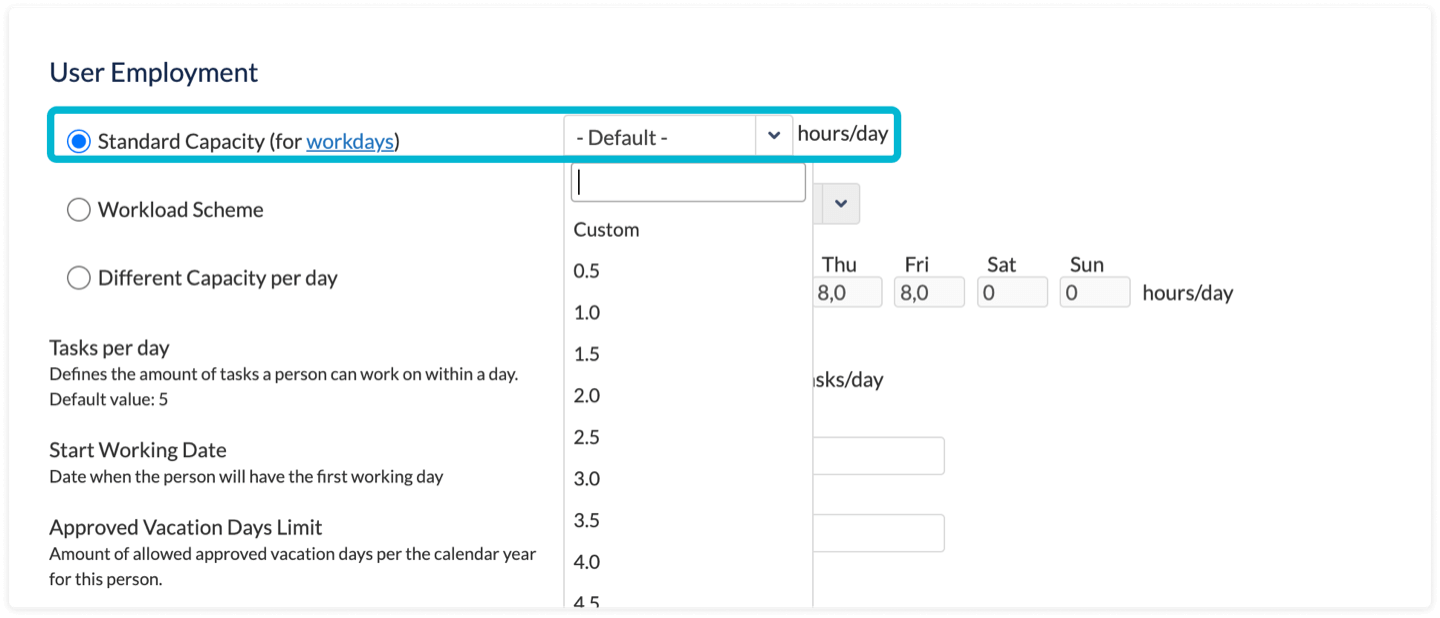
Individual Standard Capacity
If a specific user has a different working schedule, you can adjust their capacity individually.
This is useful for part-time employees, contractors, or users with reduced availability.
To configure individual capacity:
-
Go to Configuration → Users.
-
Find the required user.
-
Click Manage next to the user.
-
Update the user’s capacity settings.
Individual Custom Capacity by Day of the Week
You can also configure a custom capacity plan for different days of the week, so users can follow different working schedules.
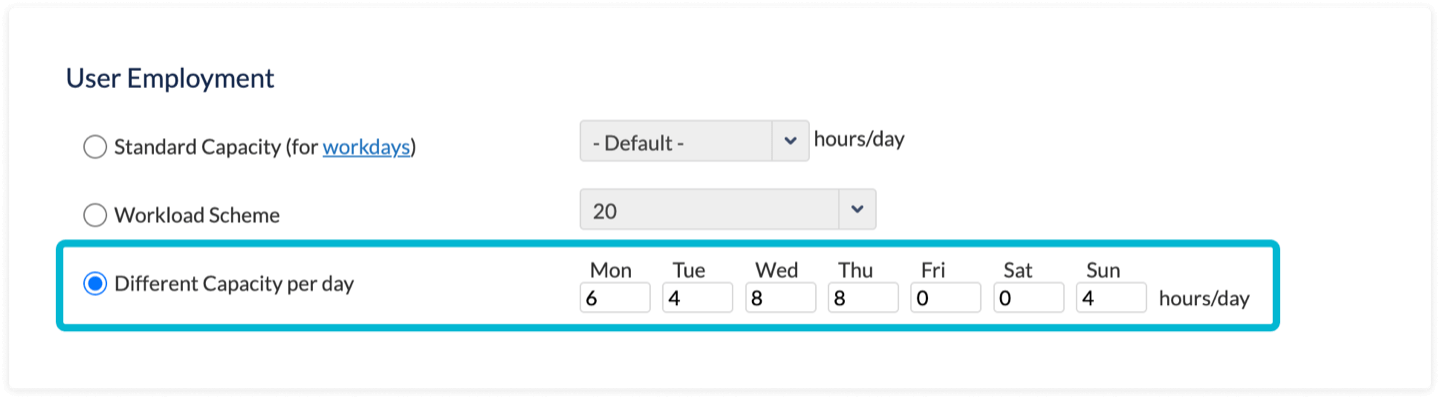
For advanced weekly schedules, you can use Workload Schemes.
Workload Scheme
This is useful when different teams, locations, or countries follow different working schedules.
For detailed instructions on creating and managing Workload Schemes, please refer to the related Workload Scheme documentation page.
Why Capacity Settings Matter
Capacity settings help managers understand how much work can realistically be planned for each user or resource.
Accurate capacity configuration helps prevent overbooking, improves workload forecasting, and gives teams a clearer view of available working time.