
ActivityTimeline synchronizes Jira projects, issues, and worklogs to keep your planning and time tracking data up to date with Jira.
For active projects, changes to Jira issues and worklogs are synchronized automatically. By default, ActivityTimeline checks for updates every 10 minutes. If you need to see recent changes sooner, click Refresh in the top-right corner of the Planner.
Project synchronization involves a few separate processes:
-
Project list synchronization — detects new Jira projects and adds them to the Projects page.
-
Project activation — determines which Jira projects ActivityTimeline should synchronize and use.
-
Issue and worklog synchronization — loads and keeps project issues and worklogs up to date.
If a project is deactivated, ActivityTimeline stops synchronizing new changes from Jira, while previously synchronized data remains available until it is manually removed.
Manage Project Synchronization
To review or manage your projects, go to:
Configuration → Projects
From this page, you can activate or deactivate projects, manually synchronize issues and worklogs, and refresh the Jira project list.
Refreshing the Project List
When a new project is created in Jira, it may not appear in ActivityTimeline immediately.
New Jira projects are added to ActivityTimeline during the scheduled project list synchronization. Depending on your configuration, this synchronization may run daily, weekly.
If you need the new Jira project to appear in ActivityTimeline sooner, you can refresh the project list manually.
To do this:
-
Go to Configuration → Projects.
-
Click Refresh Projects.
-
Wait until the project list synchronization is completed.
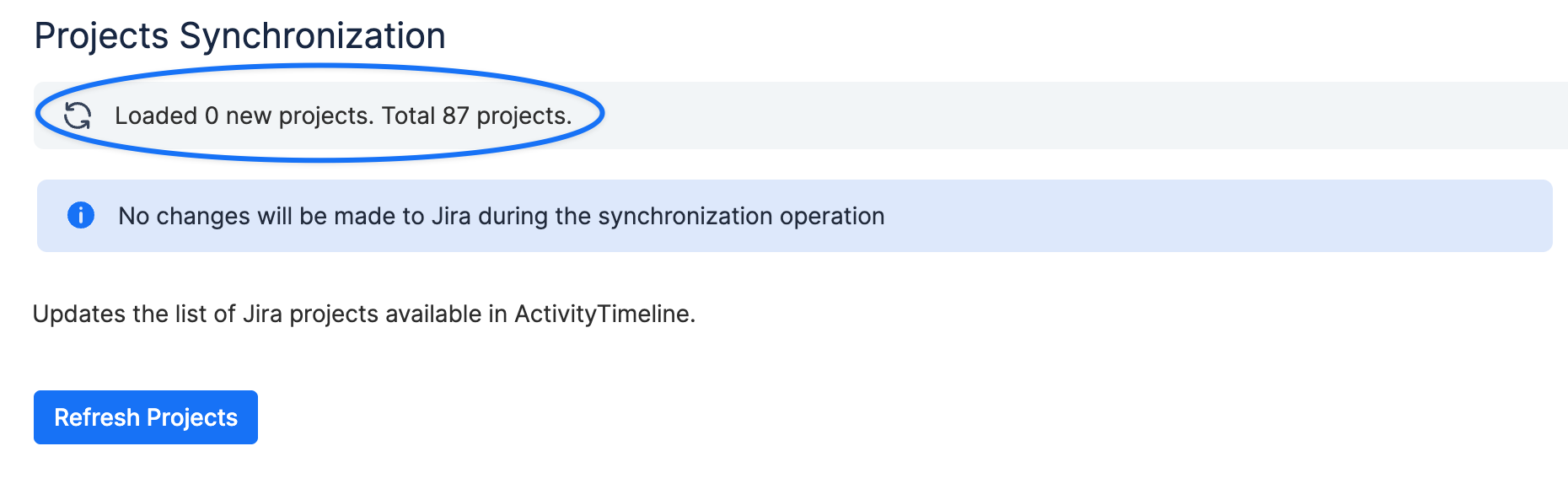
Once the project appears on the Projects page, you can activate it in ActivityTimeline.
Activating a Project
Activating a project makes it available for synchronization and management in ActivityTimeline.
However, activating a project does not automatically synchronize its Jira issues or worklogs.
After activating a project, you need to manually run the synchronization for project data.
Recommended order:
-
Activate the project.
-
Click Sync Tickets next to the project name.
-
Wait until the ticket synchronization is completed.
-
Click Sync Worklogs next to the project name.
-
Wait until the worklog synchronization is completed.

This ensures that both Jira issues and related worklogs are loaded correctly into ActivityTimeline.
Deactivating a Project
If a project is set to Inactive, ActivityTimeline will stop synchronizing updates from Jira for that project.
Inactive projects are not available for regular planning and management inside ActivityTimeline. This is useful when you want to exclude archived, test, sandbox, or irrelevant Jira projects from planning and reporting.
Please note that deactivating a project does not remove previously synchronized issues or worklogs from ActivityTimeline. This data remains stored in ActivityTimeline cache.
If you want to remove previously synchronized data for a project, use the remove options on the Projects page:
-
Remove Tickets — removes synchronized issues from ActivityTimeline cache.
-
Remove Worklogs — removes synchronized worklogs from ActivityTimeline cache.

Scheduled Project List Synchronization
ActivityTimeline can periodically synchronize the list of Jira projects to keep the Projects page up to date.
To configure this:
-
Go to Configuration → Synchronization → Refresh Projects.
-
Click Refresh Projects.
-
Here you can also configure how often ActivityTimeline should refresh the project list from Jira and set default state of new projects.
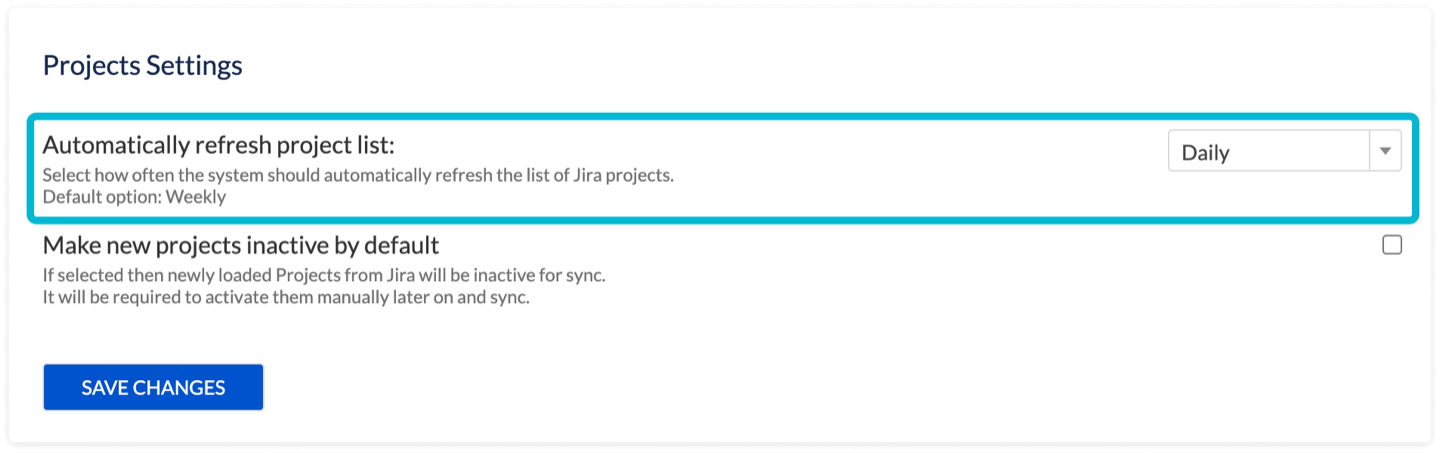
This helps ensure that newly created Jira projects appear in ActivityTimeline without requiring manual checks unless necessary.
Troubleshooting: Project Is Synced, but Issues Are Not Loaded
If a project is synchronized but no issues are loaded, ActivityTimeline may not have the required Browse Projects permission in Jira.
For Data Center instances:
-
Go to ActivityTimeline → Configuration → Technical Info.
-
Check which user is listed as the Sync User.
-
In Jira, go to Project Settings → Permissions.
-
Verify that the Sync User has the Browse Projects permission for the affected project.
-
If the permission is missing, grant the Sync User the required permission.
-
Return to ActivityTimeline → Configuration → Projects.
-
Click Sync Tickets next to the affected project to trigger a manual synchronization.
For Cloud instances:
-
In Jira, go to Project Settings → Permissions.
-
Make sure the atlassian-addons-project-access group has the Browse Projects permission.
-
Return to ActivityTimeline → Configuration → Projects.
-
Click Sync Tickets next to the affected project to trigger a manual synchronization.
After the required permissions are updated and the project is synchronized again, issues from the project should appear in ActivityTimeline.