
In ActivityTimeline v8.2.0+ , you can manage not only Jira users but also custom resources that do not have to represent real Jira users.
Resources can be used to plan and manage non-human or temporary planning entities, such as:
-
Meeting rooms
-
Equipment
-
Devices
-
Shared assets
-
Potential new employees
-
Open positions
-
Additional capacity needs
This is useful when you need to reserve availability for something that is not an actual Jira user but still needs to be included in planning.
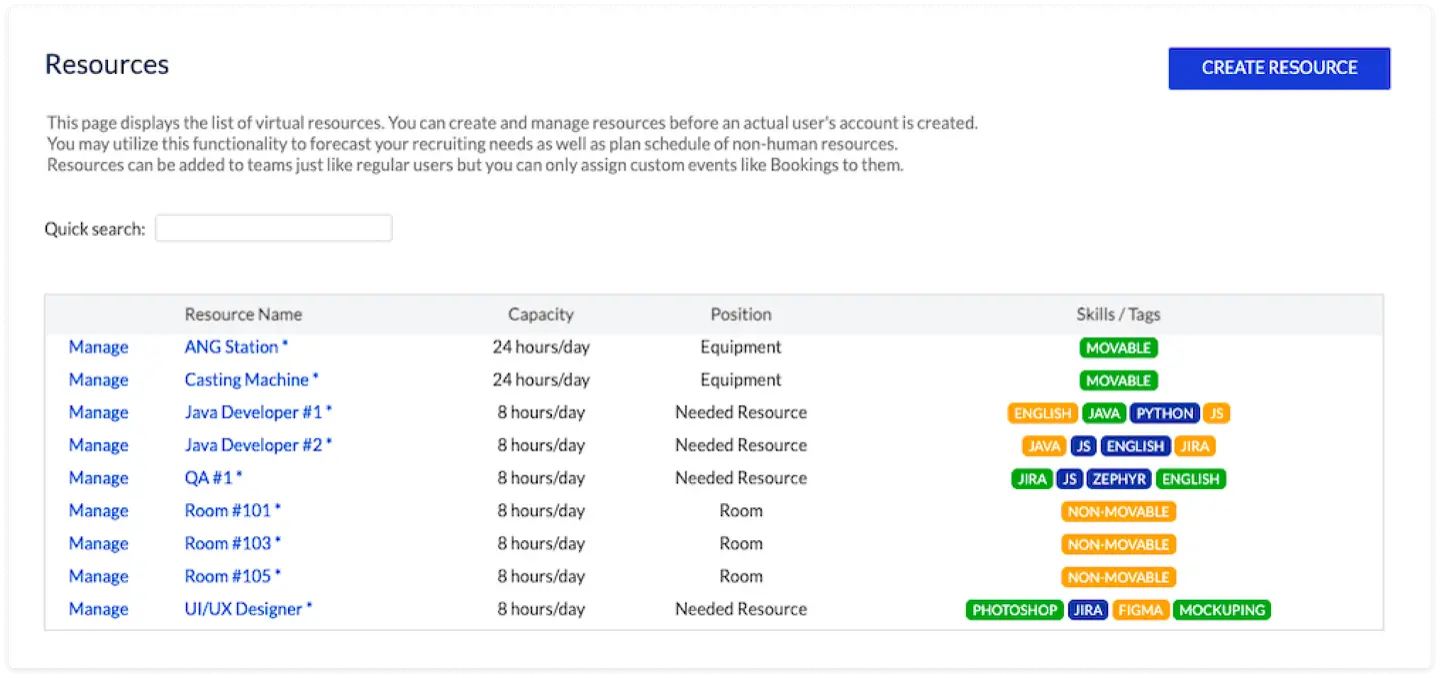
Creating and Managing Resources
To create a resource, go to:
ActivityTimeline Configuration → Users → Resources → Create Resource
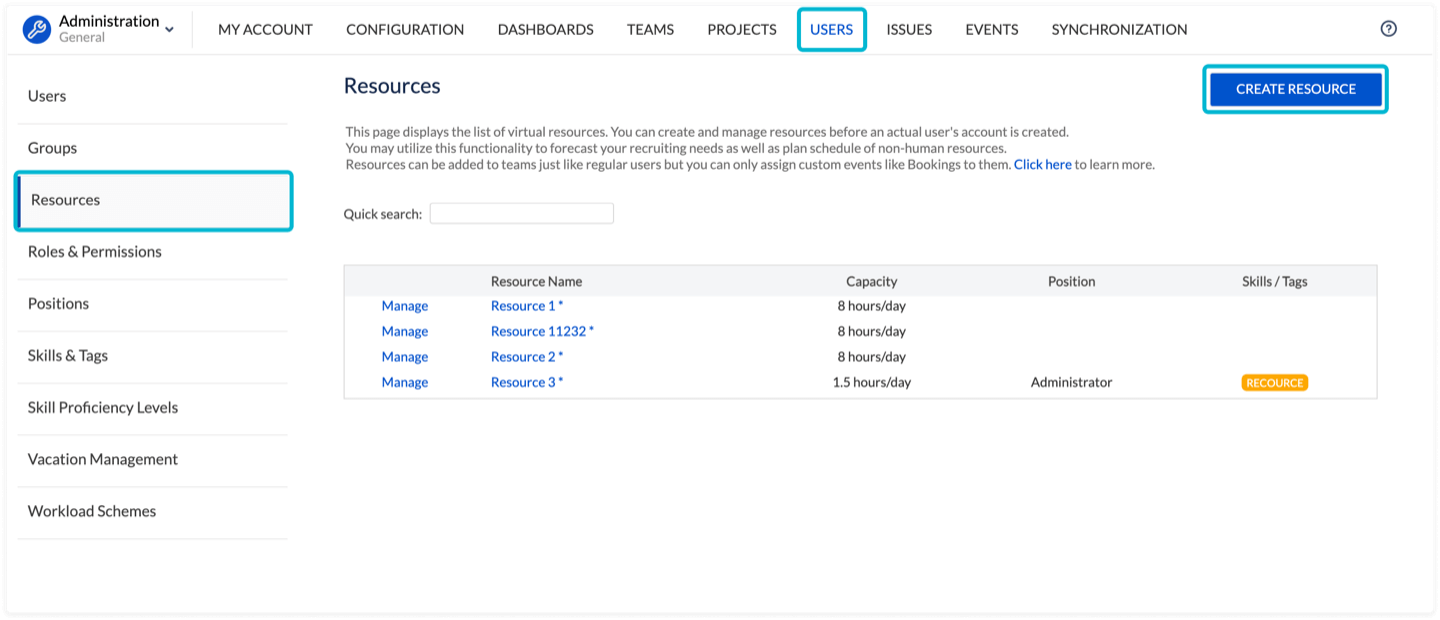
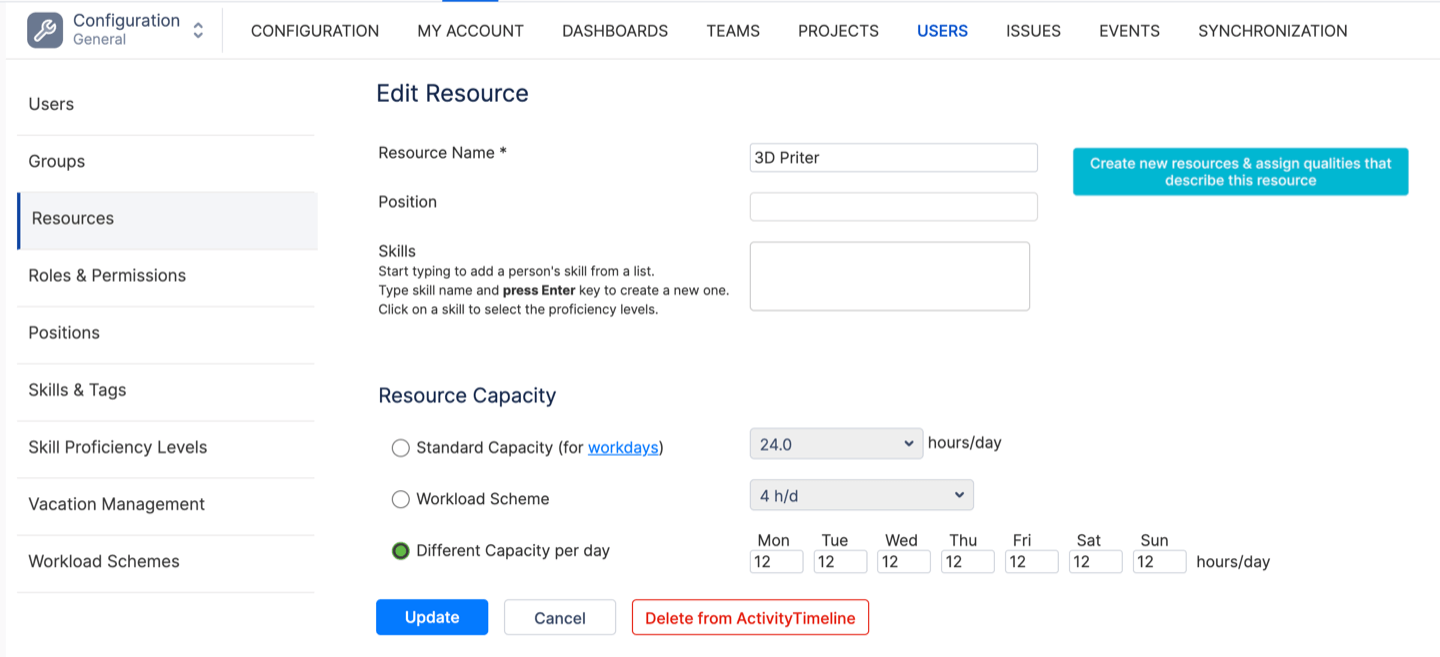
When creating a resource, you can define its:
-
Name
-
Position
-
Skills& Tags
-
Capacity
These attributes help describe the resource and make it easier to find, group, and plan.
For example, the Position can represent the resource type, such as Equipment, Meeting Room, or Potential Employee. Skills and tags can be used to describe additional qualities or requirements.
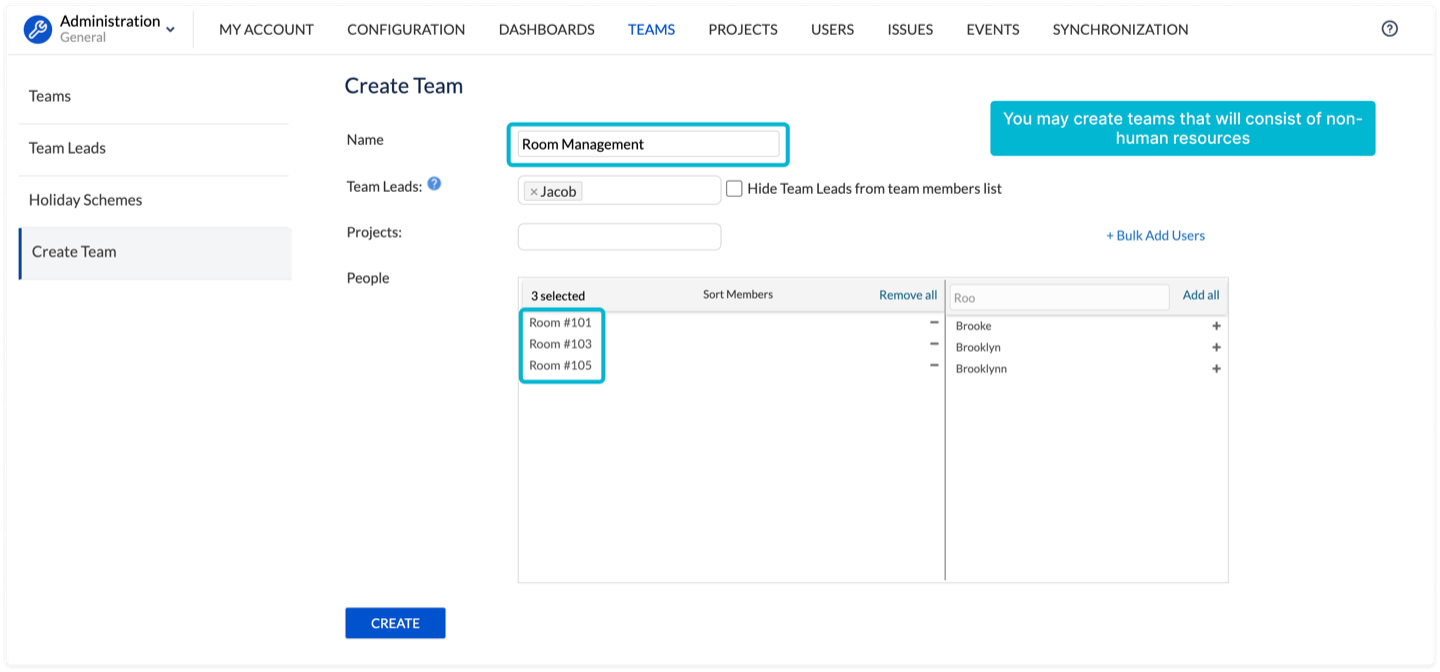
Resource Teams
Resources can also be organized into teams.
This allows you to display and manage them on the Planner in the same way as other planning entities.
Team of Potential Employees
Resources can be used to represent potential new employees or roles that still need to be hired.
For example, if you know that a future project will require additional developers, designers, or QA engineers, you can create resources for those future roles and schedule work for them in advance.
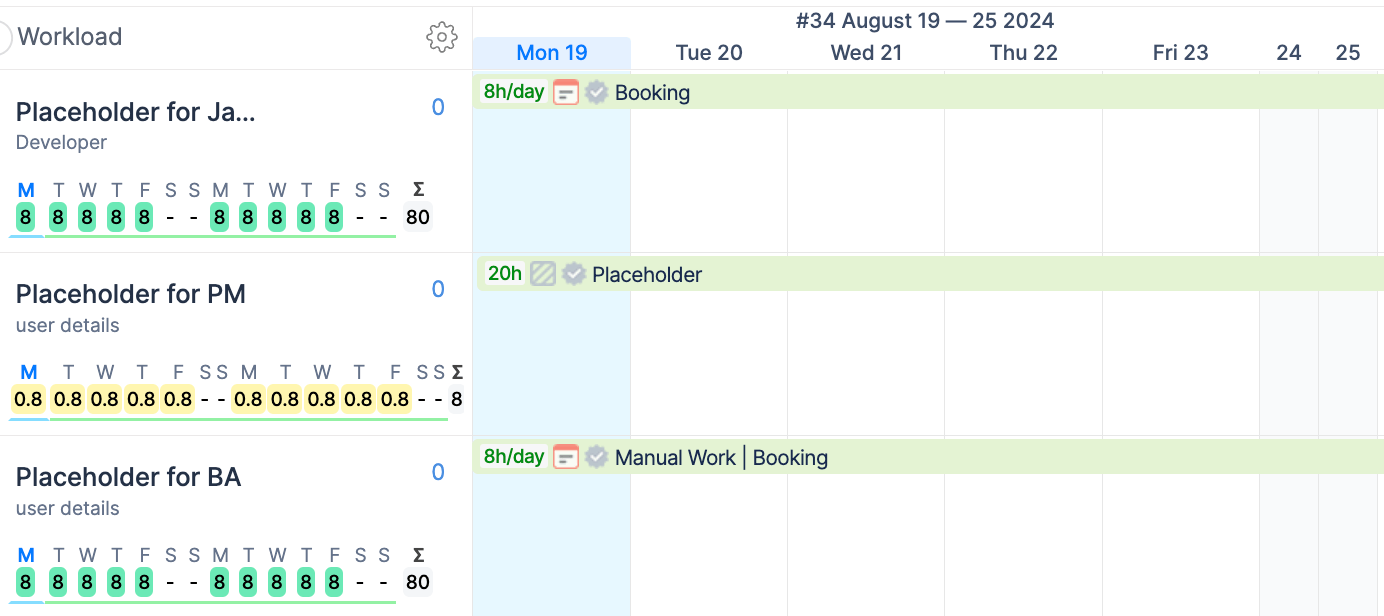
Once the actual people are hired, you can reassign all planned tasks from the resource to the real user.
This helps teams plan future capacity before the hiring process is complete.
Resources and Holiday Schemes
Resources can also be included in Holiday Schemes.
A Holiday Scheme can be applied to a resource either:
-
Through a team the resource belongs to.
-
Directly to the individual resource.
This is useful when resources should follow the same non-working days as a specific team, location, or organizational unit.
Resource Limits
The number of resources you can create is limited by the number of paid users in your ActivityTimeline instance.
For example, if you have 130 active Jira users, you can create and manage up to 130 custom resources in ActivityTimeline.
Planning Jira Tasks for Resources
Please note that Jira issues can be assigned only to Jira users or teams in ActivityTimeline.
Resources are not Jira users, so they cannot be set as Jira issue assignees.
This limitation exists because Jira task assignment depends on Jira users and Jira permissions. Since ActivityTimeline resources are created only inside ActivityTimeline and do not exist as users in Jira, Jira issues cannot be assigned to them directly.
If you need to plan Jira-related work for a resource, we recommend using a Placeholder as a workaround. You can create a Placeholder based on the Jira task and assign it to the resource in ActivityTimeline.
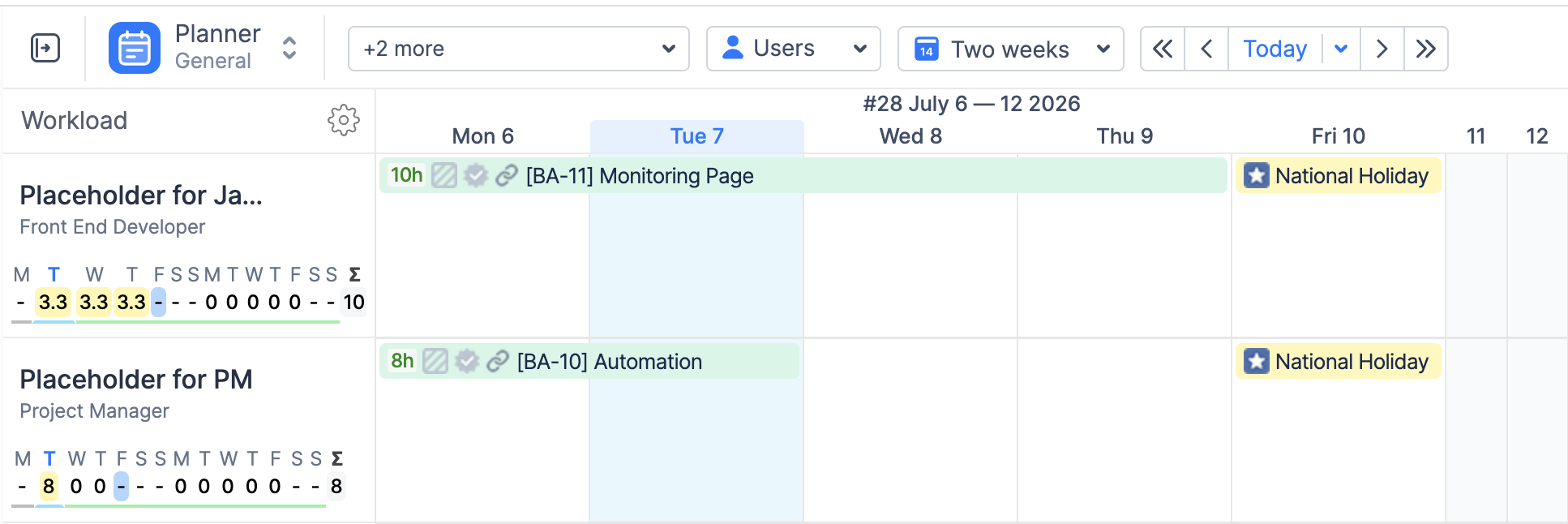
This allows you to reserve the resource’s capacity for work related to the Jira task while keeping the original Jira issue assigned to a real Jira user or team.
For more information about using Placeholders, please refer to the related documentation page: Placeholder Custom Event