
ActivityTimeline provides tools to manage employee vacation limits and ensure that leave policies are followed across the organization.
Administrators can define how many vacation days employees are entitled to and prevent vacation overbooking beyond approved limits.
All settings described on this page apply specifically to the “Vacation” event type in ActivityTimeline.
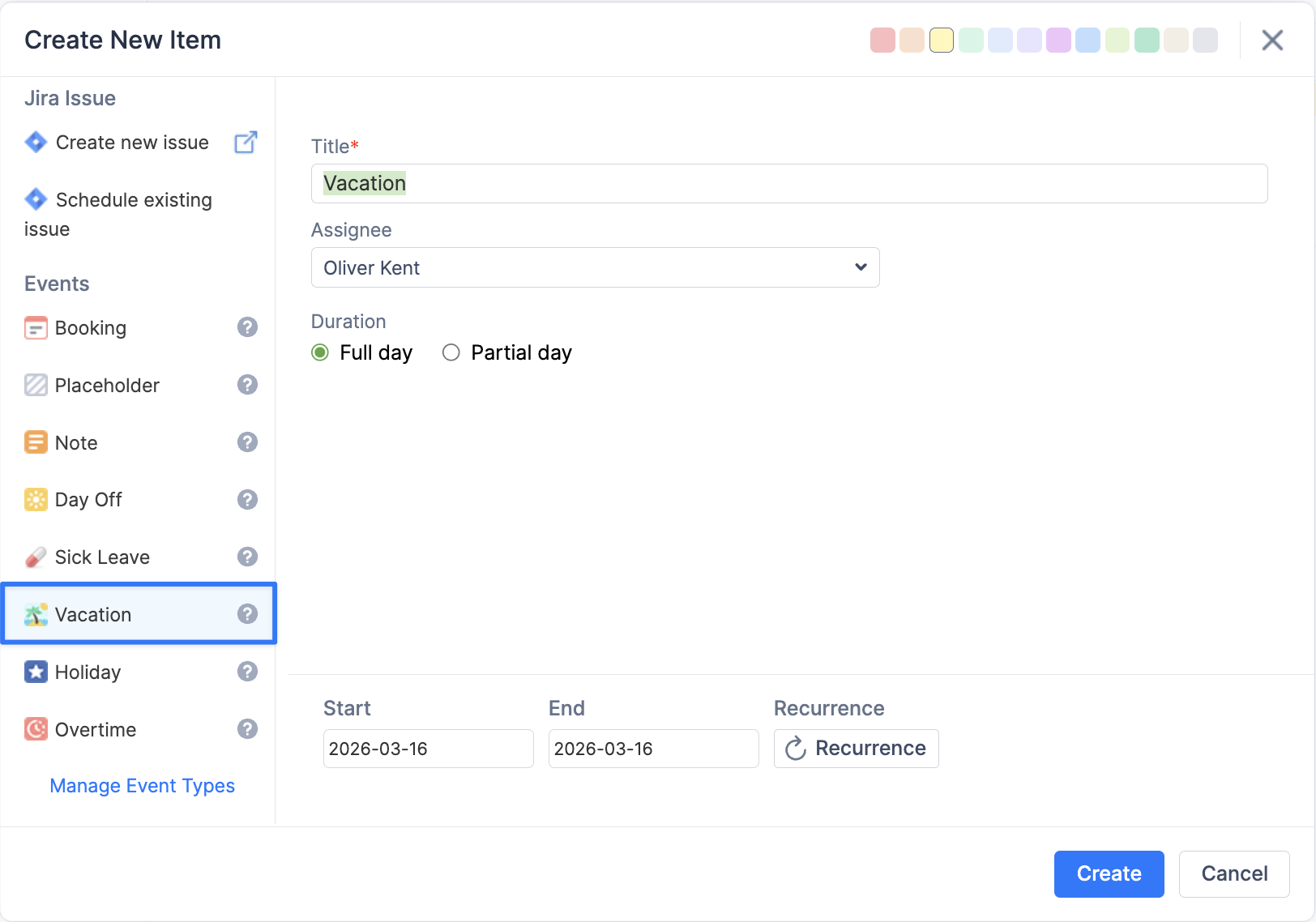
Most of the settings are available in ActivityTimeline → Configuration → Users → Vacation Management tab.
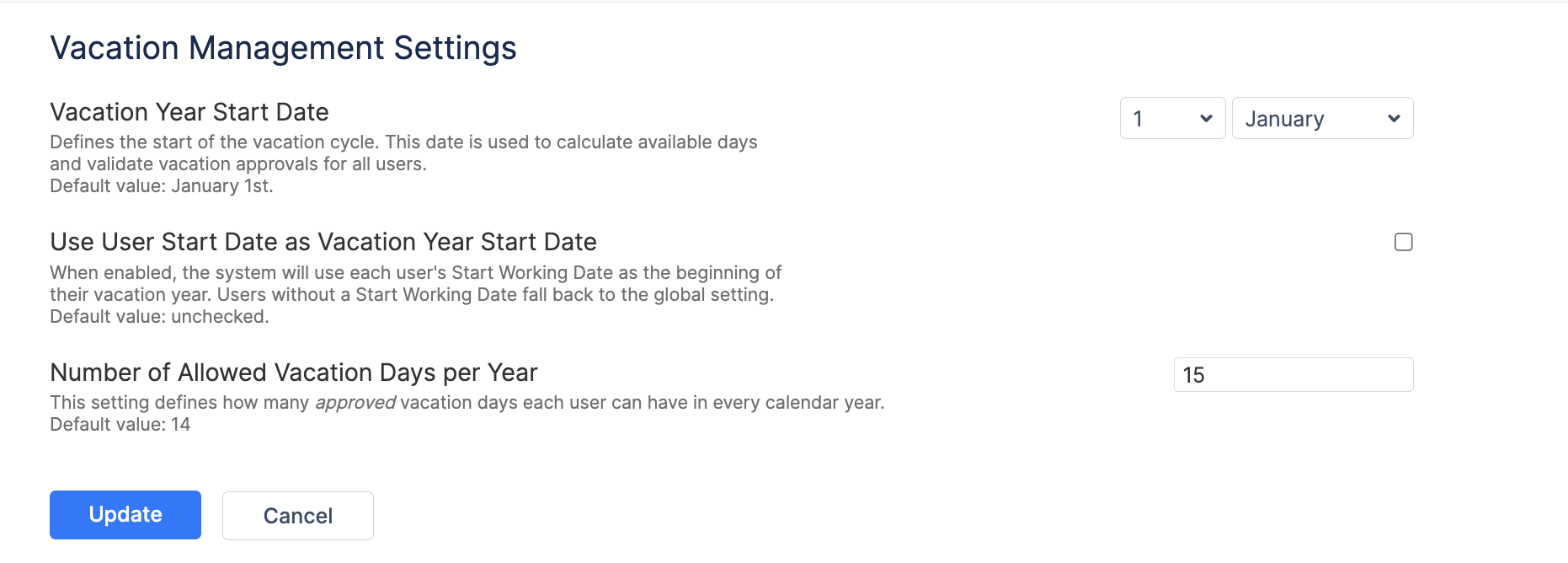
Setting Vacation Allowances
Vacation allowances define how many days an employee can take off within a year.
These limits can be configured in two ways, depending on your organization’s policies.
Global Settings (Organization-Wide)
You can define a standard number of vacation days that applies to all employees in the setting ‘Number of Allowed Vacation Days per Year’. This approach is suitable when leave policies are consistent across the organization.
Individual Settings (Per Employee)
If some employees have different leave entitlements, their vacation limits can be adjusted individually.
To configure individual limits navigate to Configuration → Users → Click ‘Manage’ near the correct user → Update ‘Approved Vacation Days Limit’
Individual settings are useful when vacation policies depend on seniority, employment agreements or country-specific regulations.
Bulk Updates of Vacation Limit
Vacation allowances can be updated for multiple employees at once using Bulk Mode on User Management page.
How Vacation Limits Work
Vacation remaining balances are updated only after leave is approved.
Step 1 — Vacation Request
A vacation can be created by:
-
An employee creating vacation event on his timeline
-
A manager creating a vacation on behalf of an employee

At this stage, the vacation is considered pending and does not yet affect the employee’s remaining allowance.
Step 2 — Manager Approval
A manager reviews the pending vacation and either approves, leaves unapproved or deletes it.
Only approved vacations are counted toward the employee’s yearly limit used.
Step 3 — Balance Update and Visibility
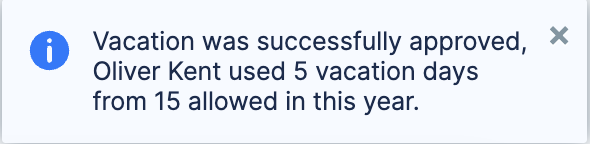
Once approved the employee’s remaining vacation balance is updated automatically and the approved vacation appears in reports. This ensures vacation limits are calculated based only on confirmed leave, preventing planning inaccuracies.
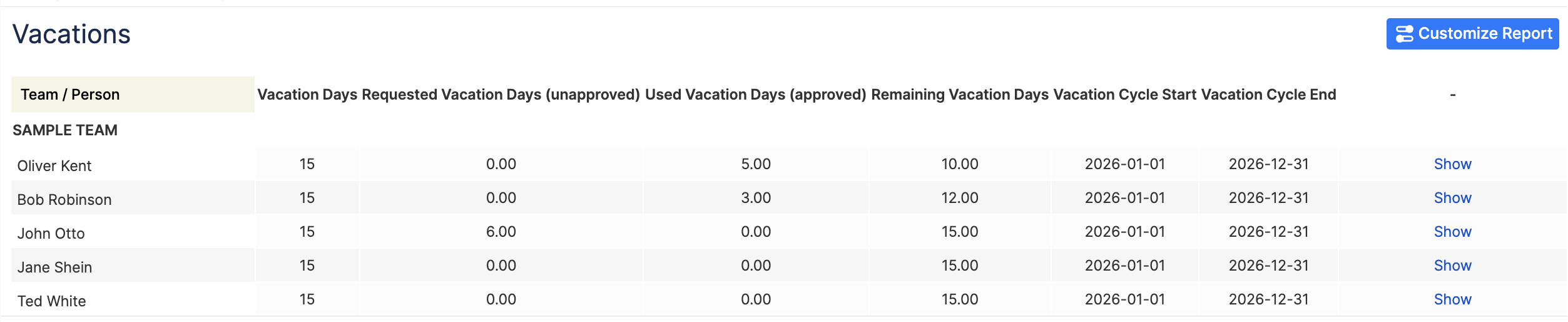
Vacation Cycle Management
Vacation allowances are calculated based on a defined vacation cycle. The cycle determines when the vacation year starts for allowance calculations.
Administrators can configure vacation cycles to match organizational policies.
Organization-Wide Vacation Cycle
You can define a single vacation cycle start date that applies to all employees.
This approach is suitable when everyone follows the same annual leave calendar.
Example:
If vacation allowances reset every year in January, set January 1 as the cycle start date (Default).

Individual Vacation Cycles
If some employees follow different leave calendars, vacation cycles can be configured individually.
To enable individual vacation cycles:
-
Go to the Vacation management page.
-
Enable the option “Use User Start Date as Vacation Year Start Date.”
When this option is enabled, the system uses each employee’s Start Working Date as the beginning of their personal vacation cycle.
If an employee does not have a Start Working Date specified, the system automatically applies the global vacation cycle instead.
You can define the cycle start date for each employee under Users → Manage → User Management → Select User → Set ‘Start Working Date’
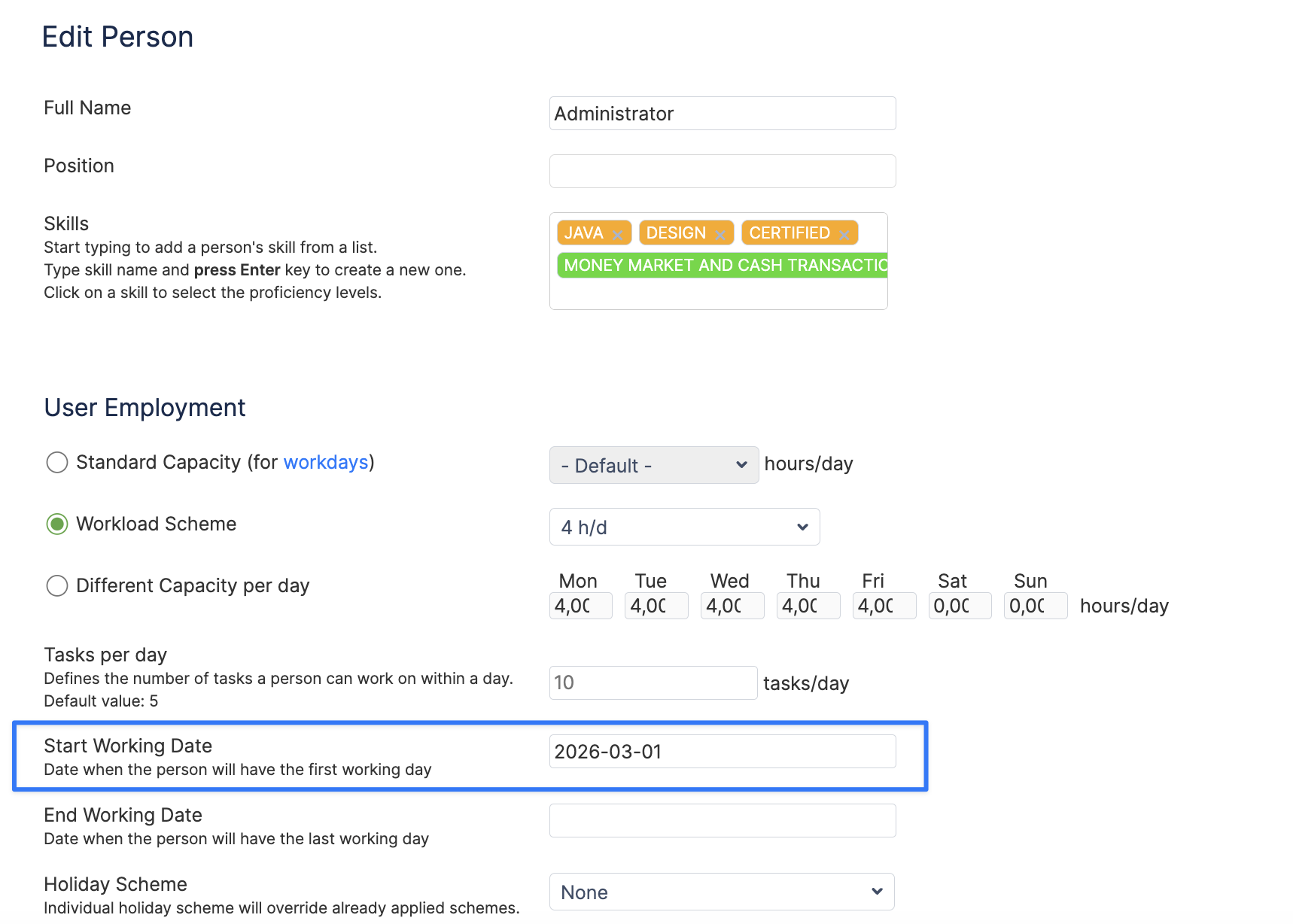
The selected date will be used as the start of that employee’s vacation year.
Each employee’s vacation allowance will then be calculated according to their assigned cycle.