The Jira Integration page allows ActivityTimeline administrators to configure how ActivityTimeline reads from and writes data back to Jira.
This page is used to map Jira fields to ActivityTimeline planning fields, so that scheduling changes can be synchronized between both systems.
To access this page, go to:
Configuration → Jira Integration
Why Field Mapping Matters
Field mapping defines which Jira fields ActivityTimeline should use for planning, assignment, estimates, hierarchy, and sprint-related data.
Depending on your configuration, ActivityTimeline can support two planning approaches:
-
Synchronized planning — ActivityTimeline uses mapped Jira fields, so changes made in ActivityTimeline can update the corresponding Jira issue fields, and Jira updates can be reflected back in ActivityTimeline.
-
Isolated planning — ActivityTimeline planning stays inside ActivityTimeline and does not update Jira planning fields.
If you want ActivityTimeline to display Jira issues automatically on the timeline based on Jira dates, you should map the relevant Jira start and end date fields. Default values are Start/Due date fields for Company-Managed projects.
If you want to plan only inside ActivityTimeline without updating Jira, you can use the No mapping option for planning fields where available.
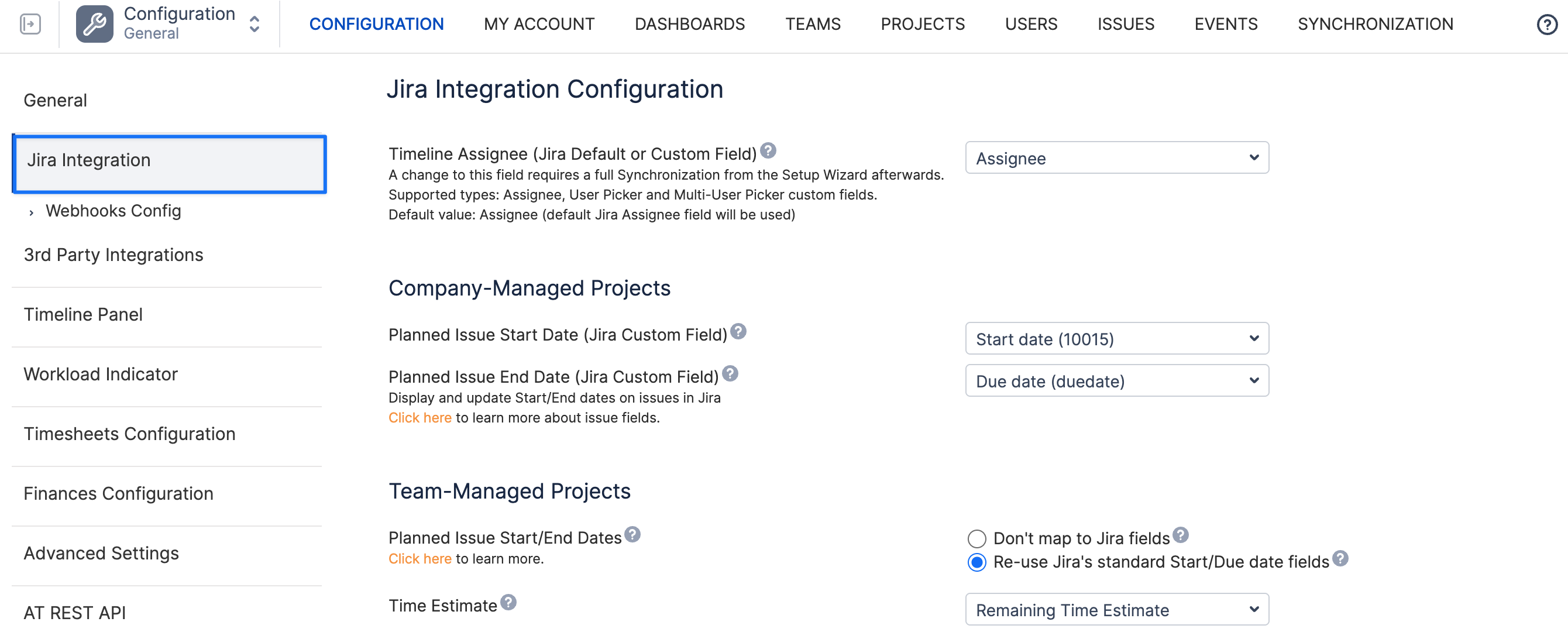
Timeline Assignee
The Timeline Assignee field defines which Jira field should be used to place issues on user timelines in ActivityTimeline.

Supported options include:
-
Assignee (Default)
-
User Picker custom fields
-
None (When None is selected, ActivityTimeline does not update any Jira field for this value. The related planning data is stored only inside ActivityTimeline)
Please note that changing the Timeline Assignee field can significantly affect how issues are displayed and synchronized in ActivityTimeline. We recommend verifying the expected behavior with the ActivityTimeline support team before changing this setting.
After changing this field, run Full Synchronization from the Setup Wizard so ActivityTimeline can re-cache issues based on the updated assignee mapping.
Please note that changing this field requires running Full Issue Synchronization.
Company-Managed Projects
For company-managed projects, administrators can configure which Jira fields should be used as ActivityTimeline planning dates. These fields define where ActivityTimeline should read and update issue start and end dates in Jira.
Default behavioir:
-
Planned Issue Start Date → Jira Start Date field
-
Planned Issue End Date → Jira Due Date field

You can also use Jira custom fields if your organization uses custom start and end date fields. Supported field types include date picker and date/time picker fields.
After changing start or end date field mapping, run a full issue synchronization so ActivityTimeline can re-cache issues using the updated configuration.
Team-Managed Projects
For team-managed projects, ActivityTimeline provides separate configuration options because Jira team-managed projects handle fields differently from company-managed projects.
For planned issue start and end dates, you can choose one of the following options:
-
Do not map to Jira fields
-
Reuse Jira’s standard Start/Due date fields

If you want ActivityTimeline planning dates to stay only inside ActivityTimeline, choose not to map them to Jira fields.
If you want planning dates to be synchronized with Jira, reuse Jira’s standard Start/Due date fields.
You can also configure which Jira estimate field should be used for planning, for example:
-
Remaining Time Estimate
-
Internal Time Estimate (Doesn’t update Jira Remaining Estimate and is stored in ActivityTimeline)
Sprint-Based Planning
ActivityTimeline can automatically display Jira issues on user timelines based on sprint start and end dates.

This is useful for teams that plan work in Jira sprints and want sprint issues to appear in ActivityTimeline without manually scheduling each task. Learn more: Displaying Issues Based on Sprint Dates
Team Field
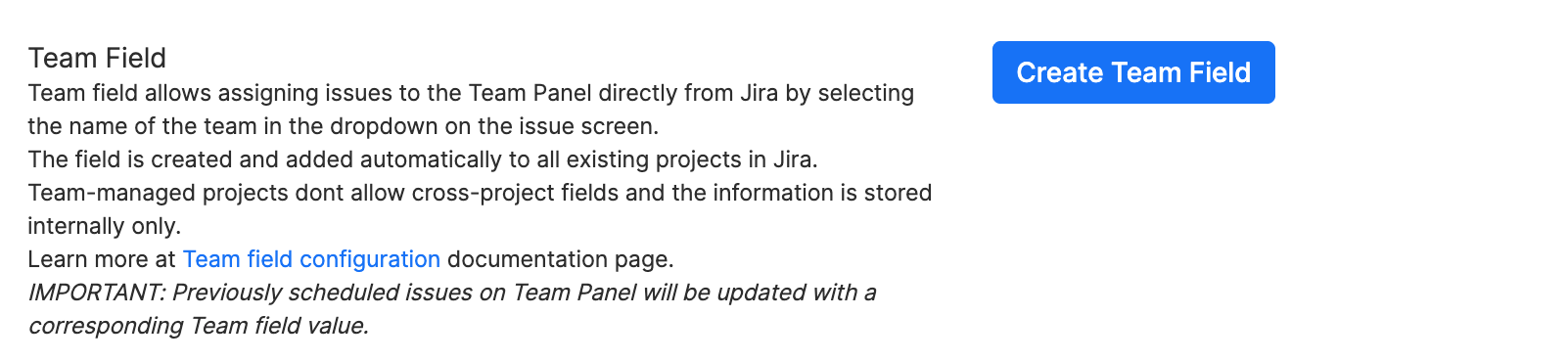
The Team Field allows issues to be assigned to the Team Panel directly from Jira.
When configured, ActivityTimeline creates or uses a Jira custom field that stores the team value. This allows users to select a team on the Jira issue screen and display the issue on the corresponding Team Panel in ActivityTimeline.
Important notes:
-
If an issue has both an assignee and a team value, the assignee takes priority, and the issue is displayed on the user’s timeline.
-
Team-managed projects dont allow cross-project fields and the information is stored internally only.
-
If the Team Field is unlinked, ActivityTimeline will no longer update this field. To create and link Team field again click on ‘Create Team Field’,
Learn more: ActivityTimeline Team Field for Jira
Issue Collaborators
The Issue Collaborators field can be used when multiple users need to work on the same Jira issue.
This field should be a Jira Multi-User Picker custom field.

When configured, ActivityTimeline can use the selected collaborators to display the issue across multiple user timelines. This is useful when work needs to be shared between several people.
If no collaborator field is selected, ActivityTimeline will use the main Timeline Assignee field.
Learn more: Split Jira Issues
Other Jira Fields
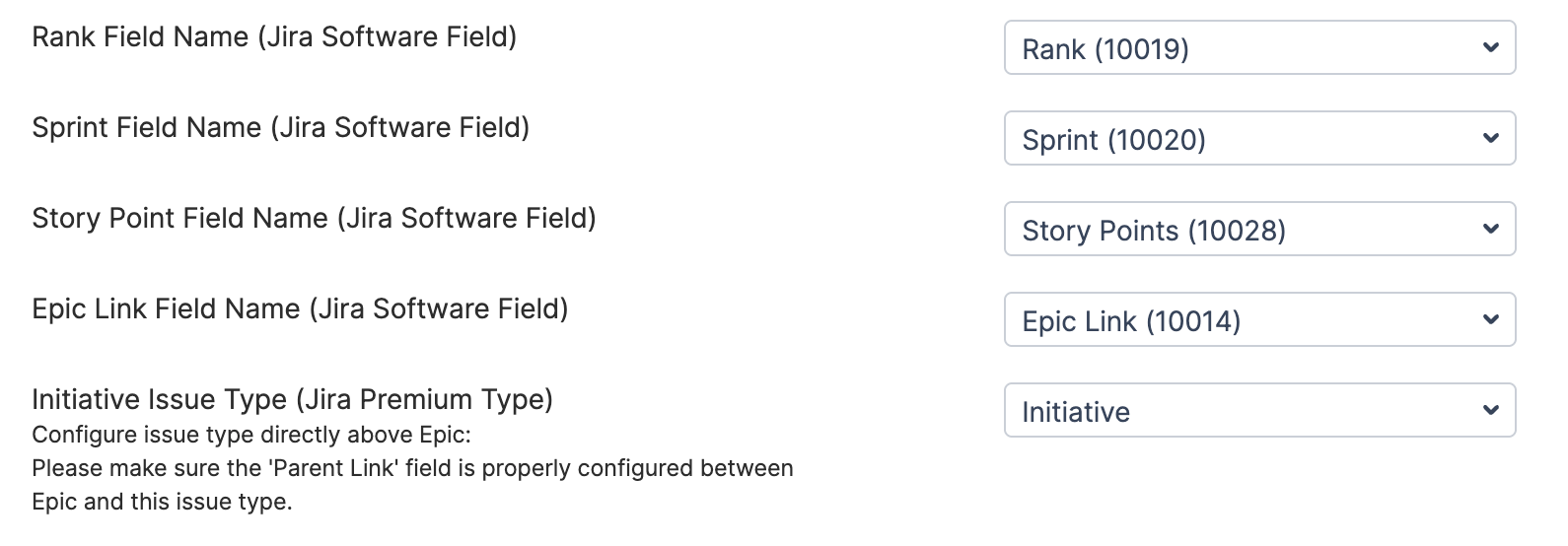
The Jira Integration page also allows administrators to map several Jira Software fields that ActivityTimeline uses for planning, sorting, hierarchy, and reporting.
These may include:
-
Rank Field
-
Sprint Field
-
Story Point Field
-
Epic Link Field
-
Initiative Issue Type (ActivityTimeline supports a hierarchy level above Epic. To enable this, you need to specify which issue type represents this level for your setup)
Please note that we do not recommend changing these field mappings without first consulting the ActivityTimeline support team. Incorrect mapping may affect issue synchronization, hierarchy display, planning logic, reports, or how issues appear in ActivityTimeline.
Saving Changes
After updating Jira Integration settings, click Update to save the configuration.
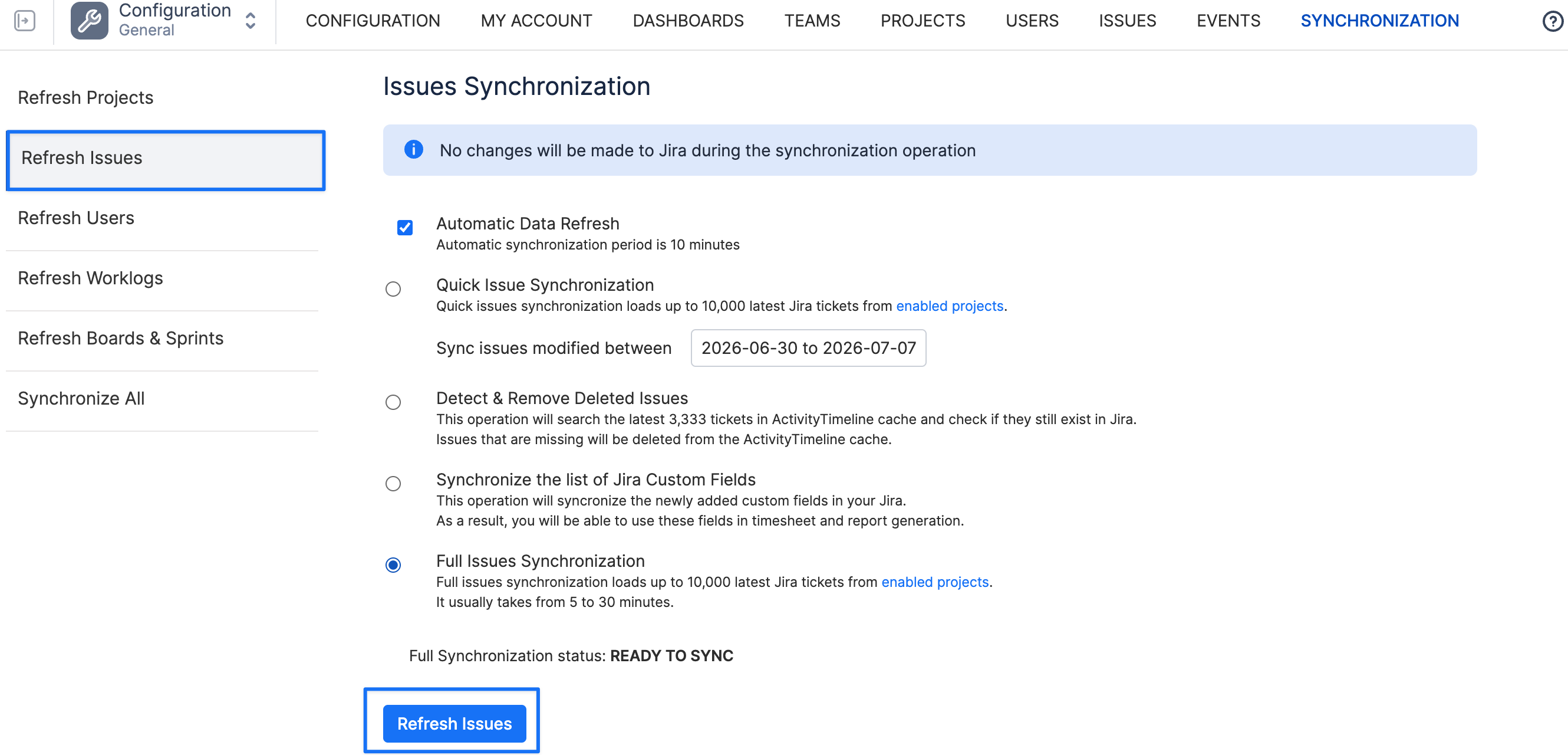
Depending on which fields were changed, you may need to run synchronization afterward.
Go to:
Synchronization → Refresh Issues → Perform Full Synchronization