
Timesheets Configuration page allows ActivityTimeline administrators to manage time tracking, worklog restrictions, additional worklog sources, and worklog categories.
The page includes the following main areas:
-
Time Tracking in ActivityTimeline
-
Worklog Restrictions
-
Additional Worklogs
-
Worklog Categories
Time Tracking
Time Tracking in ActivityTimeline
This setting allows administrators to turn Timesheets functionality on or off in ActivityTimeline.

Possible values:
-
Enabled — Timesheets functionality is available in ActivityTimeline.
-
Disabled — ActivityTimeline hides and disables timesheet-related functionality, including worklog synchronization, Timesheet reports, and the Log Work option.
Default value: Enabled
Jira Time Tracking Provider
This setting defines how worklogs are managed in Jira Cloud.

Possible values may include:
-
Jira-provided time tracking — uses Jira’s default time tracking functionality.
-
ActivityTimeline Time Tracking — enables ActivityTimeline’s advanced time tracking capabilities for Jira issues.
-
Hide Worklogs on Jira Issues — hides time tracking information from Jira issues.
Choose the option that matches how your organization wants users to log and manage time.
Worklog Restrictions
Logging Time to Closed or Resolved Issues
The Allow to log worked hours to already Closed / Resolved issues setting defines whether users can log work on issues that are already closed or resolved.

If enabled, users can log time on closed or resolved issues.
If disabled, users cannot log time on closed or resolved issues.
Default value: Enabled
Maximum Worklog Hours per Day
The Limitation of maximum allowed worklog hours per day setting defines whether ActivityTimeline should limit the number of hours users can log per day.

If enabled, users cannot log more hours than their daily capacity.
If a user needs to log more than their daily capacity for a specific day, this can be allowed by creating an Overtime event for that day.
If disabled, ActivityTimeline does not restrict the number of hours users can log per day.
Default value: Disabled
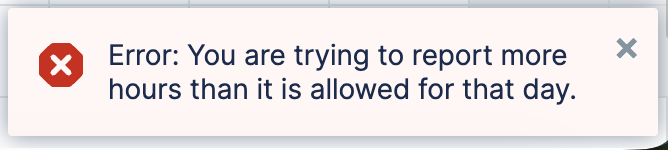
If this setting is enabled and a user tries to log more hours than their capacity allows, ActivityTimeline will display an error.
Backdate Limit for Worklogs
The Backdate Limit for Worklogs setting restricts how many days back users can create or edit Jira worklogs in ActivityTimeline.
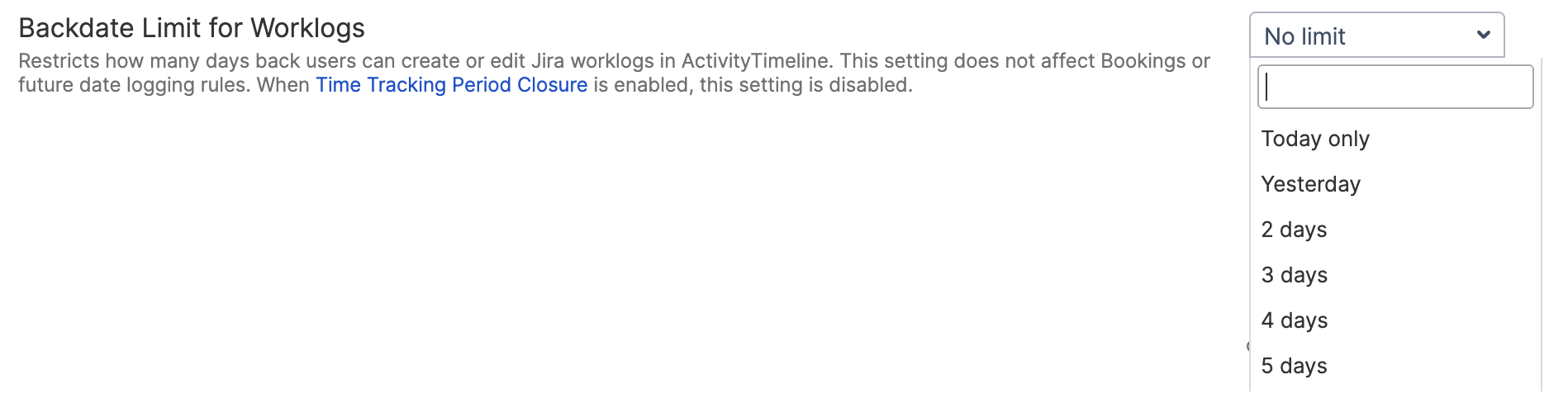
This setting applies to Jira worklogs created or edited in ActivityTimeline. It does not affect Bookings or future date logging rules.
When Time Tracking Period Closure is enabled, the Backdate Limit setting is disabled.
Mandatory Description for Worklogs
This setting defines whether the Work Description field is required when users log time in ActivityTimeline.

If enabled, users must enter a work description before saving a worklog.
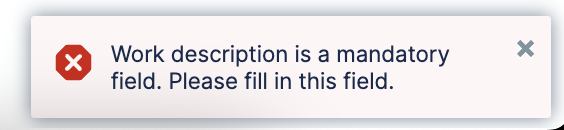
If disabled, users can log worked hours without adding a description.
Default value: Unchecked
Include Non-Working Events in Timeline Timesheets
This setting allows ActivityTimeline to show scheduled non-working events in Timeline Timesheets.

Non-working events may include Day Off (DO), Holiday (H), Vacation (V), Sick Leave (SL). External Day Off (EDO).
If enabled, Timeline Timesheets will include additional columns showing non-working days for the selected period.

Default value: Unchecked
Allow to log time for other users
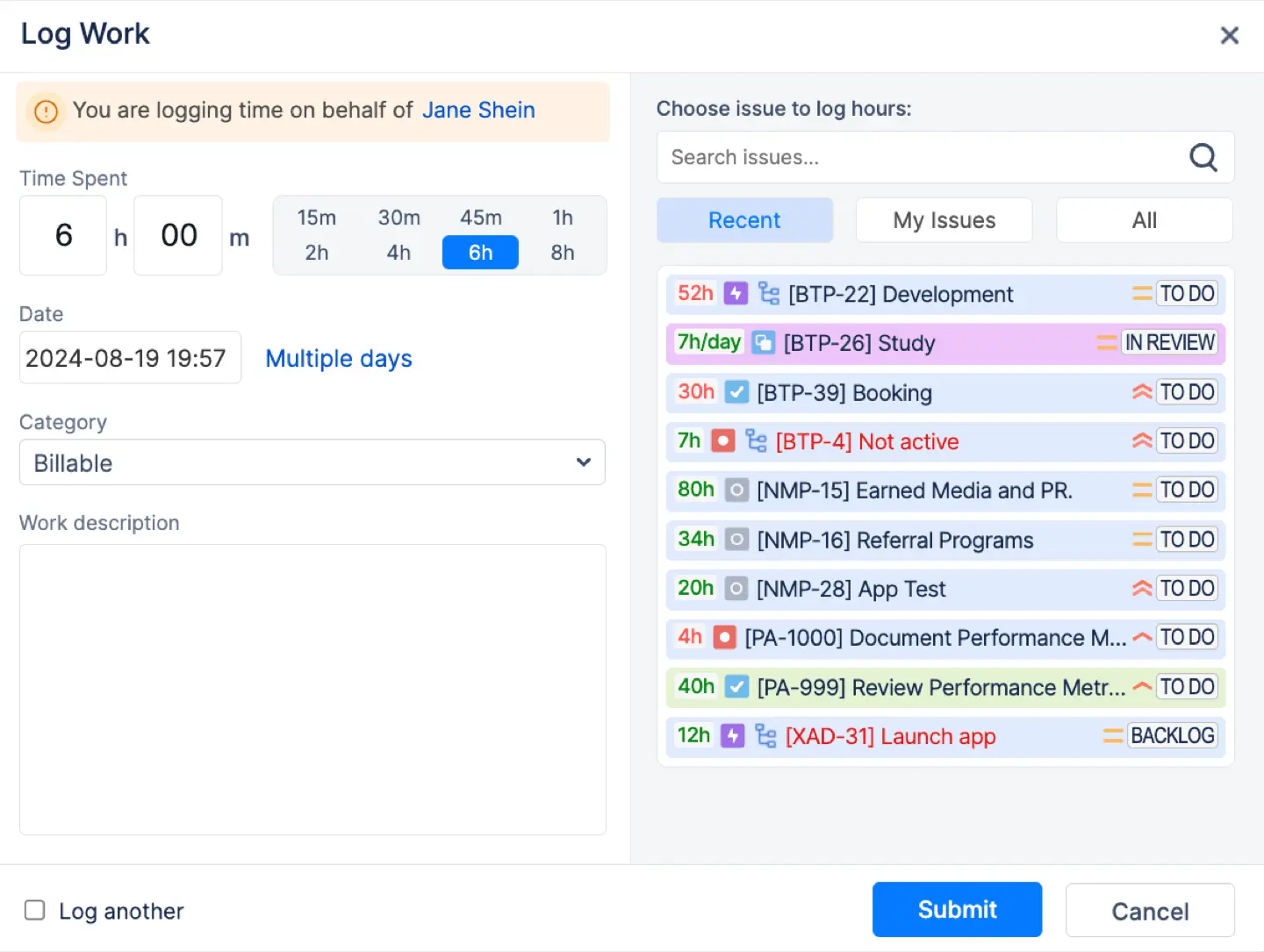
This setting allows users with management-level roles to log time on behalf of users they manage.

The following roles can log time for other users when the setting is enabled:
-
Administrator
-
Manager
-
Power Team Lead
-
Team Lead
Default value: Checked
In the Workspace view, the user should select the correct person from the user picker, click Log Work, and confirm that the warning message appears, indicating that time is being logged on behalf of another user.
Additional Worklogs
Treat Booking items as worklogs
This setting defines whether hours from Booking events should be treated as worklogs.

If enabled, Booking event hours are automatically counted as worklogs in past.
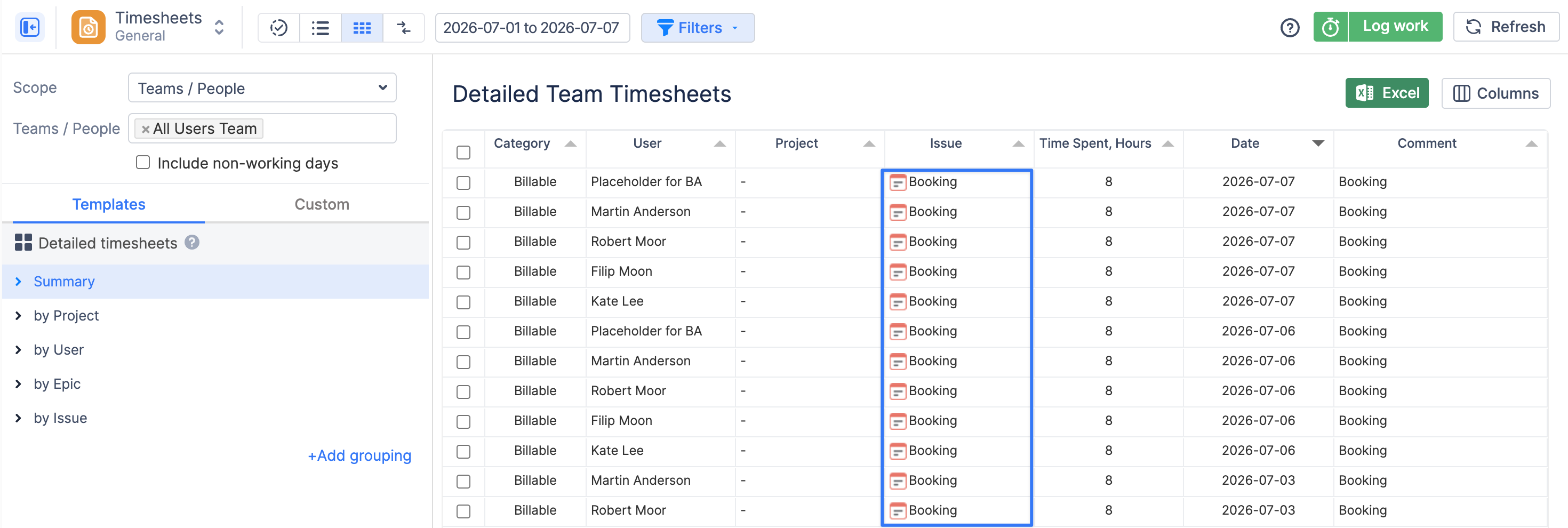
This can be useful when Bookings represent planned or committed work that should be included in timesheets and workload calculations.
Default: Checked
If needed, this behavior can be overridden for a specific Booking event type by going to:
Configuration → Events → Booking Event Type → Edit
Then select the Not a Worklog category for that event type.
External Calendar Worklog Behavior
This setting defines whether events from external calendars (Google, Outlook, iCal) should automatically appear in timesheets as worklogs or only be logged manually.

Depending on your setup, external calendar events can be treated as worklogs, ignored, or handled according to the selected behavior.
This is useful when teams import meetings, focus time, or other calendar events and want to decide whether those events should count as logged work. Learn more: Integrating with Google Calendar - Export & Import | How Imported Events Work
Default value: Treat all as worklogs
When Time Tracking Period Closure is enabled, "Treat Bookings as worklogs" and "Treat External Calendar items as worklogs" settings will be automatically disabled.
https://www.youtube.com/watch?v=bcLUJBS5bkQ&t=1s
Allow Users to Log Hours in the Future
This setting defines whether users can log worked hours for future dates.

If enabled, users can create worklogs for future dates.
If disabled, users can log time only for current or past dates.
Worklog Categories
Worklog Categories allow users to specify the type of work performed when logging time in ActivityTimeline.
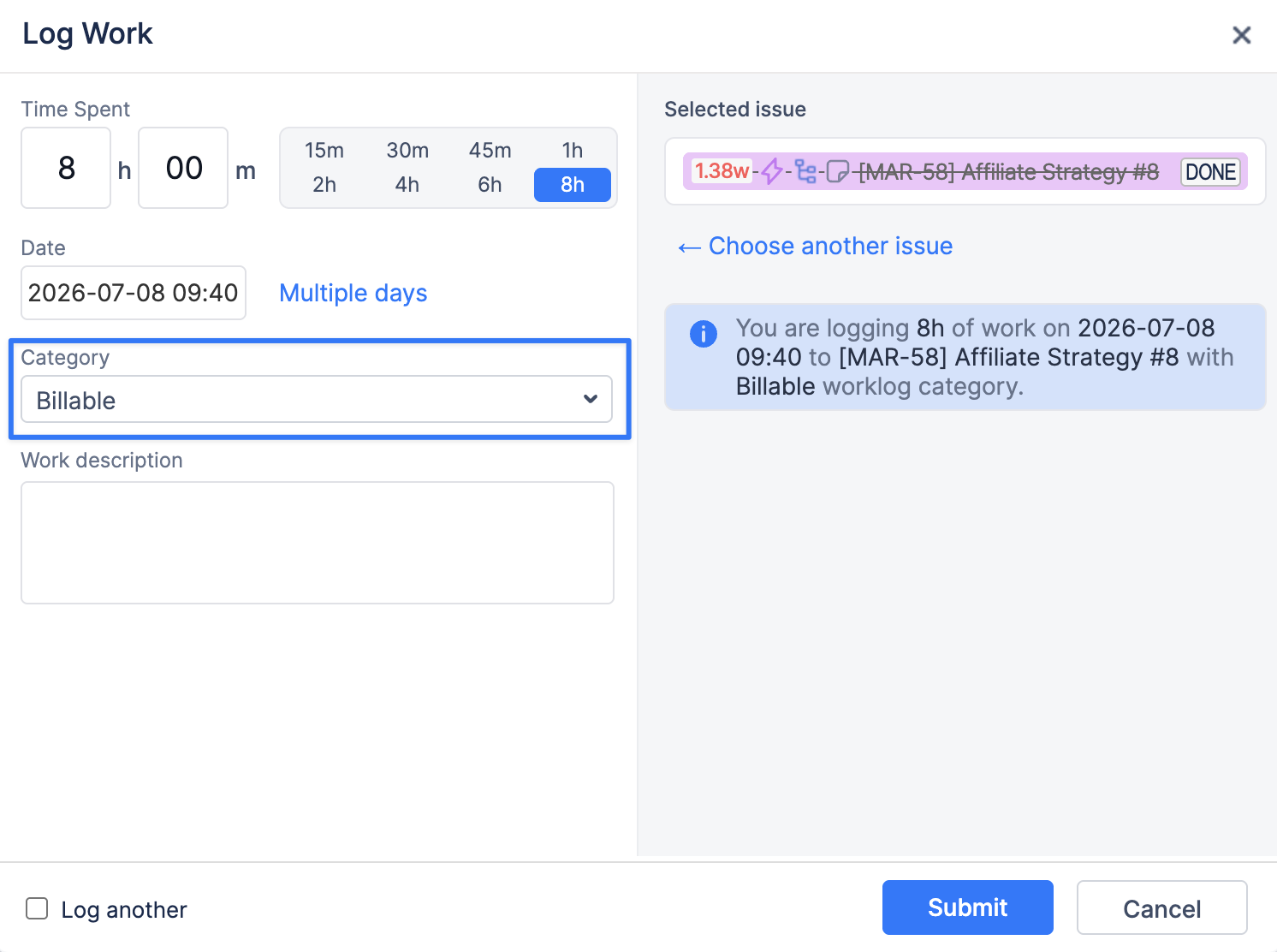
Each project can have its own default worklog category. This can be configured on the Manage Projects page.
Default category: Category #0
Learn more: Worklog Categories
Timesheet Approval
To explore timesheet approval options view: Timesheet Approval Settings