
Overview
The Timesheets module helps you review and analyze logged time in ActivityTimeline.
Depending on your permissions, you can use Timesheets to:
-
Review logged hours for a selected period.
-
Compare required, planned, and logged time.
-
Check timesheet completion.
-
Review individual worklogs.
-
Approve or unapprove worklogs, if approval is enabled.
-
Analyze time by user, team, project, Epic, Jira issue, and other criteria.
-
Export timesheet data to Excel.
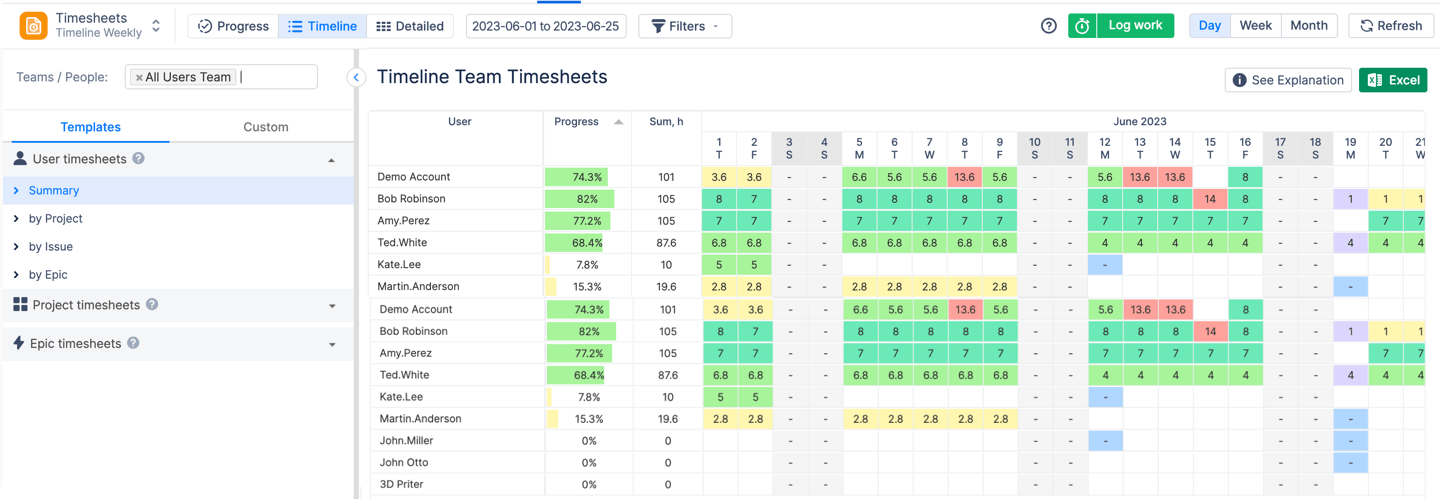
The information available to you depends on your ActivityTimeline role and permissions. For example, managers may have access to timesheets across multiple teams, while team members may only have access to their own data.
Some options may depend on your ActivityTimeline configuration and permissions.
Timesheet Views
ActivityTimeline provides several timesheet views for different reporting and review needs.

Progress View: Use it to monitor how time tracking is progressing for users and teams during a selected period.
This view is useful when you need a quick overview of whether users have completed their expected time reporting.
Timeline View: Use it to review logged time across users and time periods in a visual format. You can:
-
Review total logged hours for the selected period.
-
View logged time by day, week, or month.
-
Identify periods with higher or lower logged hours.
-
Compare time across users or teams.
You can switch between Daily, Weekly, and Monthly units to change how the data is aggregated.
Detailed View: Use it when you need to review individual worklogs.
You may also be able to edit or approve individual worklogs directly from this view.
Alignment Timesheets: Use it to compare Planned time vs Logged time over a selected period. Available as part of Advanced Edition of ActivityTimeline.
Configure a Timesheet
You can customize a timesheet by selecting its scope, period, filters, grouping, and other available options.
Select the Scope
The Scope determines which data is included in the timesheet.
You can generate a timesheet based on:
-
Teams or users.
-
Projects.
-
Epics.
-
Categories.
-
Jira issues.
-
Jira filters.
Selecting specific teams or users is not required in all cases. This allows you to build reports based directly on projects, Epics, issues, or other available criteria.
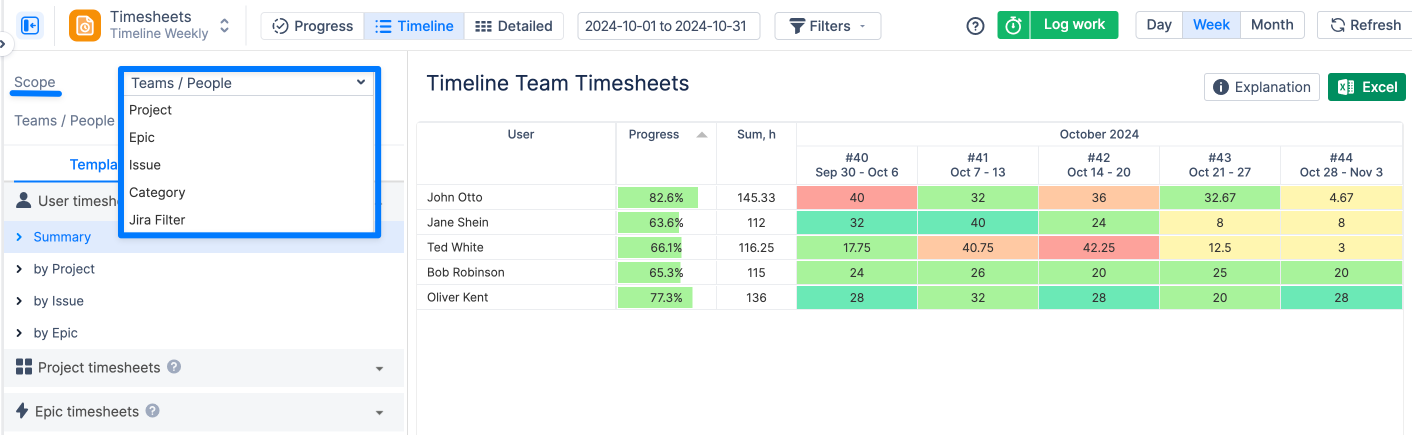
Most scope criteria support selecting multiple values at the same time. Jira filters are selected individually.
Select the Period
Click the current date range to open the date picker.
You can:
-
Select a custom start and end date.
-
Choose one of the available predefined periods.
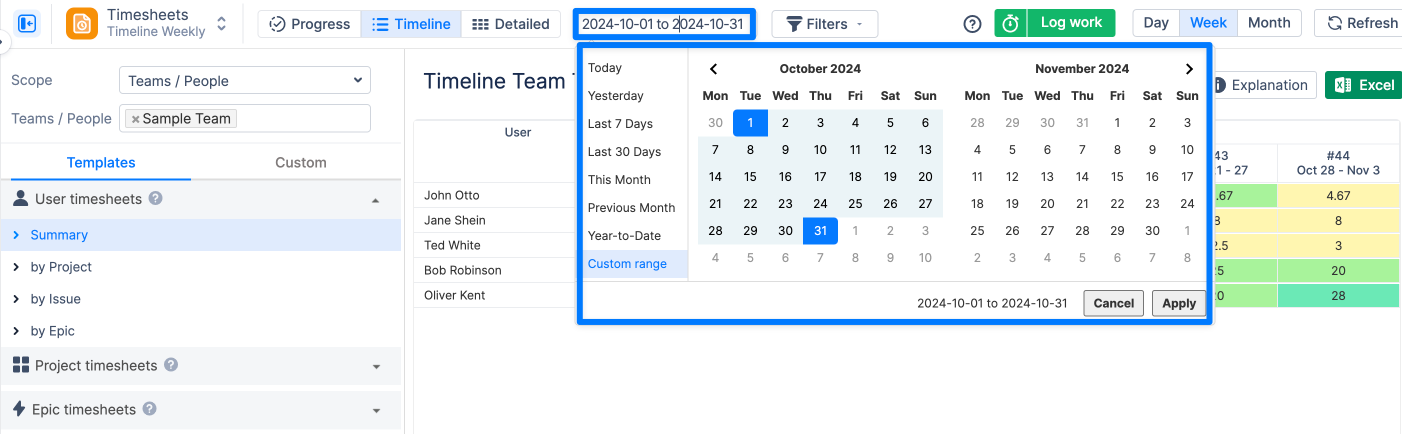
The selected period determines which worklogs are included in the timesheet.
Change the Time Unit
In the Timeline View, you can switch between:
-
Daily.
-
Weekly.
-
Monthly.
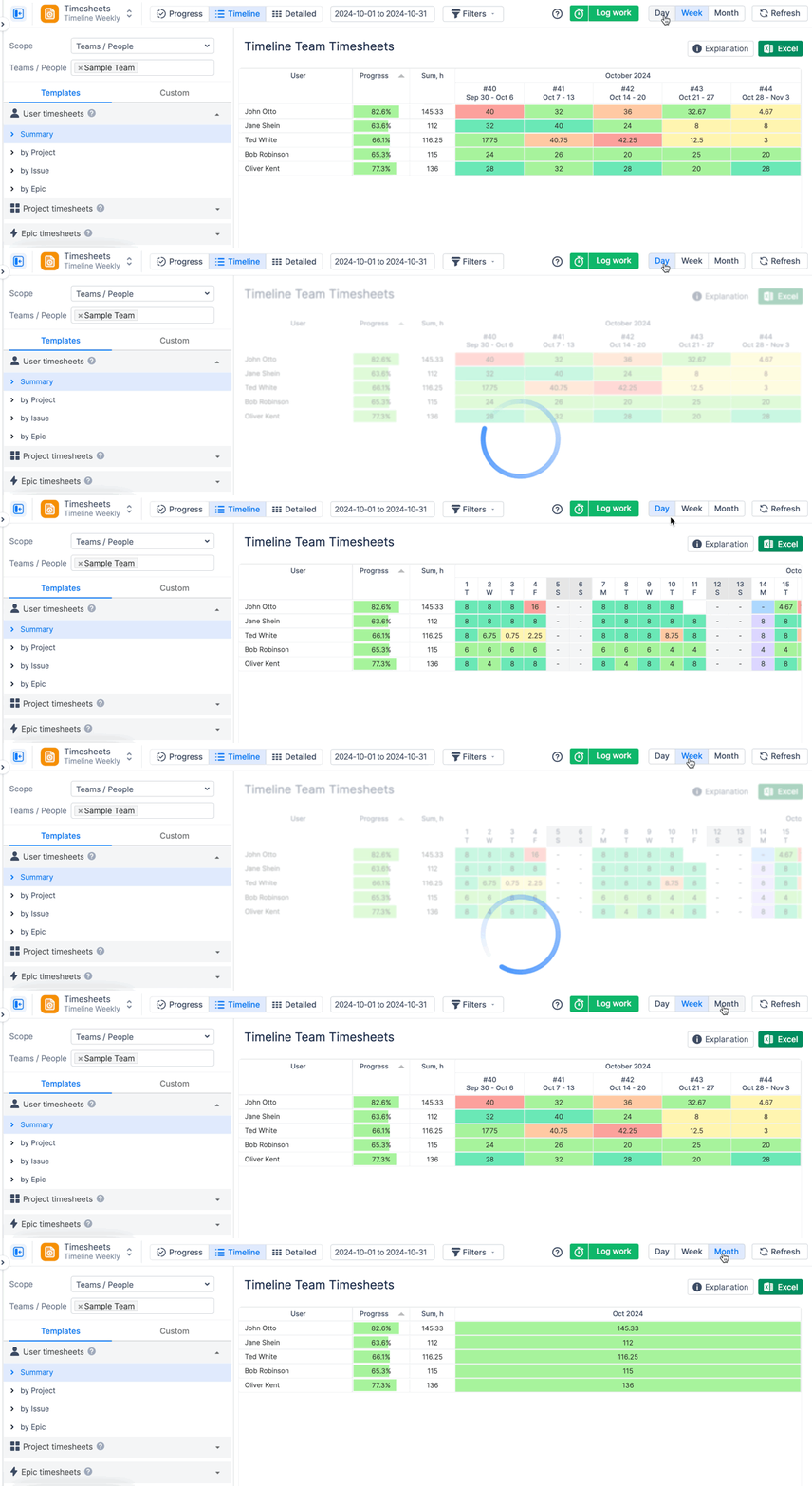
This controls how logged time is grouped and displayed on the timeline.
Apply Filters
Use filters to narrow down the data displayed in the timesheet.
Depending on your configuration, you can filter by:
-
Project.
-
Worklog category.
-
Approval status.
-
Worklog type.
-
Worklog attributes.
-
Team/ People.
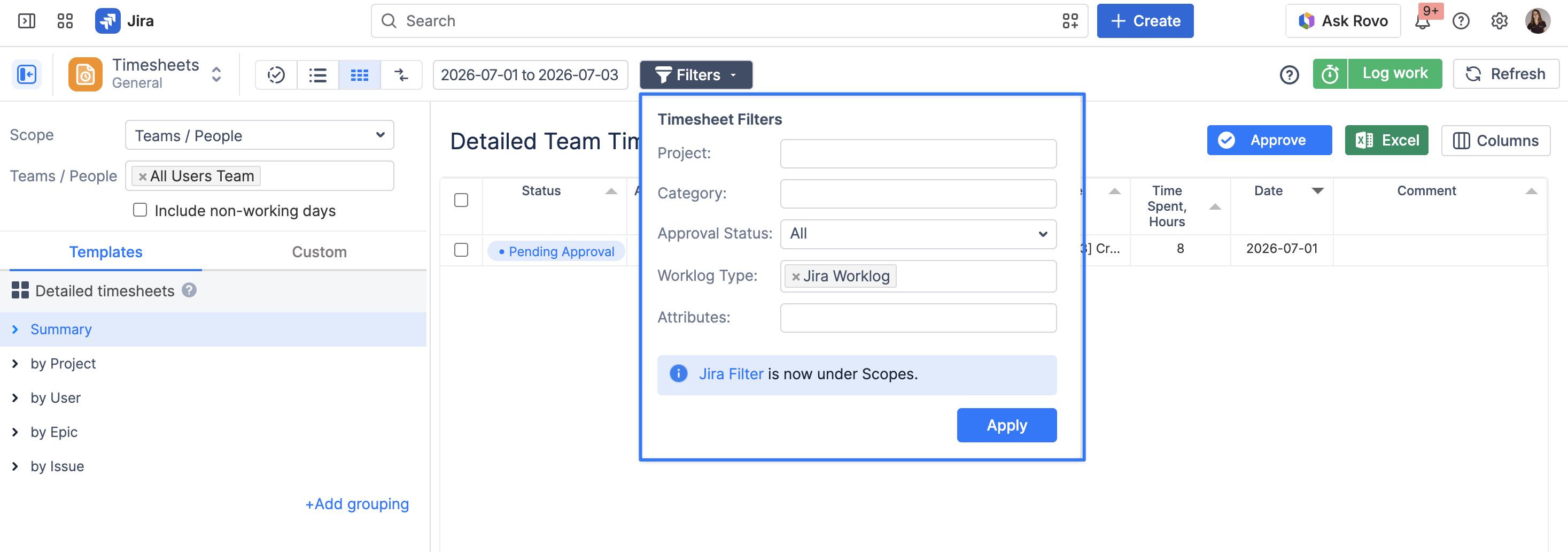
Available filters may vary depending on your ActivityTimeline configuration.
Group Timesheet Data
Timesheet grouping helps you organize logged time for easier analysis.
You can use predefined templates or create your own grouping structure.
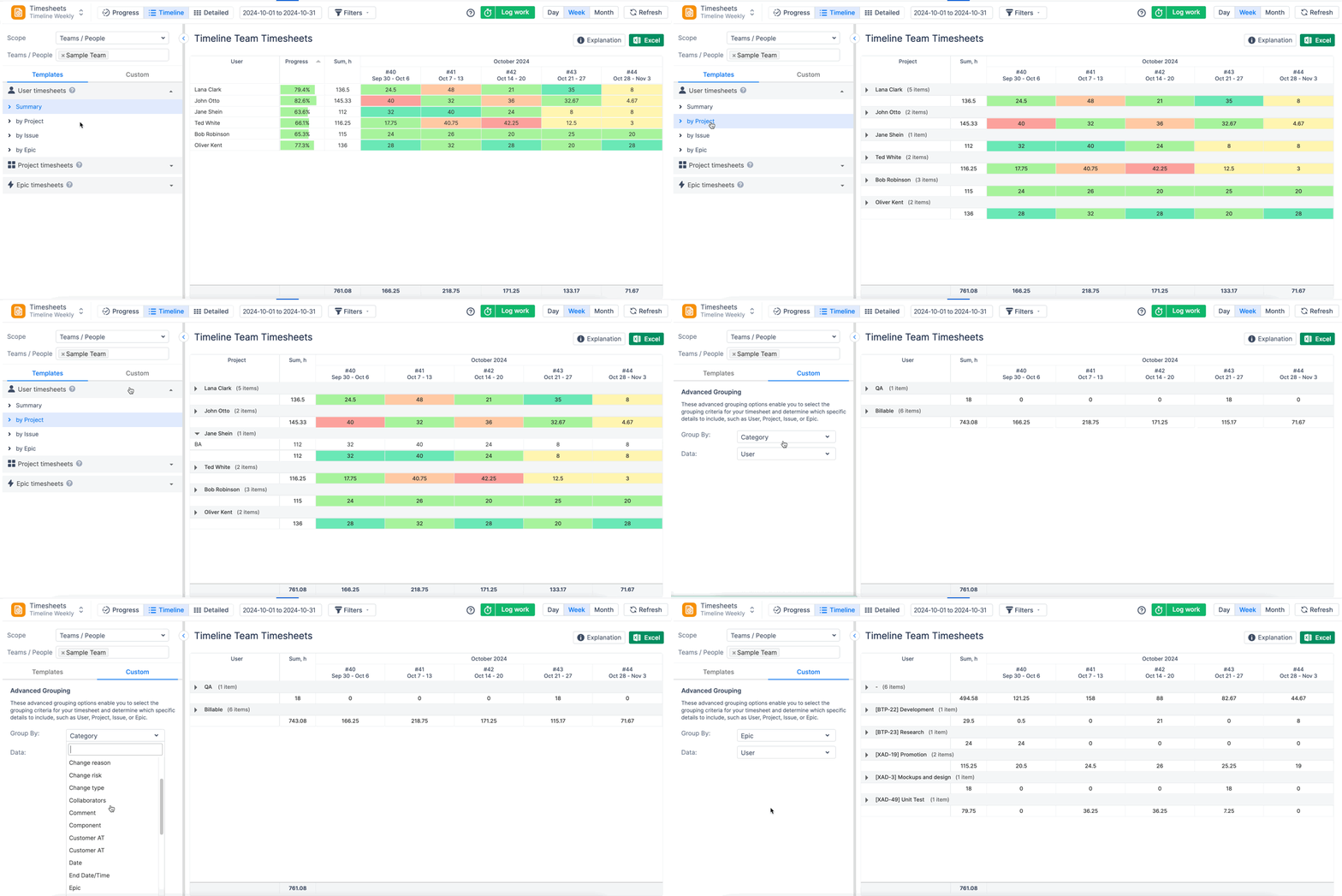
You can create multi-level timesheets by combining available fields.
For example, you might group worklogs by:
User → Project → Jira Issue
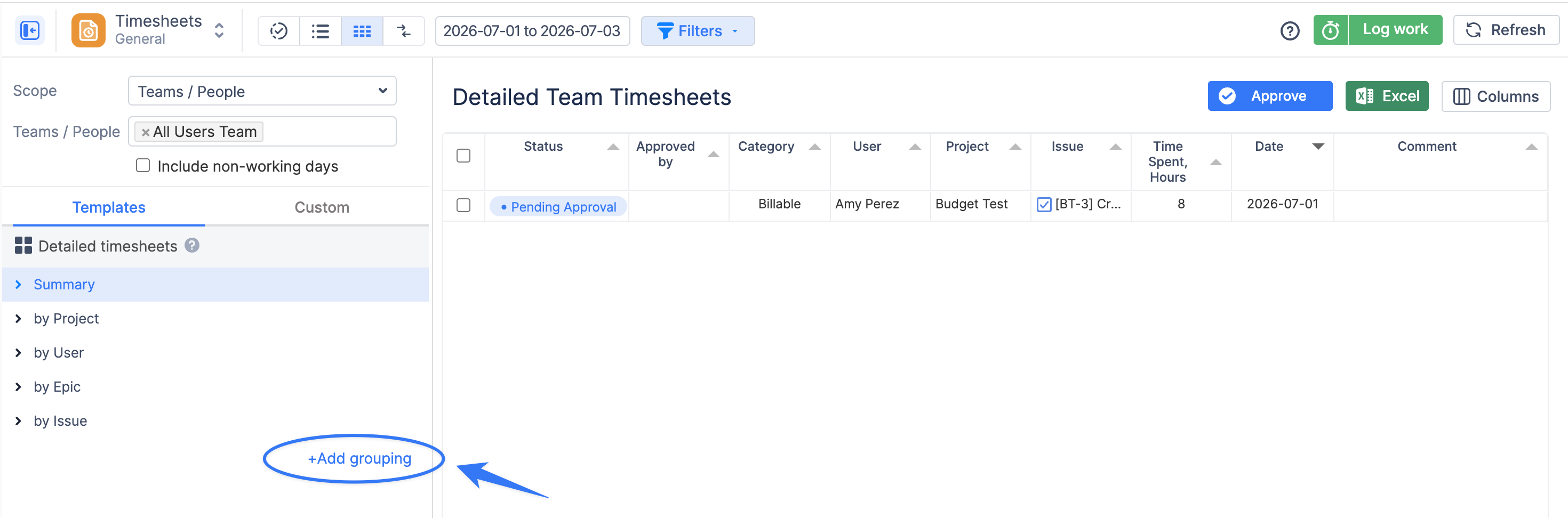
Available grouping options may include Jira fields and custom fields, depending on your configuration.
View and Edit Worklog Details
You can review individual worklogs directly from Timesheets.
Click a worklog to open the Record Details panel on the right.
Depending on your permissions and configuration, you can edit:
-
Time Spent.
-
Category.
-
Worklog attributes.
-
Comments.
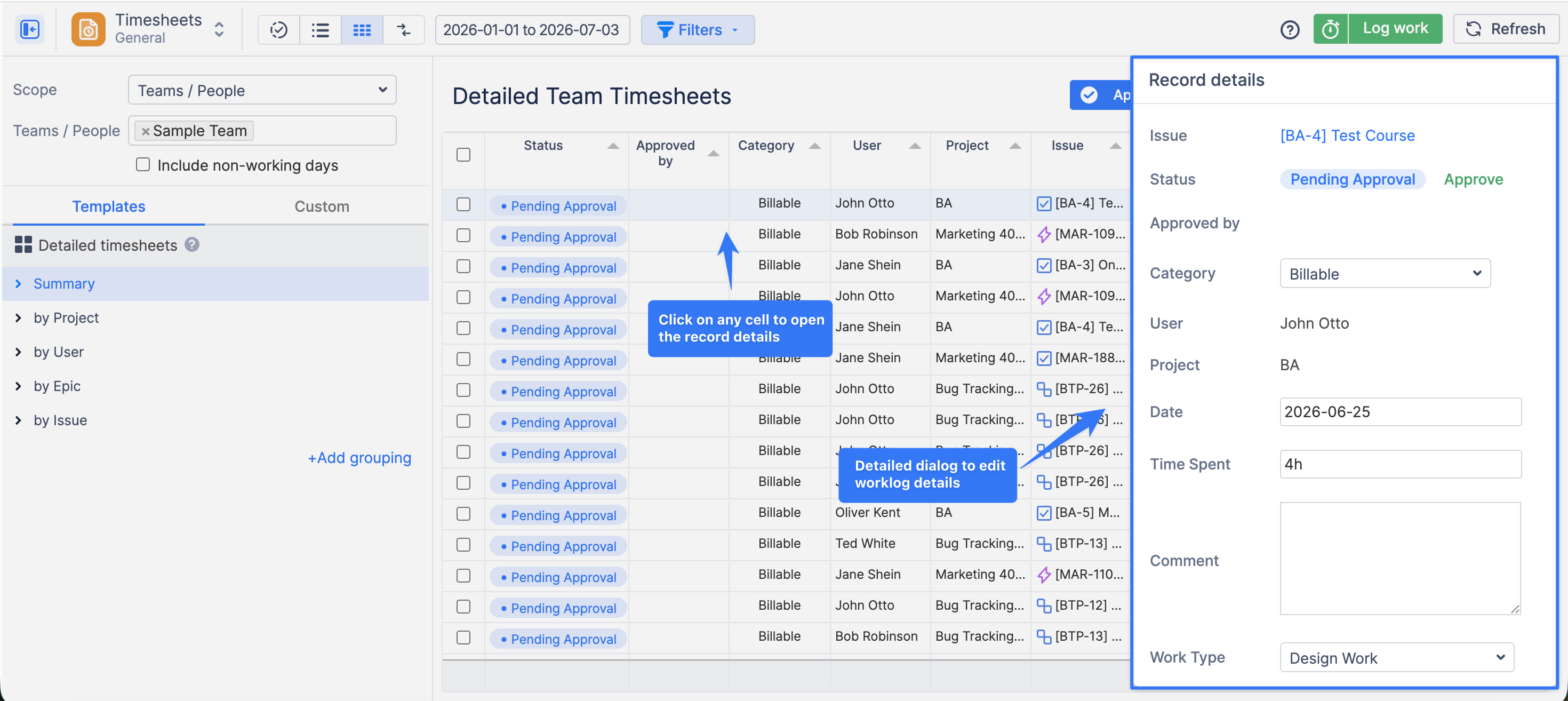
If worklog approval is enabled and you have the required permissions, you can also approve or unapprove the worklog from this panel.
Changes made to Jira worklogs are synchronized with Jira. Deleting a Jira worklog removes it from both ActivityTimeline and Jira, subject to your permissions and time tracking configuration.
Export Timesheets to Excel
Timesheet views can be exported to Excel for further analysis or sharing.
Click the Export to Excel button in the available timesheet view.
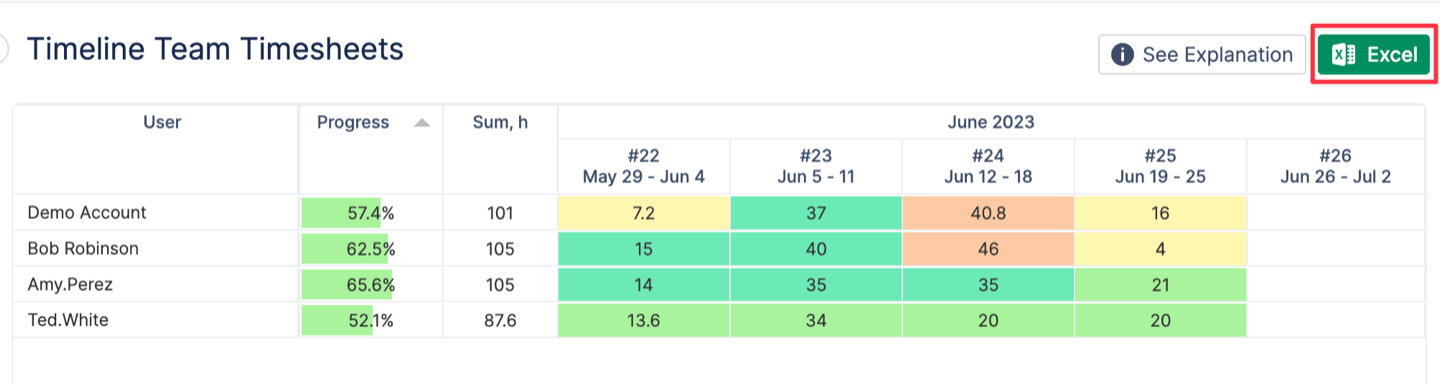
The exported report contains the timesheet data based on the current report configuration.

Save a Timesheet Configuration
If you regularly use the same timesheet setup, you can save it as a dashboard.
To save the current configuration:
-
Configure the timesheet with the required scope, period, filters, and grouping.
-
Click Save Configuration As….
-
Enter a name for the configuration.
-
Save it.
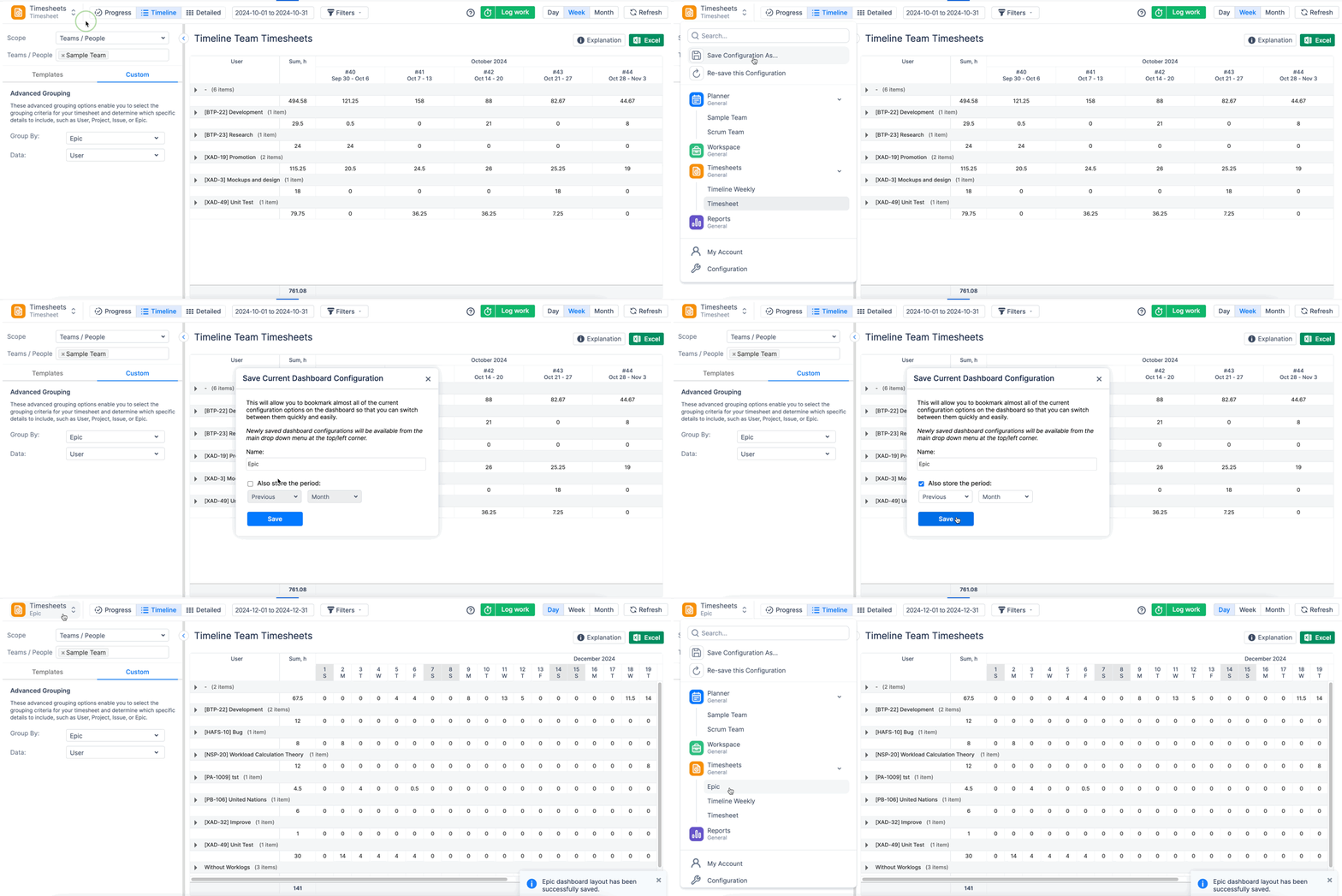
To manage saved dashboards, go to:
My Account → Dashboards
Depending on your permissions, you may also be able to share a saved dashboard with other users or teams.