
The Issue Panel works as a backlog in ActivityTimeline. It displays Jira issues from the Jira projects that are enabled in ActivityTimeline and allows users to quickly find, filter, group, and schedule work on the Planner.
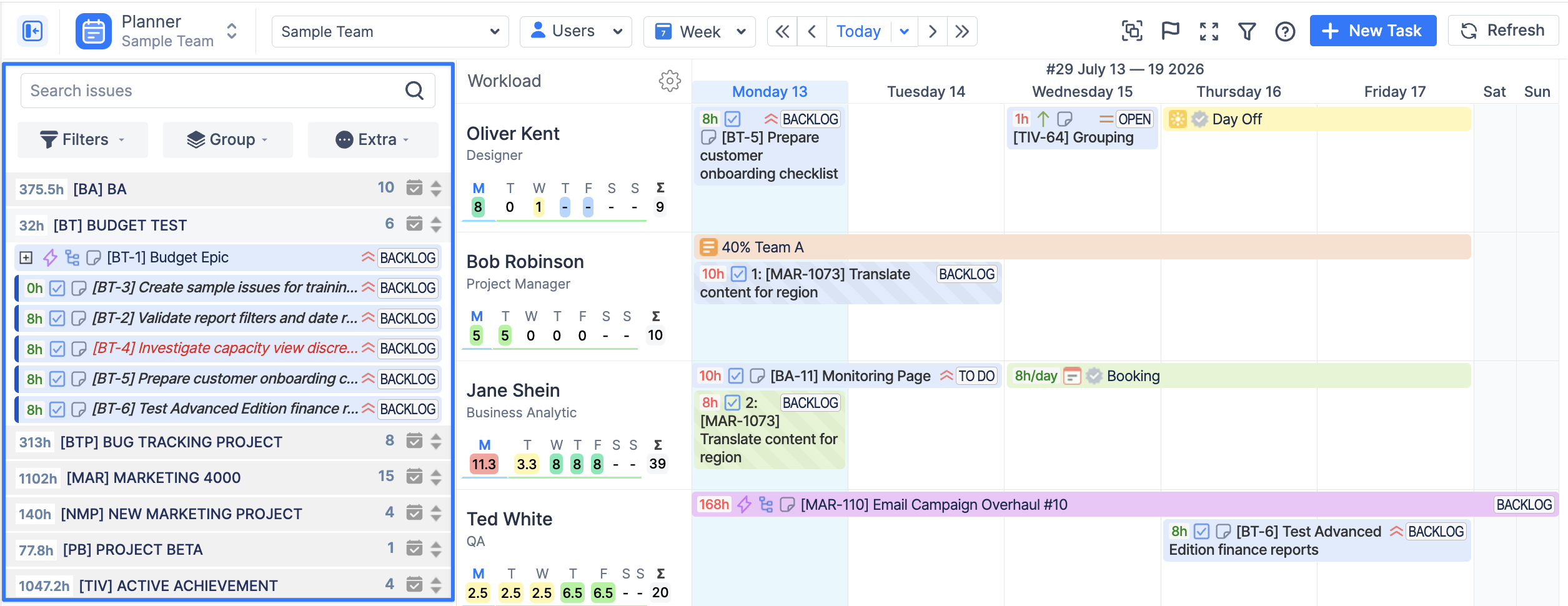
By default, issues in the panel are grouped by Jira project. Users can also group issues by other parameters, such as sprint, component, parent issue, assignee, priority, status, and other available fields.
Each item in the Issue Panel represents a Jira issue. Depending on your configuration, the issue bar may display information such as issue estimate, priority, status, issue type, or additional fields configured by the administrator.
Issue Panel Tabs
The default view can be configured and changed through one of the three tabs. The available tabs are Filters, Group, and Extra.
-
Filters – allows the user to filter all tickets in the left issues panel
-
Group – allows grouping the tickets by different parameters
-
Extra – allows the user to apply a filter, run JQL Search, and automatically schedule tickets for entire team.
Issue Bar Layout
Each Jira issue appears as a separate bar in the Issue Panel.
The information displayed on the issue bar helps users quickly understand the issue type, priority, estimate, status, and whether the issue is already scheduled.
Administrators can customize issue appearance in:
Configuration → Issues → Issue Appearance
Issue Indicators and Icons
Issue Status
The issue status is displayed on the far right side of the issue bar.

This allows users to quickly identify whether the issue is open, in progress, done, or in another Jira workflow status.
Priority Icon
The priority icon shows the Jira priority of the issue.
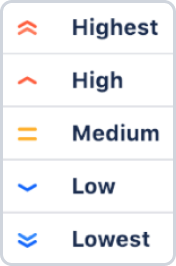

This icon helps users quickly identify high-priority or urgent work directly from the Issue Panel.
Issue Type Icon
The issue type icon is displayed near the issue estimate.
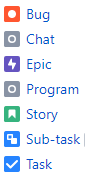

ActivityTimeline supports Jira issue types, and their icons are loaded from Jira. For example, the icon may indicate whether the item is a Story, Task, Bug, Epic, or Sub-task.
Hierarchy Icon
If a Jira issue contains sub-items, ActivityTimeline displays a hierarchy indicator next to the issue in the Issue Panel.

For example, if a Story contains Sub-tasks, the hierarchy indicator helps users understand that the issue has child items.
Clicking the Hierarchy Icon opens the list of its sub-items in a separate dialog. This dialog shows all related sub-items, their estimates, statuses, and scheduling indicators.
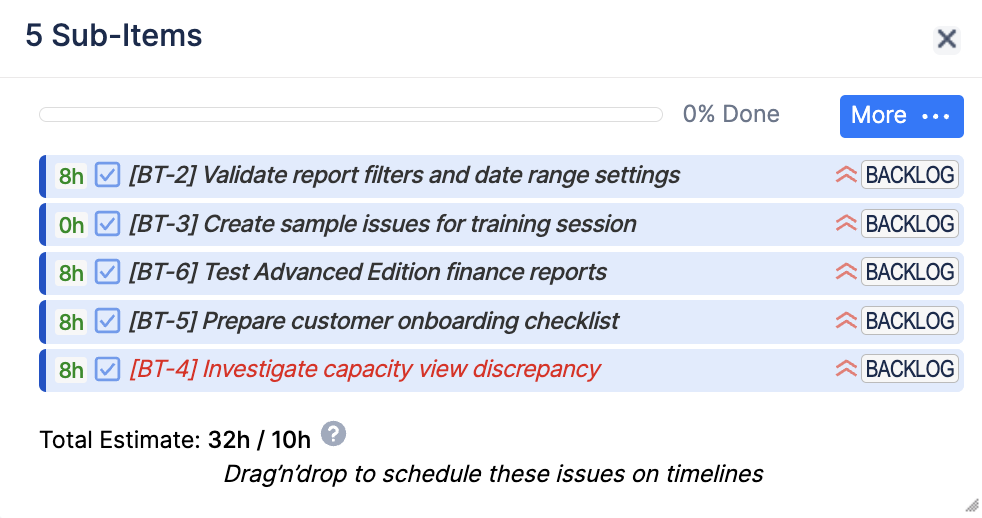
Clicking on 
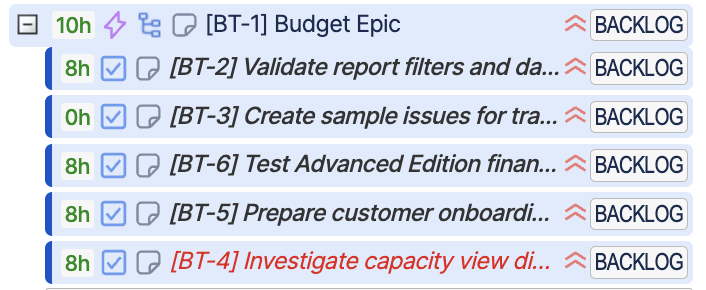
Users can drag and drop both parent issues and sub-items from the Issue Panel to the Planner timeline, depending on their permissions and scheduling needs.
Tip: Use Filters for a Hierarchy-Like View
ActivityTimeline displays Jira issues in the Issue Panel as individual schedulable items by default. Since all Jira work types are treated equally for planning purposes, parent issues and child issues can appear in the same list.
To create a cleaner hierarchy-like view, use the Filters tab to show only a parent work type, such as Epic. You can then expand each parent issue to review and schedule its child issues directly from the Issue Panel.
Sub-task Icon
A sub-task icon is displayed when the Jira issue itself is a Sub-task.

Clicking on Sub-task icon next to the parent issue opens parent issue in Jira.
This helps users distinguish sub-tasks from parent issues directly in the Issue Panel.
Scheduled Issue Indicator
When an issue is scheduled on the Planner, ActivityTimeline marks it with a blue vertical bar on the left side of the issue item.

This helps users avoid scheduling the same issue unintentionally and makes it easier to distinguish between scheduled and unscheduled work.
Placeholder Icon
ActivityTimeline can show the number of placeholders linked to a Jira issue directly on the issue bar. This makes it easier to identify work that has been planned but still needs resource allocation.
To enable this option, go to:
Configuration → Issues → Issue Placeholder Icon → Update
After the icon is enabled, click it on the issue bar to view all placeholders associated with the issue.
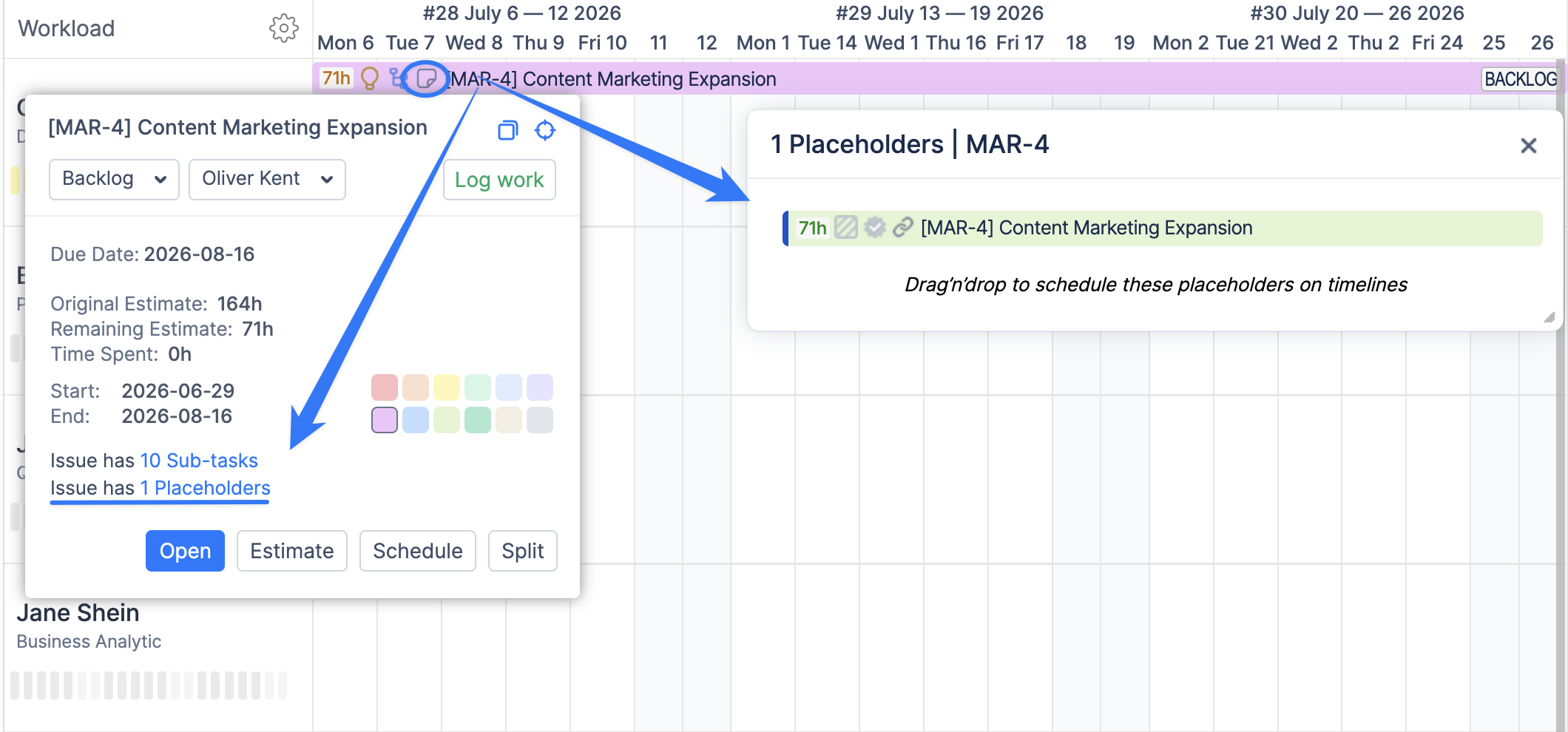
The same placeholder count is also displayed on the issue details card, helping managers and team leads understand remaining resource demand for the task.