
Using Jira groups is the recommended approach for larger instances, especially for organizations with more than 250 users. It helps simplify user management and reduces the amount of manual configuration required in ActivityTimeline.
The Groups page can be accessed under:
Configuration → Users → Groups
Overview
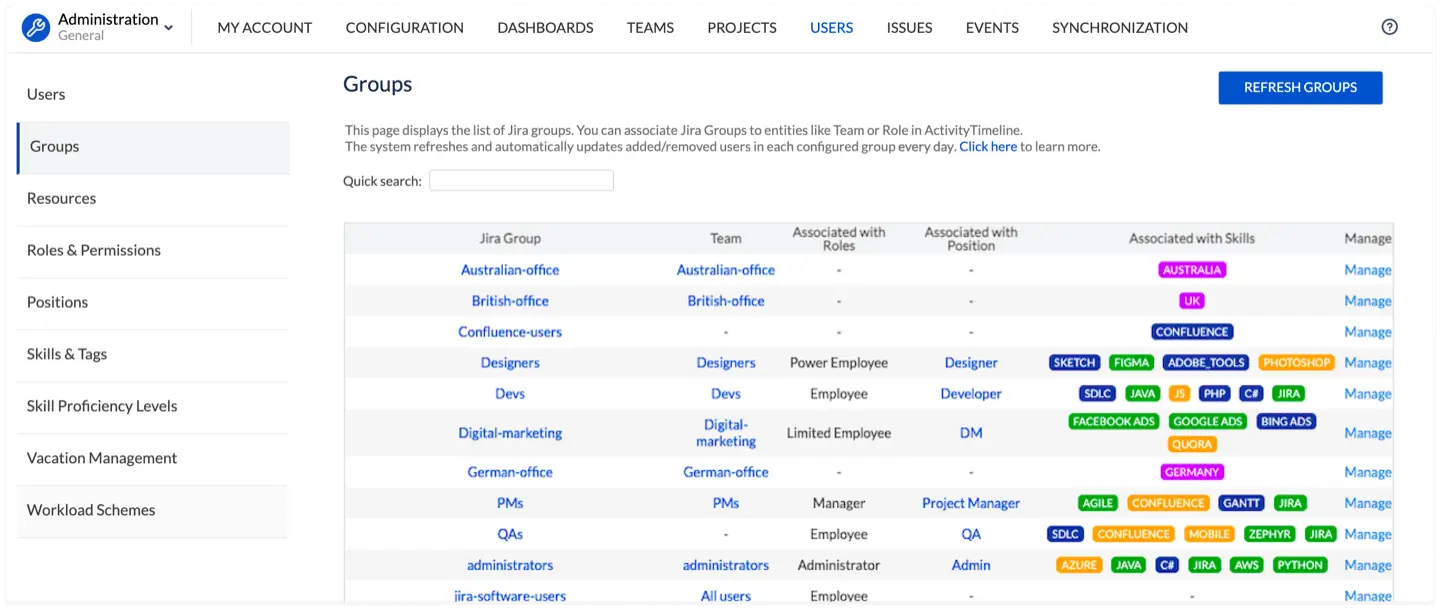
On the Groups page, you can view the list of Jira groups synchronized with ActivityTimeline.
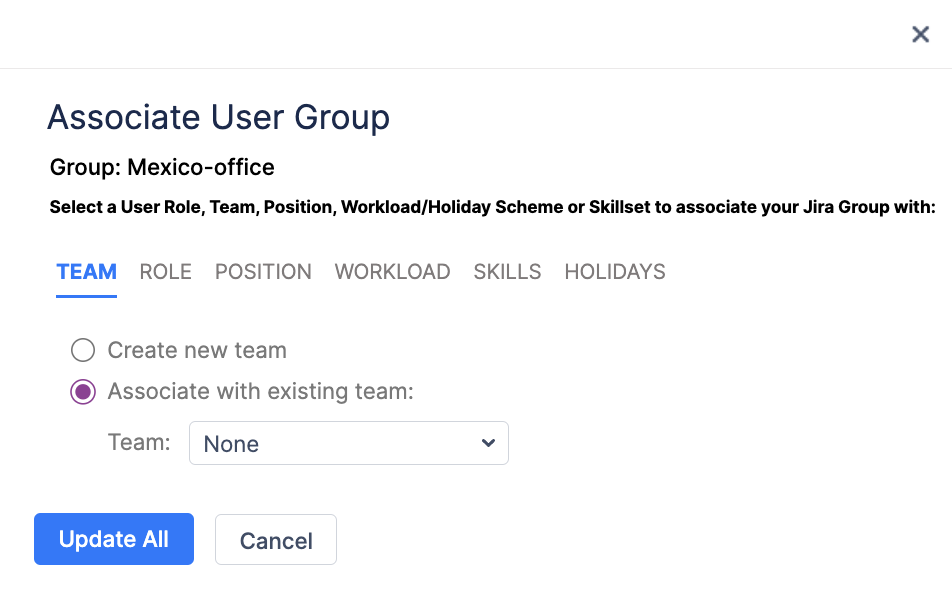
Jira groups can be associated with ActivityTimeline attributes and entities, such as:
-
User Roles
-
Teams
-
Positions
-
Skills
-
Workload Scheme
-
Holiday Scheme
When a Jira group is mapped to one of these attributes, all users who belong to that Jira group receive the corresponding ActivityTimeline configuration automatically.
For example, if a Jira group is associated with a specific Skill or User Role, all members of that Jira group will receive that Skill or User Role in ActivityTimeline after synchronization.
Synchronization
The list of Jira groups and group members is updated automatically once a day.
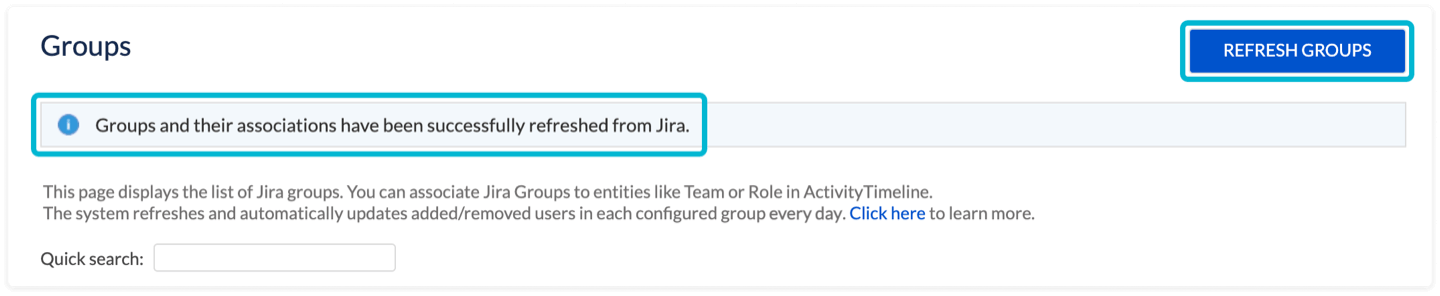
You can also refresh Jira groups manually from:
Configuration → Users → Groups
Manual refresh is useful when you have recently updated Jira group membership and want those changes to be reflected in ActivityTimeline sooner.
Overlapping Rules
A user can belong to multiple Jira groups. If those groups are associated with different ActivityTimeline attributes, ActivityTimeline applies the following rules.
User role - Multiple Jira groups can be associated with the same position. The user role with the biggest set of permissions will be assigned to a person. For example: when user’s groups are associated both with the Administrator & Manager user role, the person will get the Admin role.
Team - A team can only be assigned to a single Jira group. When a team gets associated with a new Jira group, it automatically removes the association with the other group.
Position - Several Jira groups can be associated with the same position in ActivityTimeline. If a user is a part of several groups that are assigned to different positions, the user will be assigned to a position that is associated with a group that he/she became a part of the latest.
Skills - Multiple Jira groups can be associated with the same set of skills. When several user’s groups are linked to skills, the user will get all the skills associated with those groups.
Recommended Setup
Before configuring Jira group mapping, we recommend reviewing your Jira group structure and deciding which groups should control ActivityTimeline roles, teams, positions, and skills.
For larger organizations, it is usually best to:
-
Use clearly named Jira groups.
-
Avoid mapping too many overlapping groups to different user roles.
-
Keep role-mapping groups separate from skill or position groups.
-
Test the mapping with a small group of users before applying it broadly.
-
Refresh users and groups after making major changes in Jira.
Why Use Jira Groups Mapping
Jira groups mapping is useful when you want to manage user settings centrally in Jira instead of updating each user manually in ActivityTimeline.
It can help you:
-
Assign user roles in bulk.
-
Keep team membership aligned with Jira groups.
-
Assign positions automatically.
-
Apply skills to users based on their Jira group membership.
-
Reduce manual work for large organizations.
-
Keep ActivityTimeline user configuration consistent with Jira administration.